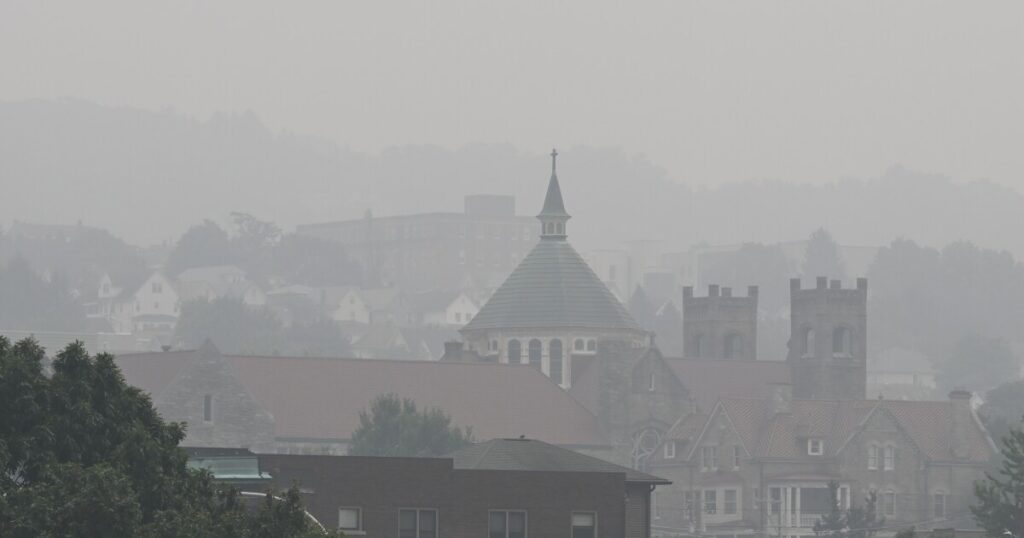
As wildfire smoke drifts from Canada and Minnesota, Pennsylvania is bracing for deteriorating air conditions. State officials have issued a Code Purple Air Quality Alert, marking a significant health warning for residents.
U.S. Environmental Protection Agency
The U.S. Environmental Protection Agency’s Air Quality Index (AQI) provides standardized color codes for air quality:
● Green – good air quality
● Yellow – moderate air quality
● Orange – unhealthy pollution levels for sensitive groups
● Red – unhealthy pollution levels for all
● Purple – very unhealthy pollution levels for all.
● Maroon – hazardous pollution levels.

Pennsylvania Department of Environmental Protection
According to state officials, the Code Purple designation indicates “very unhealthy” conditions due to elevated levels of particulate matter, specifically PM2.5. The U.S. Environmental Protection Agency (EPA) describes PM as a combination of small particles and liquid droplets suspended in the air.
What’s happening, and where?
The Associated Press reports that smoke has obscured skies from the Great Lakes to the East Coast. The reduced visibility and potential health risks have resulted in warnings about outdoor air conditions.
NPR highlights the rising incidence of wildfires and smoke associated with climate change and rising temperatures.
In New York, the Department of Environmental Conservation cautioned that air quality could worsen, with “very unhealthy” conditions possible from Buffalo to New York City, as reported by The Associated Press.
Warnings have been issued in major cities, including Philadelphia.
In New Jersey, Gov. Mikie Sherrill has instructed transportation authorities to distribute masks to commuters, as noted by local sources.
Staying safe
A Pennsylvania DEP release advises, “All residents should avoid long or intense outdoor activities, and sensitive groups such as children, elderly residents, and those with respiratory illnesses should avoid all outdoor activities.”
To mitigate pollution, DEP suggests:
● Refraining from using gas-powered lawn and garden tools.
● Avoiding the burning of leaves, trash, and other materials.
Where to learn more
● Scranton residents can find additional details on the city’s website.
● Statewide information is available on the DEP’s Air Quality Partnership page.
● National air quality updates can be accessed via the EPA’s AirNow site.
● The National Weather Service in Binghamton, N.Y. has issued an alert covering Northeast Pennsylvania.