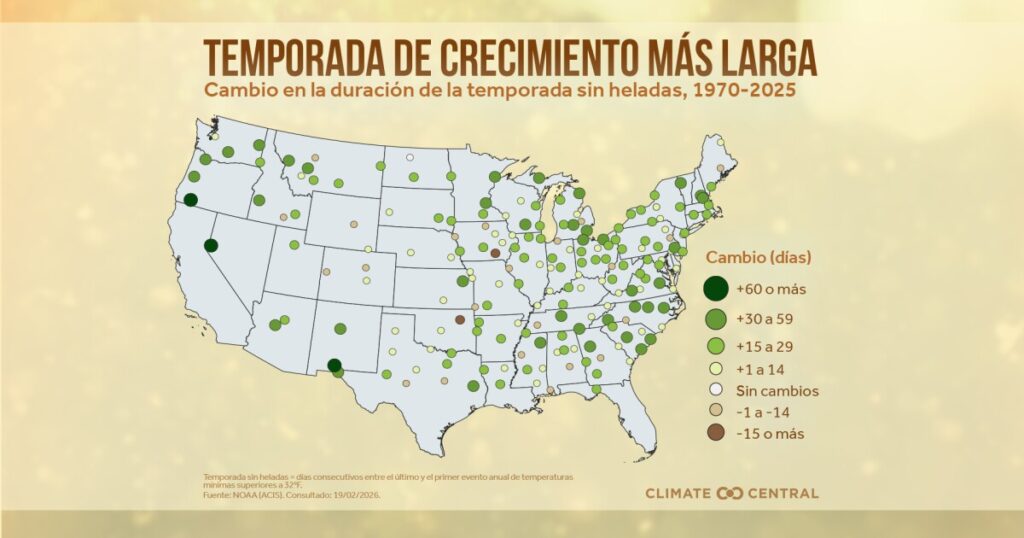
Recent findings from a report by Climate Central, a non-profit organization, indicate that frost-free growing seasons have lengthened across all U.S. climate regions, leading to extended allergy seasons.
Kristina Dahl, Climate Central’s Vice President of Science, noted that warmer winters are causing trees and plants to bloom earlier. Elevated carbon dioxide levels are also exacerbating the situation.
“With more carbon dioxide in the atmosphere due to human activity and the burning of fossil fuels, the growth of many plants is actually stimulated,” stated Dahl.
The city of Reno has experienced the most significant change, with its frost-free season extending by 100 days since 1970.
Dahl highlighted that these changes pose health concerns. “If a person spends the night congested, sneezing, coughing, and itching, that can affect their sleep. And in the case of children, we know that around 20% of minors in the U.S. suffer from seasonal allergies, which can trigger asthma,” she explained.
Health impacts differ for marginalized communities. “People of color in the U.S. tend to have higher asthma rates, much of which is linked to exposure to various pollutants and allergens,” Dahl noted.
The Asthma and Allergy Foundation of America reports that Black and Puerto Rican children are two to three times more likely to suffer from asthma than white children.
For children with asthma, Dahl suggested that minimizing exposure and checking air quality and allergen forecasts before going outside can help prevent asthma attacks.
Reno is not alone in facing these changes. Boise, Idaho, has seen 55 additional frost-free days, and Las Cruces, New Mexico, has experienced an increase of 65 days.
Read more about the story in English here.