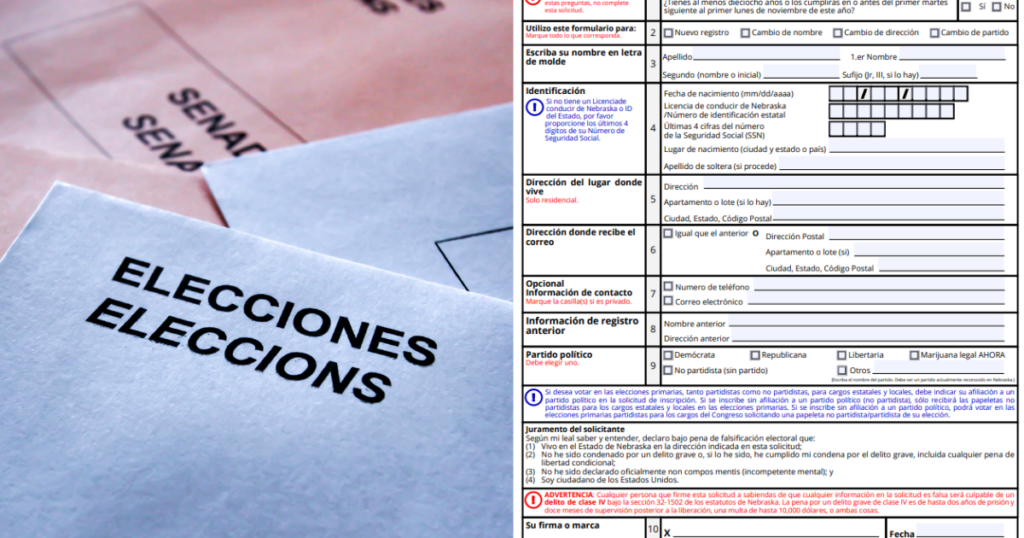
Efforts to enhance voter participation among newly naturalized citizens and those facing socio-economic challenges are gaining momentum. These groups often encounter barriers such as lack of knowledge about the voting process, time constraints due to work, and accessibility issues related to childcare and transportation. Addressing these challenges is the focus of Civic Nebraska’s outreach initiatives, especially in certain neighborhoods of Lincoln and Omaha identified as needing support before the 2026 elections.
“We are making sure that we’re focused on those communities that may not have the education of how our election process works – because we know it’s very complicated – and that they have access to the resources that they need,” said Wilson from Civic Nebraska. The organization has developed Spanish-language canvassing materials and offers a Ballot Builder tool to show voters the candidates and issues on their ballots.
Collaborating with the Get Out The Vote coalition, Civic Nebraska partners with groups already engaged with Latino communities to foster trust and continuity. “We want to make sure that in a system that feels really tricky – sometimes really scary or inaccessible – that they do have resources that they can rely on throughout that process,” Wilson emphasized.
Fostering Community Engagement
Guadalupe Esquivel, communications director for Nebraska Table, a nonpartisan nonprofit collective focused on civic engagement, highlights the importance of community building in encouraging Latino participation in elections. Esquivel noted that normalizing civic engagement involves making resources common and accessible.
Recalling her experience as a canvasser, Esquivel shared how switching to Spanish helped her connect with potential voters: “At first they were kind of responding a little haltingly – a little hesitantly. And when I switched over to Spanish, they instantly opened up, and they shared a lot of the concerns that they had with their community, with their neighborhood, with their representatives.”
Esquivel pointed out the importance of making civic engagement second nature. With Nebraska Table offering voting guides in multiple languages, efforts are underway to bridge language gaps that may hinder participation. Esquivel expressed concern about the chilling effect that fears related to immigration policies can have on voter engagement.
Initiatives to Overcome Apathy
Local organizations are actively working to combat voter apathy and fear. In Grand Island, the Multicultural Coalition supports community members by providing employment resources and guidance on civic participation. Executive Director Raúl Arcos Hawkins remarked on how community ties facilitate discussions about voting.
“As people are moving through the immigration legal process and then becoming residents and citizens, they’re becoming more invested into the community,” Arcos Hawkins said. His team offers materials on voting in various languages and provides guidance on registration and voting procedures.
Arcos Hawkins emphasized the importance of understanding why voting matters, especially when policy changes impact the immigration system and, consequently, economic security. Despite challenges, noncitizens can still influence policy by supporting Get Out The Vote efforts through education and encouragement.
Weyler Flores, motivated by policy changes during the Trump administration, joined the Nebraska Democratic Party’s Latino Caucus. “I’m trying to give more voices to the Latino community, especially for other people – immigrants and such – who cannot really be a voice themselves,” Flores said, underlining his commitment to advocacy.