In Pennsylvania, the dental workforce is facing a significant challenge as the number of practicing dentists continues to decline. This issue is exemplified by Dr. Darleen Oleski, who decided to purchase a dental practice in Tunkhannock to prevent its closure, a move inspired by her daughter’s inability to afford the purchase due to overwhelming student debt.
Dr. Oleski’s experience underscores a broader trend affecting the state. A report by the Center for Rural Pennsylvania highlights that over 20% of dentists are over 65, with another significant portion approaching retirement. This has led to a shortage of replacements in the profession.
Statewide Dental Workforce Concerns
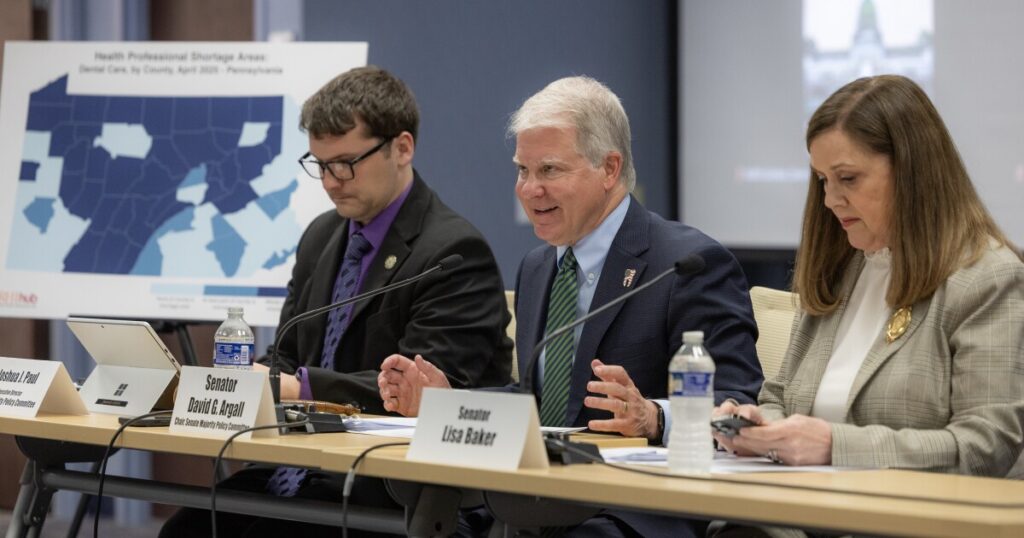
The aging dental workforce was a key topic at a public hearing led by State Sen. Dave Argall at Benco Dental in Jenkins Township. The hearing aimed to address the shortage of dental professionals in the state.
Sen. Dave Argall Facebook
The work environment for dentists in Pennsylvania is exacerbated by low insurance reimbursement rates. James Mancini noted, “We’re 47th in reimbursement in the country, in Pennsylvania, so 46 other states reimburse more for the same procedure than we do in Pennsylvania.” This financial challenge contributes to the state’s 13.3% decline in dentist numbers per 100,000 residents, as reported by the American Dental Association.
Addressing the Imbalance
High student debt also deters new graduates from pursuing dental careers in Pennsylvania. Shawn Casey highlighted the issue, stating that the “average debt of a dental student is probably about $450,000,” while starting salaries range from $150,000 to $210,000, making it difficult for new dentists to manage their finances.
Moreover, there is a significant shortage of dental hygienists, a concern emphasized by Michael Verber, CEO of Verber Dental Group. “If you look at our population, we need four times the number of hygienists we currently have to serve our population in any sort of preventative fashion,” he explained, pointing out the state’s one-to-one hygienist-to-dentist ratio.
Potential solutions include expanding the roles of expanded functions dental assistants (EFDAs) and increasing access to dental hygiene programs. Ann Hoffman from Central Penn College highlighted the need for more dental hygiene programs, which currently accept fewer than 10% of qualified applicants due to limited resources.
New Initiatives and Programs
Efforts to address these challenges include Temple Dental’s new rural dentistry program. The Kornberg School of Dentistry is set to open a campus in Tamaqua, serving Schuylkill, Carbon, and Luzerne counties. The program aims to attract students to rural areas, with classes set to begin this fall.

Sen. Dave Argall Facebook
Sen. Argall expressed initial concerns about student interest in the program but was encouraged by the strong response. “When we first announced this new program, we said, ‘Well, are we going to have to wine and dine these students to get them to come to a small town.’ And no, no, we are over subscribed,” Argall remarked. The clinic will train dental students while providing much-needed services to the community.