University of Wisconsin-Madison to Establish College of Computing and AI
In a significant move that marks its first new academic division in over four decades, the University of Wisconsin-Madison is set to unveil its College of Computing and Artificial Intelligence on July 1. This new initiative is poised to position the university as a pivotal non-industry leader in the AI landscape.
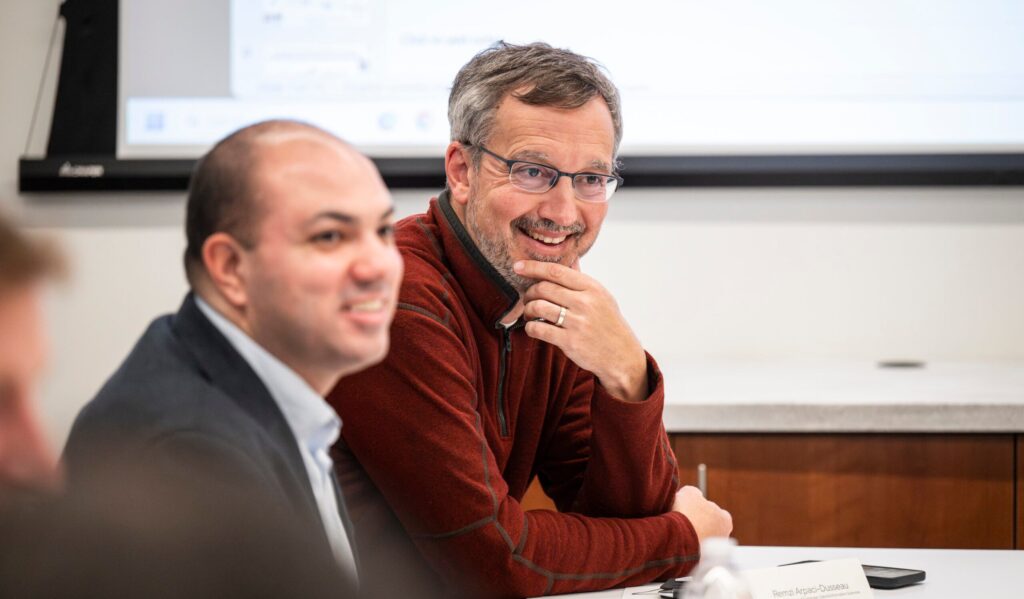
Recently appointed as the founding dean, Remzi Arpaci-Dusseau, who also serves as the director of the university’s School of Computer, Data and Information Sciences, will spearhead the college’s launch and strategic direction. Arpaci-Dusseau envisions the college as a platform that balances AI enthusiasm with ethical considerations, emphasizing the importance of public welfare over industry-driven agendas.
“We’re not here to be AI cheerleaders,” stated Arpaci-Dusseau in an interview with WPR’s “Wisconsin Today.” He emphasized the role of the university as “an educated, thoughtful leader in these very challenging spaces.”
Collaboration Across Disciplines
Arpaci-Dusseau outlined plans for the college to collaborate with other university divisions, such as the School of Medicine and Public Health, to explore intersections between health and AI. This interdisciplinary approach aims to reshape the educational landscape, preparing students for a tech-driven future in various fields, including medicine.
The college also seeks to innovate in its educational offerings, potentially introducing new courses and certifications that will benefit students across different majors. Dual degrees and majors are on the horizon, fostering a comprehensive understanding of AI and its implications.
Ethics at the Forefront
Addressing the ethical concerns surrounding AI, Arpaci-Dusseau highlighted the importance of the university’s role in providing a voice distinct from the tech industry. Collaborations with departments such as Philosophy and Public Affairs will inform the ethical training of students, preparing them to navigate real-world ethical dilemmas in their professional lives.
Community Engagement and Policy
As AI data centers face scrutiny in Wisconsin communities, the college aims to engage in dialogues that consider both short-term benefits and long-term impacts. By working with the La Follette School of Public Affairs, the college hopes to contribute to shaping future laws and policies that govern AI technologies.
Arpaci-Dusseau acknowledged concerns regarding data centers and emphasized the need for deliberate decision-making that balances immediate and future needs. “What we can hopefully do is be some point of light on that (issue) that isn’t just coming from industry,” he noted.
Attracting Talent for a New Era
Despite the challenges of competing with Silicon Valley salaries, the college aims to attract faculty who are passionate about academia and mentorship. Arpaci-Dusseau believes that many talented individuals are drawn to the intellectual environment and mission of shaping technological change, beyond financial incentives.
Job Market Prospects
With the job market in flux post-pandemic, Arpaci-Dusseau remains optimistic about opportunities for AI and computing graduates. He noted that major tech companies continue to seek junior talent capable of guiding AI projects, underscoring the enduring need for human judgment in technology development.
During a recent visit to Silicon Valley, Arpaci-Dusseau observed that while AI agents play a role in coding, human oversight remains crucial. As he learned from industry leaders, “The agent can help you, but if you just go to the agent and say, ‘Do some stuff,’ it’s garbage in, garbage out.”