Attorney Robert Harrington Appointed as Charlotte’s New Mayor
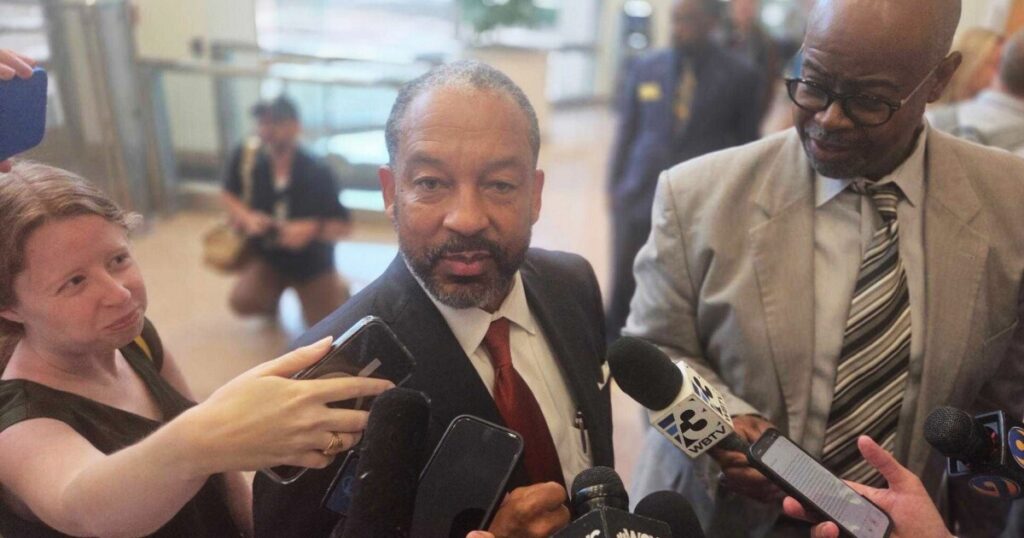
In a significant decision, the Charlotte City Council has appointed attorney Robert Harrington as the new mayor of Charlotte, succeeding Vi Lyles, who is set to resign at the end of June. Harrington, who has yet to hold an elected position, will fill the remainder of Lyles’ term until December 2027, which encompasses 17 months, or just under three-quarters of a full two-year term as mayor.
Harrington emerged as the chosen candidate from a pool of 114 applicants, being one of five finalists for the position. Despite his lack of prior elected experience, Harrington has held leadership roles, including serving as the head of the Charlotte Mecklenburg Library board and as the current president of the North Carolina Bar Association.
Mayor Pro Tem James Mitchell, with nearly 25 years in city government, was not selected for the role, receiving only two votes in the initial round. Former City Council member Harold Cogdell also garnered two votes. Harrington, however, received four votes, while former Federal Reserve official Carrie Cook obtained three.
The decision proceeded to a run-off between Harrington and Cook, with Harrington securing victory through more than six votes. The specifics of the council members’ votes were not disclosed by the clerk.
Harrington intends to complete his term without seeking election in 2027, continuing his work at the law firm Robinson Bradshaw. He described the mayoral role as part-time, with an $80,000 compensation package, while the city manager oversees daily operations and personnel management.
During his interview, Harrington emphasized his experience in leading meetings and his connections within the business community, vital in Charlotte’s growth-focused environment. As mayor, he will face numerous challenges, including drafting new regulations for data centers post-moratorium, negotiating the long-term airport lease with airlines, and addressing contract workers’ wage demands. Navigating the historically complex relationship with state leaders in Raleigh also remains a critical task.
A pressing issue is the future of the Interstate 77 toll lanes project. Recently, both the City Council and the Charlotte Regional Transportation Planning Organization withdrew their support. State Sen. Vickie Sawyer has introduced a draft amendment requiring repayment of over $60 million in design costs unless the toll lanes are reinstated.
Harrington has stated that while the city must remain attentive to public sentiment, he has not revealed his stance on the toll lanes. He identifies affordability and public safety as Charlotte’s primary challenges, committing to efficient meeting management as a means to establish trust.
Harrington becomes the third mayor appointed by the council in the past 13 years, following Patsy Kinsey and Dan Clodfelter’s previous appointments under different circumstances.
Expressing gratitude, Harrington remarked that serving as mayor is the “ultimate way to pay [Charlotte’s kindness] forward.”