North Carolina’s Economic Outlook Shows Promising Revenue Increase Amid Tax Cuts and Pay Raises
North Carolina’s financial landscape is set for significant change as state economists project $71.2 billion in revenue for the 2025 and 2026 fiscal years, marking a notable increase from previous estimates. This forecast, according to a recent update, highlights the state’s robust economic performance.
Compared to the March projection, this new forecast reflects an increase of approximately $1.3 billion and is $2.7 billion above the state’s certified budget. The data, compiled by the Office of State Budget and Management alongside the legislature’s nonpartisan Fiscal Research Division, underscores stronger-than-anticipated income tax collections.
A key factor in this rise is a third consecutive year of strong stock market performance, which has bolstered capital gains realizations, alongside substantial corporate bonuses resulting from significant 2025 profits. These elements have contributed to the optimistic revenue outlook.
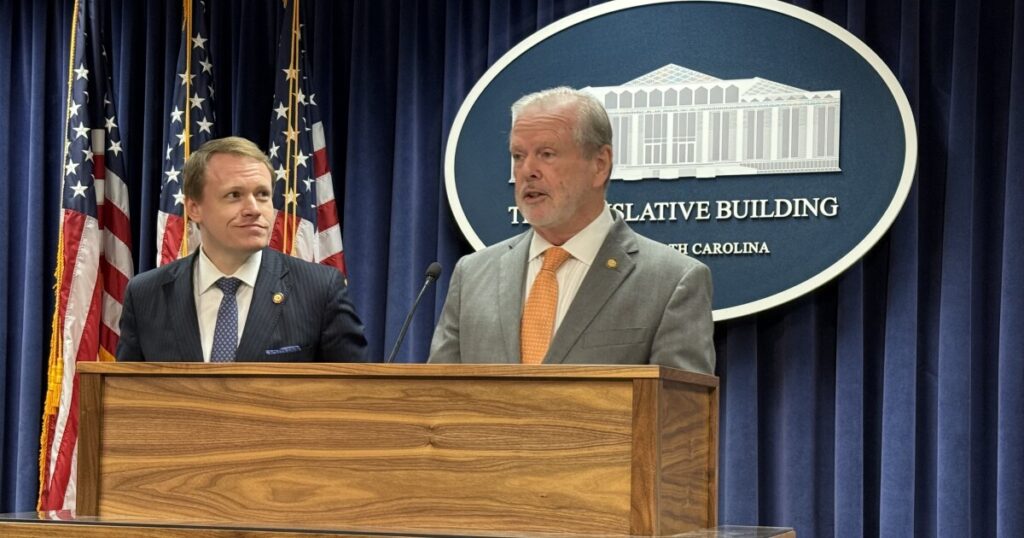
State leaders, including Senate Leader Phil Berger and House Speaker Destin Hall, have cited this revenue forecast to support plans for reducing the personal income tax rate while simultaneously increasing state employee salaries. “We fully anticipate and expect that we’re covering those pay raises without any real difficulty,” Berger stated, following the announcement of their budget framework agreement.
The proposed tax plan aims to gradually reduce the personal income tax rate from the current 3.99% to 3.49% by 2027-2029, eventually reaching as low as 2.99% in 2033 and 2034. This plan removes most revenue triggers, opting instead for set rate cuts, with the potential for further reduction by an additional half-percentage point.
Without the newly updated budget agreement, forecasts indicated that revenue triggers would have resulted in a drop to 2.99% by 2028. Meanwhile, Republican lawmakers are preparing to implement average raises of 3% across state government, with teachers and state law enforcement officers seeing even higher increases.
Despite skepticism about conservative revenue forecasts, Senate Republicans, led by Berger, are optimistic. Berger remarked, “For years, we’ve seen these revenue forecasts significantly underestimate our state’s economic outlook. North Carolina’s economy is strong, and we continue to bring in substantial revenue surpluses thanks to Republican-led tax and budget policies.”
The forecast also noted higher-than-expected sales tax collections in April, driven by increased federal income tax refunds, and sustained corporate income tax collections due to corporate success. Rising insurance premiums have further contributed to state revenue.
Governor Josh Stein has expressed concerns about the continued reduction of the income tax rate, advocating to maintain it at 3.99%. He stated, “With the strong stock market, revenues have exceeded our forecast. That is good news, but we can’t stake our future on stock market volatility. We need to make fiscally responsible decisions and continue to invest in what makes our state so strong: our people.”
The forecast warns of potential economic challenges, such as rising fuel costs linked to geopolitical tensions, which could dampen consumer spending and business investment. Additionally, while optimism around AI-driven growth is propelling the stock market, forecasters caution that a downturn could impact tax revenues significantly.
“As in the late 1990s and mid-2000s, however, a rising dependence on stock market gains raises the risk of a more significant drop in individual and corporate income tax revenues if stock prices were to fall persistently below recent highs,” the forecast cautioned.