Economist Warns Nearly a Third of U.S. GDP at Risk of Recession
Amid growing economic uncertainties, Mark Zandi, chief economist at Moody’s Analytics, has raised concerns about a potential downturn in the U.S. economy. His latest analysis suggests that significant portions of the nation’s GDP are either already in a recession or on the brink.
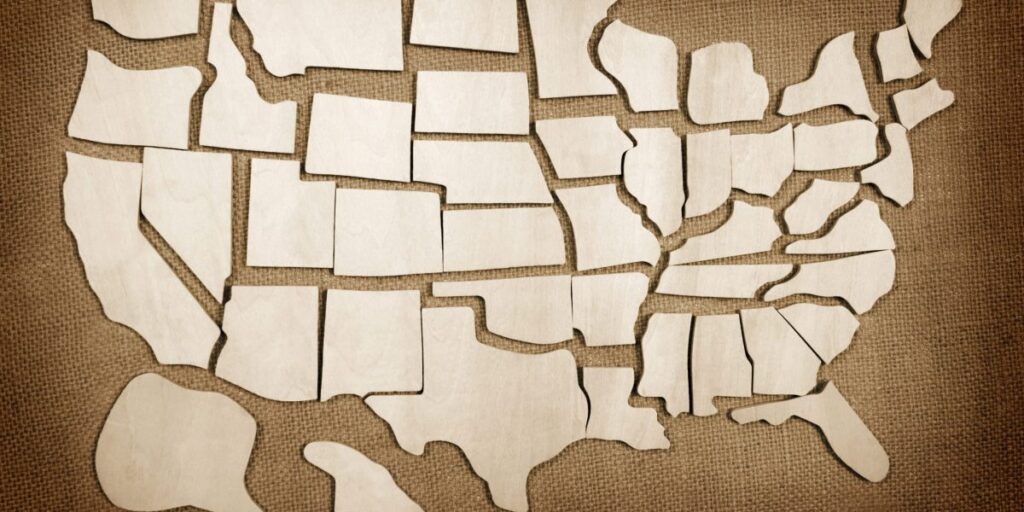
In recent social media posts on Sunday, Zandi detailed his assessment indicating that nearly a third of U.S. GDP is currently experiencing a recession or is at high risk of doing so. Another third remains stagnant, while the final third continues to grow.
“States experiencing recessions are spread across the country, but the broader D.C. area stands out due to government job cuts,” Zandi explained. “Southern states are generally the strongest, but their growth is slowing. California and New York, which together account for over a fifth of U.S. GDP, are holding their own, and their stability is crucial for the national economy to avoid a downturn.”
The Atlanta Fed’s GDP tracker currently indicates ongoing national growth, though projections suggest a slowdown to 2.3% in the third quarter from 3% in the second quarter.
State-Level Economic Status
- Recession/high risk (22): Wyoming, Montana, Minnesota, Mississippi, Kansas, Massachusetts, Washington, Georgia, New Hampshire, Maryland, Rhode Island, Illinois, Delaware, Virginia, Oregon, Connecticut, South Dakota, New Jersey, Maine, Iowa, West Virginia, District of Columbia*.
- Treading water (13): Missouri, Ohio, Hawaii, New Mexico, Alaska, New York, Vermont, Arkansas, California, Tennessee, Nevada, Colorado, Michigan.
- Expanding (16): South Carolina, Idaho, Texas, Oklahoma, North Carolina, Alabama, Kentucky, Florida, Nebraska, Indiana, Louisiana, North Dakota, Arizona, Pennsylvania, Utah, Wisconsin.
Last week, Zandi further emphasized his outlook, noting that Moody’s machine-learning-based leading recession indicator assigns a 49% probability of a recession within the next year.
While anticipated tax reductions and increased defense spending are expected to bolster growth, their effects are not projected to materialize until the following year. Zandi remarked that the economy’s baseline scenario is narrowly avoiding a recession, stating, “The economy will be most vulnerable to recession toward the end of this year and early next year,” he added. “That is when the inflation fallout of the higher tariffs and restrictive immigration policy will peak, weighing heavily on real household incomes and thus consumer spending.”
Employment Concerns
Zandi highlighted that with numerous economic threats looming, it would require minimal additional pressure to trigger a recession. He specifically mentioned the possibility of a selloff in the Treasury bond market, which could lead to a sharp rise in long-term yields.
Additionally, he pointed out that more than half of industries are already shedding workers, a trend historically associated with recessions.
Payrolls expanded by just 73,000 last month, significantly below the expected 100,000. Furthermore, employment figures for May and June were revised downward from 144,000 to 19,000 and from 147,000 to 14,000 respectively, reducing the average monthly gain over the past three months to only 35,000.
Zandi anticipates that future revisions may reveal an actual decline in employment numbers. “Also telling is that employment is declining in many industries. In the past, if more than half the ≈400 industries in the payroll survey were shedding jobs, we were in a recession,” he noted. “In July, over 53% of industries were cutting jobs, and only health care was adding meaningfully to payrolls.”