Rising Popularity of Living Christmas Trees in Wisconsin and Beyond
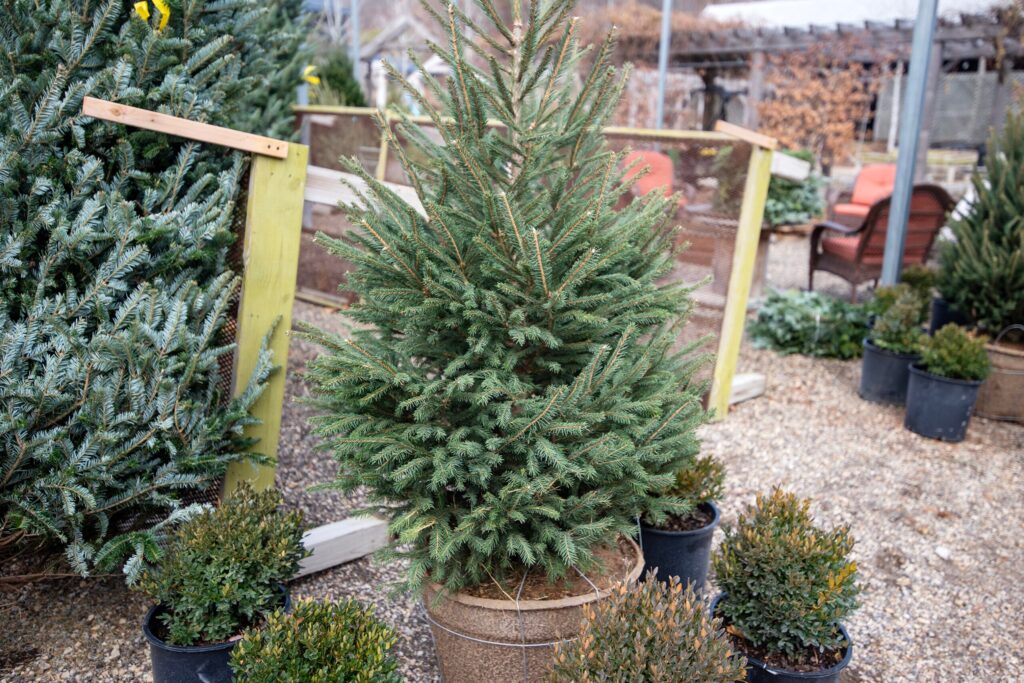
At Second Nature at Reads Creek, a plant nursery in southwestern Wisconsin, the holiday season is in full swing. While traditional 8- and 9-foot fir trees remain available, it’s the 5-foot potted spruce trees that are capturing the attention of eco-conscious consumers this year.
The nursery, owned by Dave Tubbin, has already sold 50 of these living Christmas trees even before the official start of the holiday tree sales in late November. Tubbin recalls the humble beginnings of this trend four years ago when a dozen leftover landscaping trees were set out for decoration. “People tried to buy them and I thought, ‘Gosh, we don’t even have a price on them,'” Tubbin said. “We had no idea that people wanted that. But as the demand continued to grow for it, we just kept bringing them in.”
The shift towards living Christmas trees is part of a larger trend embraced by consumers interested in sustainable holiday practices. According to NPR, this approach appeals to those who wish to minimize their environmental impact and beautify their surroundings after the festive season. Although potted trees have been around for two decades, Rick Dungey from the National Christmas Tree Association notes that their market share is still relatively small, and sales figures aren’t officially tracked.
For many, a living Christmas tree is seen as the greenest option in the debate over the environmental impact of holiday trees, surpassing both real cut trees and artificial ones. Bill Lindberg, a Christmas tree educator at Michigan State University Extension, explains, “You’re not generating any waste or byproduct. The tree is going back into the ground and then going forward, it’s going to conduct photosynthesis and capture CO2 out of the environment.”
The appeal of living trees extends to those looking to add evergreens to their property. Scott Powell, general manager of Dutchman Tree Farms in Michigan, reports increased interest among customers seeking smaller, space-efficient options. “A lot of folks don’t always want the 6- to 7-foot, larger tree, and so they’ll try the smaller ones,” Powell said. He noted the popularity of using living trees for various displays, including porch pots and other outdoor decorations.
In Texas, Douglas Hingst of Pipe Creek Christmas Tree Farm has sold living trees for 15 years, observing a steady rise in interest. Unlike traditional pines and firs, Hingst offers cypress trees better suited for Texas’s climate. He emphasizes the importance of choosing appropriate species based on local conditions, which influences a tree’s survival.
For those considering a living Christmas tree, practical considerations such as soil type, space, and planting conditions are crucial. In colder regions, like Wisconsin, Tubbin advises storing potted trees in a warm area to help them acclimate during winter. Regular watering is essential, especially when trees are indoors, and Tubbin suggests using a metal water trough as a drainage tray.
While living trees require some effort, such as handling their weight (Tubbin’s 5-foot spruces weigh around 150 pounds), the benefits of sustainability and the lasting memory of past Christmases continue to attract buyers. Next year, Tubbin plans to introduce a new tree species tailored for city dwellers with limited space, expanding the reach of this eco-friendly trend.
This story was produced in partnership with Harvest Public Media, a collaboration of public media newsrooms in the Midwest and Great Plains.