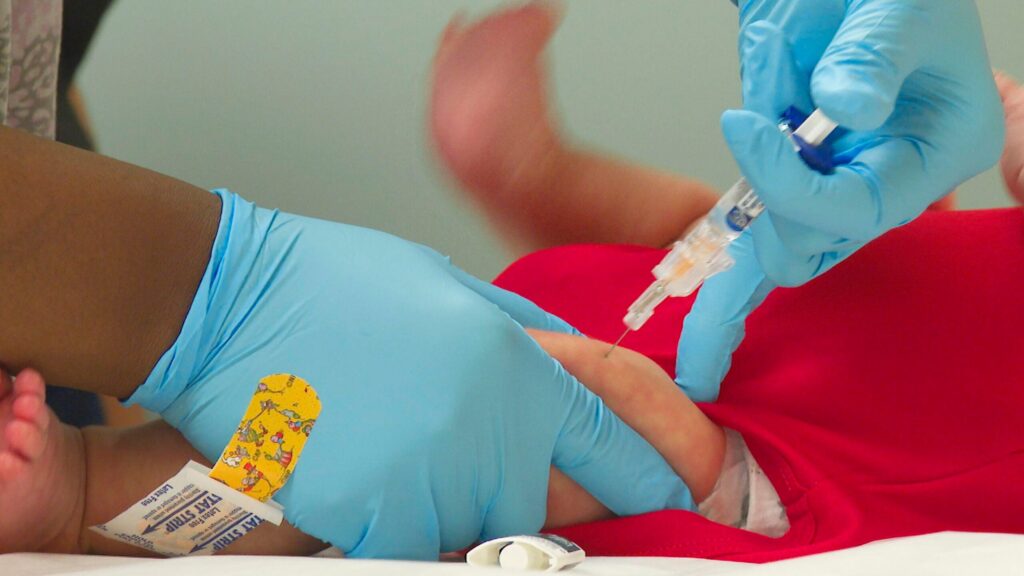
The potential revision in the federal hepatitis B vaccination guidelines for newborns is causing concern among health professionals in Wisconsin. The long-standing recommendation for infants to receive their initial hepatitis B vaccine dose immediately after birth could be altered, leading to potential confusion among families and healthcare providers.
For over three decades, the standard practice in the U.S. has been to administer the first dose of the hepatitis B vaccine to newborns at birth. However, the Advisory Committee on Immunization Practices recently suggested the Centers for Disease Control and Prevention (CDC) modify their guidance to focus on vaccinating infants only if their mothers test positive for the virus. For mothers with a negative or unknown status, the advice is to consult with their healthcare provider about vaccination.
According to the CDC, about half of those infected with hepatitis B are unaware of their status. Babies infected within their first year have a 90% risk of developing chronic conditions, which can result in liver failure or cancer. The American Academy of Pediatrics states that 25% of these infants may die from the disease.
Dr. Jonathan Temte, from the University of Wisconsin-Madison School of Medicine and Public Health, expressed that the recent vote wasn’t driven by new scientific insights and could negatively impact healthcare. He remarked, “This creates a great deal of confusion for parents, for clinicians, for public health providers, for vaccine managers.”
Dr. Margaret Hennessy, who leads the Wisconsin Chapter of the American Academy of Pediatrics, finds it misleading to imply that additional consent is needed before administering the vaccine. She emphasized, “Everything we’ve always done with vaccines has been shared decision-making. It’s always been that I’m recommending it, and the family then decides whether they do it.”
Hennessy warns that easing the universal vaccination guideline might reduce vaccination rates and increase hepatitis B cases, akin to the resurgence of diseases like measles. She noted, “The bottom line with all of this is we have seen children die in this country this year because of vaccine-preventable illnesses. I don’t want to see more of that.”
While the new recommendation doesn’t prevent families from vaccinating their babies, Maureen Busalacchi from the Wisconsin Public Health Association expressed concern that it might affect vaccine access. She stated, “(The CDC vaccine schedule) gives guidance to insurance companies and state governments in terms of what vaccine schedules should be, and in some cases, what’s paid for.”
Busalacchi also pointed out the imperfections of relying solely on virus screening, as mothers might contract hepatitis B after testing. “I think there’s a lot of frustration with this,” she said. “The science is clear. We know this saves infants from infection, and we need to keep the policy as it is.”