BOZEMAN — Scattered across tables at Montana Fish, Wildlife and Parks Region 3 Headquarters on Wednesday night were the decapitated heads of several deer. Attendees of the event aimed at educating the public about Chronic Wasting Disease (CWD) received expert guidance on lymph node removal for testing. CWD, a neurological disease affecting elk, deer, and moose, is caused by misfolded proteins called prions. It is neither a virus nor bacteria but a transmissible spongiform encephalopathy.
Prions spread through contact, feces, and bodily fluids. Contaminated soil can also infect animals. CWD is always fatal, and infected animals may spread the disease long before symptoms appear. No cure exists, and there’s no confirmed human transmission. The state invests heavily in combating this wild animal disease. “We have to respond pretty rapidly when we get a first detection because it’s probably been there for a while,” said FWP wildlife biologist Bevin McCormick.
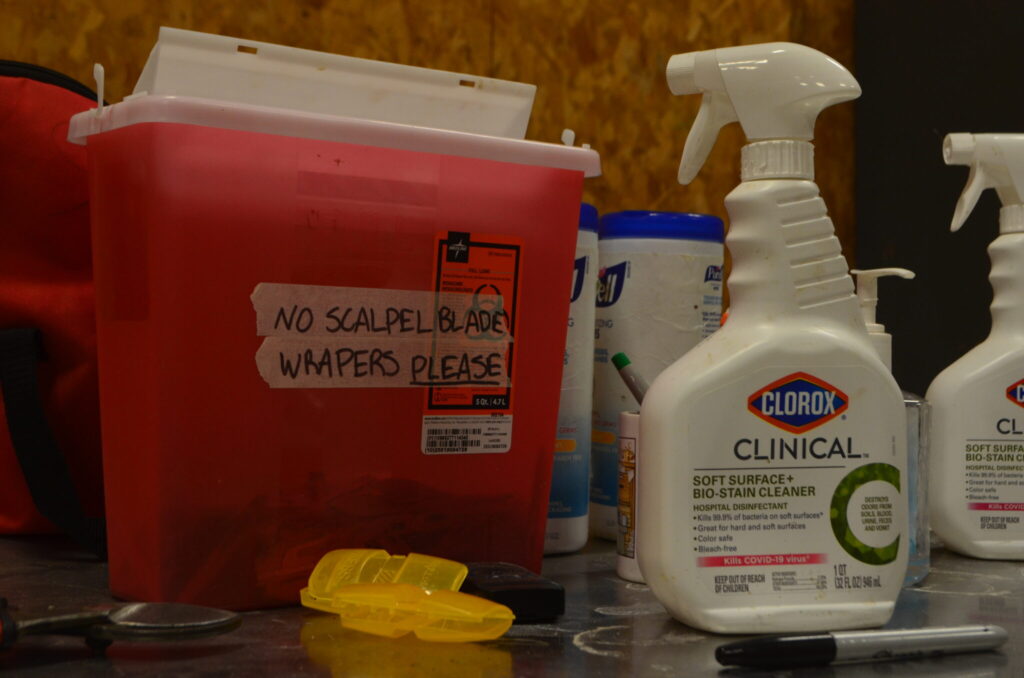
Meat from CWD-positive animals should not be consumed. Wednesday’s event demonstrated the ease of lymph node removal. Agency staffer Jasmine Allison showcased the procedure, providing attendees with tools for hands-on practice. Montana State freshman Candace Ashworth, interested in animal diseases, found the experience valuable, noting its relevance to her hunting activities.
The process is straightforward, as stressed by staff. Bringing a head to any FWP facility allows for gland removal, or samples can be mailed. Outlying offices may take days to return results, but the FWP headquarters offers quick turnaround due to proximity to testing labs. FWP encourages testing all animals, as symptoms aren’t always visible.
Allison emphasized the quick process: “Even if you did the whole process with us at one of our stations, 15 minutes, max.” Hunters help by leaving a few inches of neck, easing gland recovery. Lymph nodes feel distinct from surrounding tissue.
Chronic Wasting Disease is a growing issue in Montana, first confirmed in a deer in 2017. The state has implemented significant surveillance efforts. Beyond testing, an annual CWD report and updated disease maps are available. During the 2024-25 hunting season, nearly 10,000 deer, elk, and moose were tested, with 356 testing positive.
The disease has been found in 30% of Montana hunting districts, with seven new districts reporting cases last year. “The geographic distribution of CWD continues to expand and prevalences continue to increase statewide,” the report states. Some areas are CWD hotspots or priority sampling areas, such as around Libby, where management hunts have been tried. FWP advises disposing of animal remains in class 2 landfills to prevent prion contamination in water tables.
While CWD is not a major threat to cattle, other wild animal diseases are. A 2018 University of Wyoming study indicated low risk of CWD transmission to cattle from contaminated environments.
CSKT awaiting confirmation on CWD test
Tribal authorities announced Thursday that a second CWD case awaits confirmation from a white-tailed deer on the Flathead Indian Reservation. CSKT’s Division of Fish, Wildlife, and Recreation and Conservation is awaiting results from a second lab. A confirmed positive result was found in January. “Our goal is to protect the community and prevent further spreading within our Reservation,” said Rich Janssen, Natural Resources Department Head. “Tribal hunters need to be testing their harvests.”