Federal Judges Mandate SNAP Funding Amid Government Shutdown
In a decisive move on Friday, two federal judges in Massachusetts and Rhode Island ordered the Trump administration to continue financing the Supplemental Nutrition Assistance Program (SNAP) during the ongoing government shutdown. This decision comes just as the U.S. Department of Agriculture (USDA) was poised to halt the program’s payments citing funding limitations.
The judges granted the administration the discretion to determine whether SNAP should be funded entirely or partially for the month of November. SNAP, a critical component of the U.S. social safety net, supports approximately 1 in 8 Americans, costing around $8 billion monthly.
Democratic officials from 25 states along with the District of Columbia opposed the plan to suspend SNAP, arguing that the administration is legally obligated to maintain the program’s operation. They contended that existing contingency funds, amounting to $5 billion, along with an additional $23 billion, should be utilized to sustain SNAP.
U.S. District Judge John J. McConnell in Providence, Rhode Island, ruled that the program must at least be supported by contingency funds, requiring an update on the situation by Monday. Furthermore, McConnell stipulated that previous waivers exempting certain groups from work requirements should remain effective.
Skye Perryman, president and CEO of Democracy Forward, commented, “The court’s ruling protects millions of families, seniors, and veterans from being used as leverage in a political fight and upholds the principle that no one in America should go hungry.”
In a parallel case in Boston, U.S. District Judge Indira Talwani ruled that halting SNAP payments was “unlawful,” requiring the USDA to provide funds using available resources. She mandated an update from the government on whether they will implement partial or full funding for November.
Questions linger about the time required to reload SNAP beneficiaries’ debit cards, a process that typically spans one to two weeks. The administration’s decision may undergo appeals.
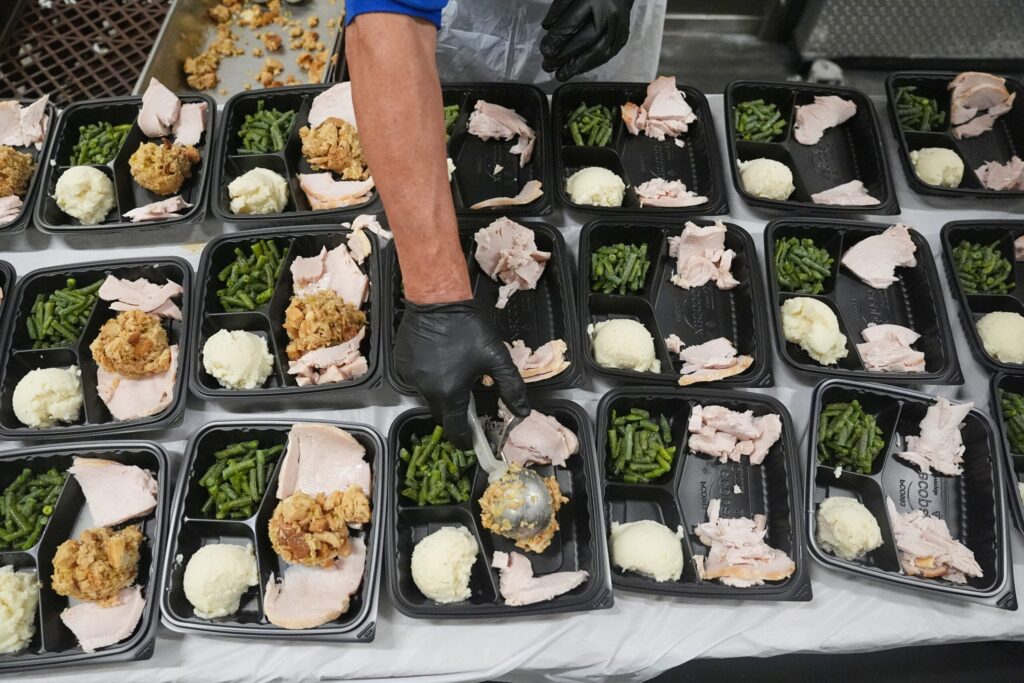
States, food banks, and SNAP recipients have been preparing for potential disruptions in food aid delivery, with some states offering additional or expedited funding for food banks.
At a Washington press conference, USDA Secretary Brooke Rollins cautioned that contingency funds are insufficient for sustained SNAP operations, criticizing Democrats for prolonging negotiations over health care funding.
Efforts to secure SNAP funding amid the shutdown stalled in Congress. Eligibility for SNAP in 2025 requires a family of four to have a net income below $31,000 annually, with nearly two-thirds of the program’s 41 million beneficiaries being families with children.