Spring 2025 Job Market Forecast: Challenges and Adaptations
As the spring 2025 class anticipates entering the workforce, projections from the National Association of Colleges and Employers (NACE) indicate a downturn in hiring. This comes after a tumultuous period for graduates from 2020 and 2021, who faced challenging job markets during the peak of the COVID-19 pandemic. However, 2022 saw a robust recovery, improving employment rates across the board.
Despite the pandemic’s impact on employment, the job market did not suffer as severely as it did during the Great Recession. Yet, significant changes are occurring, particularly in white-collar sectors. Federal worker layoffs have introduced a wave of experienced professionals into the job market, increasing competition for new graduates. “Of course, when you have an influx of new entrants, that is going to be competition for new graduates,” notes VanDerziel.
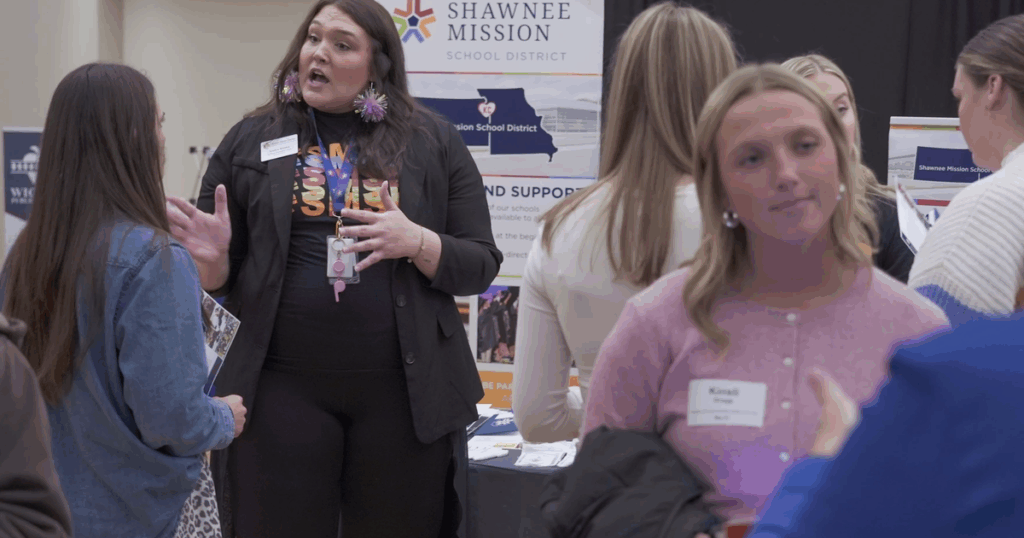
In response, higher education institutions are proactively adapting. Many universities now offer career coaching from the first semester of freshman year, equipping students to handle a competitive job landscape. Planning for various outcomes is essential in such a market.
Angi McKie, assistant provost and executive director at the Pomerantz Career Center at The University of Iowa, highlights the need for proactive strategies. “This is something we talk about quite often when either a student is trying to get into a job that is extremely competitive, or even a graduate program that is extremely competitive,” McKie explains. Instead of waiting for rejection before pivoting strategies, students are encouraged to develop multiple plans simultaneously.
McKie emphasizes the importance of personal connections and varied experiences, including research, volunteer work, part-time jobs, and campus activities, to stand out. Personal networks can also mitigate the risk of being ignored by potential employers during the application process, a situation some describe as a “humiliation ritual.”
“But once you’ve followed up a couple times, if you’re not hearing back, it’s time to move on again,” McKie advises. “Don’t take it personally. You are going to find that job that you’re looking for.”
Economists’ Perspective on Job Market Dynamics
Eric Thompson, a professor of economics at The University of Nebraska-Lincoln, advises not to overemphasize recent fluctuations in unemployment rates among new graduates. He points out that young graduates are often in a phase of finding the right career match, which can lead to more frequent job changes and periods of unemployment. “Young grads are in a period where they’re selecting their career match,” Thompson states. “Anytime you’re changing jobs more often, you’re going to be more likely to experience periods of unemployment.”
Despite the current challenges, Thompson remains optimistic about the underlying strength of the economy, suggesting that while graduates may face hurdles, the broader economic fundamentals offer a stable foundation for future growth.