Late Frosts Drive Bears into Human Habitats
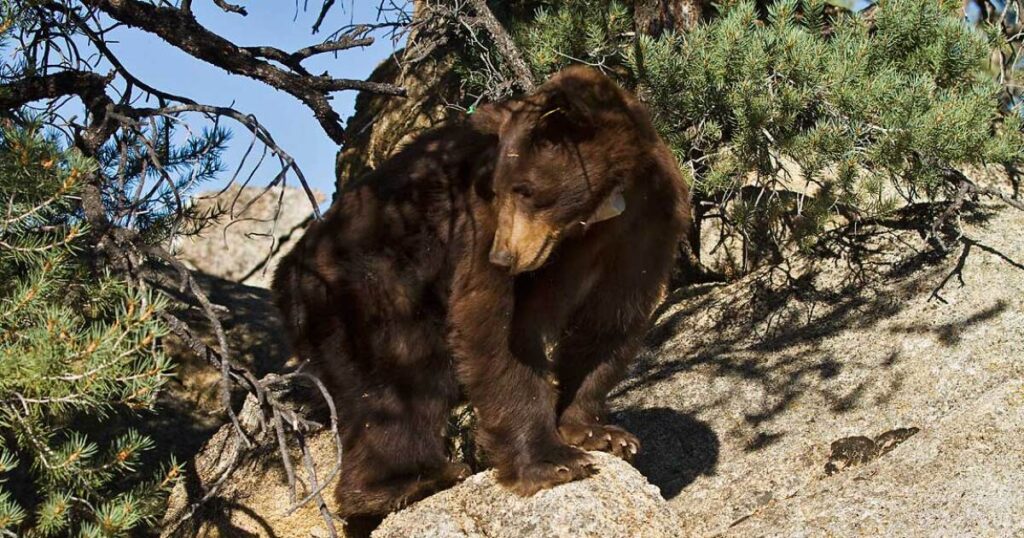
The serene mountain towns of Sierra Nevada are witnessing an unusual visitor influx — hungry black bears. A recent study conducted by the University of Nevada, Reno (UNR), highlights the significant impact of late frosts on the region’s wildlife, particularly black bears.
The comprehensive research assessed data collected from over 500 black bears captured between 1998 and 2022. Findings reveal a concerning trend: during years when late frosts occur, there is a marked increase in encounters between humans and bears. Notably, one particular year saw bear-related complaints surge to approximately 1,500, a figure threefold the normal rate.
According to Kelley Stewart, a wildlife ecologist at UNR and co-author of the study, “When the frost hits late, it kills the whole food crop up there. So what happens is a loss of natural foods. And then the bears start looking.” This loss of natural food sources such as berries, acorns, and pine nuts compels bears to venture into human settlements in search of sustenance.
Heather Reich, another co-author of the study, emphasizes the need for ongoing bear monitoring and public education to assist wildlife managers in predicting and mitigating potential conflicts. “We’re getting a lot of human-bear conflicts increasing everywhere, and this is just one more trigger of that conflict,” she remarked. Reich also noted that bears causing minor disturbances during these lean years should not immediately be deemed “problem bears,” as they are often merely trying to survive under challenging conditions.
The research team hopes that their insights will aid communities in better preparing for difficult seasons and foster a more understanding approach towards bears that wander into populated areas in search of food.
This article was produced by the Mountain West News Bureau, a collaboration between KUNR, Wyoming Public Media, Nevada Public Radio, Boise State Public Radio in Idaho, KUNC in Northern Colorado, KANW in New Mexico, Colorado Public Radio, KJZZ in Arizona, and NPR, with additional support from affiliate newsrooms throughout the region. Funding for the Mountain West News Bureau is partly provided by the Corporation for Public Broadcasting and Eric and Wendy Schmidt.