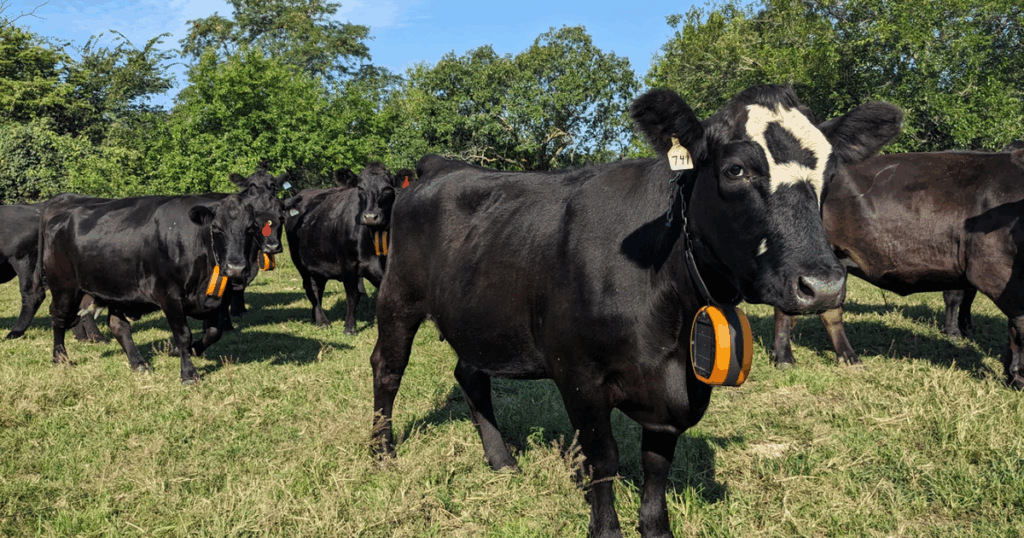
Virtual fencing technology is revolutionizing cattle management by enabling ranchers to focus grazing on areas with fire-prone vegetation, thereby mitigating wildfire risks, according to Burnidge. This innovative approach also provides ranchers the agility to swiftly relocate cattle in response to natural disasters such as wildfires and floods.
Despite the advantages of virtual fencing, Burnidge highlighted the necessity for maintaining physical barriers along roads, railways, and residential areas. These physical structures remain vital, even as virtual fencing reduces the requirement for interior fences that can impede the natural movement of wildlife, such as pronghorn and elk.
Innovative Ranching in the Flint Hills
In the eastern Kansas region known as the Flint Hills, which represents the largest surviving expanse of tallgrass prairie in North America, Daniel Mushrush and his family are incorporating virtual fencing into their ranching practices. Since 2022, they have been part of an initiative led by The Nature Conservancy.
Mushrush, who was motivated by the potential for more precise ranching methods, recalled his time at Kansas State University during the early 2000s. This period coincided with the emergence of precision agriculture for crops like corn and soybeans, sparking his interest in agricultural technology.
“A lot of my college friends were doing things with ag technology on corn and soybeans. It just, quite frankly, made me jealous,” Mushrush remarked.
One of the primary advantages Mushrush attributes to virtual fencing is the increased flexibility and time savings it offers, particularly during the calving season.
“I used to calve in about 1,000 acres of grass in the fall herd, and it would take me about 20 to 25 miles on a four-wheeler a day,” Mushrush stated.
Utilizing virtual fencing, Mushrush can now more effectively manage herd boundaries and accommodate individual cows post-calving. This adjustment has reduced his daily monitoring time from several hours to just thirty minutes.