This story was produced and originally published by WPR and Wisconsin Watch.
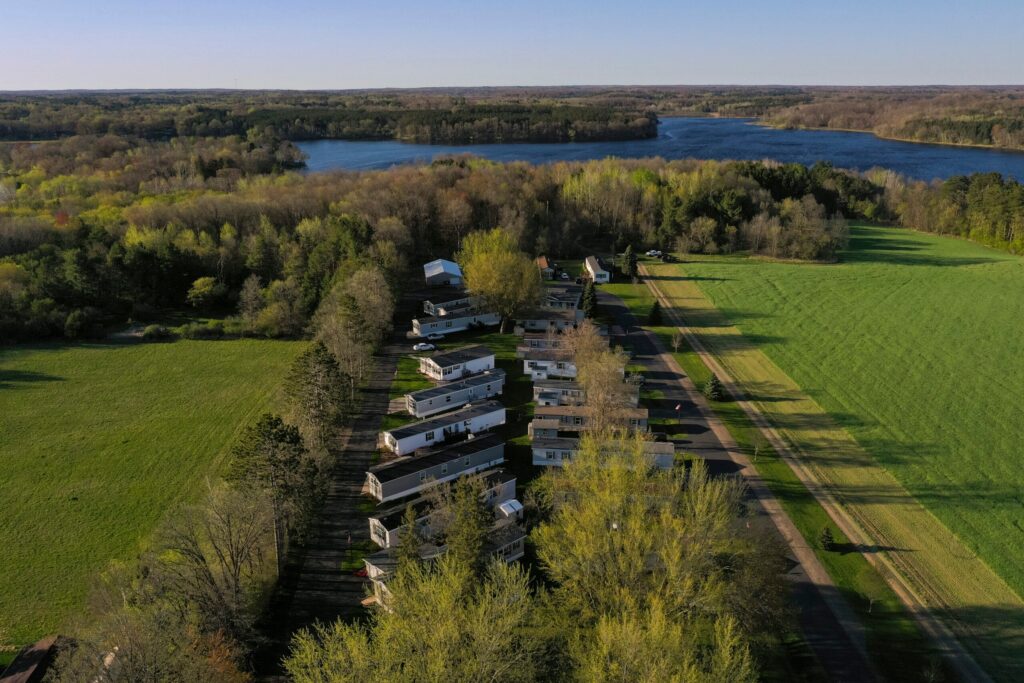
Amid the rolling lawns of Cedar Falls Acres near Menomonie, Wisconsin, Vikki Braker finds solace in the vibrant decorations adorning her porch. The silhouettes of children and whimsical ants, all under the gaze of a Green Bay Packers hat-clad tree, paint a picture of home. Yet, beneath the tranquility, uncertainty brews over who will soon own this cherished plot of land.
For almost 50 years, Braker has lived in this manufactured home community, a term more precise than the colloquial “mobile homes.” Her worries stem from the fact that while she owns her home, the land it rests on is not hers. Instead, management changes loom as the park’s longtime owner, Vince Hague, plans to sell.
Hague’s impending retirement has sparked anxiety among residents like Braker, given the rising trend of private equity firms purchasing parks like Cedar Falls Acres. Such sales often lead to increased lot rents and neglected maintenance. This has led some residents to consider buying the park and converting it into a cooperative.
Challenges of Forming a Cooperative
Braker and her husband Roger originally moved to Cedar Falls Acres seeking affordability. “We never did buy a house,” she said. “We were always very comfortable here.” However, the current situation forces her to ponder whether they should have pursued traditional homeownership.
The concept of forming a cooperative appears appealing but is fraught with complexities, especially in Wisconsin. Residents would need to form a limited equity co-op, which involves paying a small fee to secure ownership without profiting from future land value increases.
Victoria Clark-West, Executive Director of CoNorth, a nonprofit aiding in the development of such co-ops, notes that while initial costs can rise, residents typically face lower annual rate increases compared to commercially owned parks. CoNorth is already in discussions with Hague about a potential resident purchase.
State Incentives and the Cooperative Model
Despite the challenges, co-ops provide residents control over their community’s future. However, Wisconsin lags behind neighboring Minnesota in supporting such transitions. Minnesota offers tax incentives and grants that make co-op purchases more viable, whereas Wisconsin has no comparable measures.
Steve Parliament, who helped form the Countryside Park Cooperative, highlights the crucial role of community action in these efforts. The cooperative model not only stabilizes housing but also fosters a sense of community, counteracting the growing loneliness epidemic.
For Braker and her neighbors, the decision to form a co-op remains daunting. Still, the potential for self-governance and stability might prove a compelling antidote to the uncertainties of private ownership.