The University of Michigan Explores Deeper Geoexchange Technology for Sustainable Campus Solutions
The University of Michigan is pioneering a new frontier in sustainable energy by integrating advanced geoexchange technology to enhance heating and cooling systems on its campus. This initiative involves a novel approach using oil and gas drilling methods to create a more efficient closed-loop system beneath the Earth’s surface.
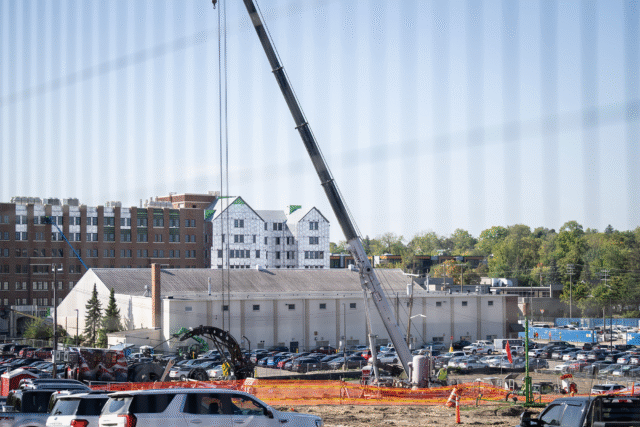
In a groundbreaking move, crews are drilling a test borehole reaching depths of 1,600 feet, equivalent to more than four football fields in length. This depth is twice that of typical geoexchange bores, which usually measure around 800 feet. By conducting this test, engineers aim to analyze subsurface conditions and system performance, offering valuable insights as the university strives to enhance its sustainable energy infrastructure.

“With this project, the University of Michigan is not only investing in renewably powered, highly efficient heating and cooling technologies, but also exploring innovative approaches that could accelerate our long-term energy transition efforts,” stated Shana Weber, associate vice president for campus sustainability. “If successful, the approaches we’re testing today are poised to inform similar efforts locally and across the country.”
Geoexchange systems differ from traditional fossil fuel methods by using ground-sourced heat pumps that capitalize on the Earth’s stable underground temperatures for heating and cooling. These closed-loop systems conduct heat via sealed piping, making them efficient and environmentally friendly. During warmer months, excess heat is stored underground, while in colder periods, this stored heat is utilized for efficient heating.
These systems showcase superior efficiency compared to conventional methods, aligning with the university’s goals for carbon neutrality and energy efficiency. Calculations for each project’s performance are made during their respective design phases.
Emphasizing their eco-friendly nature, geoexchange systems significantly reduce natural gas reliance and water usage compared to traditional cooling towers, thereby promising improved air quality and water conservation across the campus.
The ongoing borehole test will provide critical data on the thermal energy performance at greater depths, potentially unlocking even higher efficiency levels. Anticipated for later this fall, test results will guide future geoexchange implementations on campus.
“The test well gives us critical data to understand the limits and potential of deeper geoexchange boring technologies to support our long-term carbon neutrality goals. It reflects our role as a living learning laboratory, testing real-world solutions and sharing what we learn,” said Geoff Chatas, executive vice president and chief financial officer.

It’s essential to distinguish between “geothermal” and “geoexchange.” While geothermal systems generate electricity from Earth’s geothermal hot spots, geoexchange utilizes near-surface rock layers’ stable temperatures for heating and cooling. The University of Michigan’s systems are closed-loop, ensuring no groundwater contamination.
This latest test adds to the university’s existing geoexchange initiatives, such as the Hayward Street system with its 99 bores and the Ginsberg Building system. Both current projects and upcoming ones, like the Central Campus residential development, aim for LEED Platinum certification, partly due to these geoexchange systems.
Together, these projects contribute to the University’s long-term goal of an all-electric campus as part of Campus Plan 2050. The shift to efficient, electric-driven geoexchange systems powered by renewable energy is a strategic move to reduce fossil fuel dependency. Its efficiency in transferring heat makes it ideal for a campus with diverse energy demands.
“Sustainability is critically important for our students and campus community,” said Kambiz Khalili, associate vice president of student life. “We strive to design and construct buildings that meet the needs of current and future Wolverines. Partnering across campus units allows our buildings to be at the leading edge of efficiency and sustainability, to meet the moment and encourage others to look to Michigan for solutions.”
The effort embodies U-M’s commitment to sustainability, fostering innovation in campus planning, research, and operations. This initiative serves as a hands-on learning platform for students, faculty, and staff, showcasing real-world applications of advanced energy solutions.
Walbridge, a Michigan-based construction and engineering company, is executing the borehole test with CUDD Pressure Control.