Wisconsin Takes a Stand: COVID-19 Vaccine Access Without Prescription
As vaccine hesitancy grows nationwide, Wisconsin has made a bold move to ensure its citizens have access to the COVID-19 vaccine. A statewide standing medical order now allows pharmacists to administer the vaccine without a prescription, challenging recent federal recommendations.
Wisconsin’s chief medical officer, Ryan Westergaard, emphasized the state’s commitment to public health. “We’ve issued a statewide standing medical order that allows pharmacists to provide the COVID-19 vaccine to those who want it, without requiring a prescription from a clinical provider,” he explained. This decision comes in response to a federal vaccine panel’s recent choice not to recommend COVID-19 vaccination for all Americans. To support this initiative, the state’s commissioner of insurance has advised health plans to cover the cost of the vaccine.
Westergaard expressed concern about federal policy shifts, stating, “In the past, our nation’s medical associations and our nation’s federal health agencies who review the same data have issued recommendations that align with one another. Today, that’s not the case.” He warned that these decisions could restrict vaccine access, despite scientific evidence showing vaccines reduce illness, hospitalizations, and fatalities.
Contested Pipeline Reroute Raises Tribal Concerns
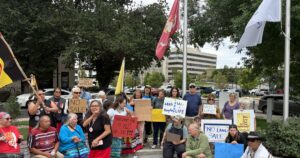
In northern Wisconsin, a contentious debate unfolds over the proposed reroute of an oil pipeline near tribal lands. The Bad River Band of Lake Superior Chippewa is challenging permits issued by the Wisconsin Department of Natural Resources to Enbridge Energy Inc. for a 41-mile reroute of Line 5.
During public hearings, tribal chairman Robert Blanchard voiced concerns about the environmental impact on over 100 acres of wetlands, including vital hunting and fishing grounds. “The reroute is going within the ceded territories of the band. And impact is going to be over 100 acres of wetlands, which, you know, will get disturbed,” Blanchard emphasized. The tribe argues that rerouting the pipeline merely shifts risks upstream, threatening their way of life, which relies heavily on natural resources.
Enbridge, however, maintains that the pipeline is crucial for energy supplies in the Midwest and Great Lakes regions. Jennifer Smith, director of U.S. tribal engagement for Enbridge, stated, “Line 5 is critical for supplying the energy that our Midwest, Great Lakes regions all rely on.” She highlighted the company’s commitment to safety and environmental protection, explaining that Enbridge continuously monitors the pipeline’s integrity.
Building Bridges: College Students Seek Civil Discourse
Amid heightened political tensions, college students at BridgeEauClaire are striving to foster meaningful dialogue. The group, part of BridgeUSA, encourages open discussions on polarizing topics, promoting understanding across diverse perspectives.
Adam Kunz, a political science professor and faculty advisor for the group, described it as “the anti-debate club,” emphasizing that the goal is to understand rather than to win arguments. He noted that Gen Z students are eager for real connections but often lack the skills to engage in civil discourse due to online harassment fears.
Kunz observed, “They want a social situation. They want to find a community, but they’re so used to being targeted or trolled online, they’re scared to express their opinions.” By offering a safe space for discussion, groups like BridgeEauClaire help students develop social skills and foster genuine dialogue.
State Employees: Remote Work Debate Heats Up
In state government news, a debate over remote work policies for Wisconsin state employees is underway. Republican Representative Amanda Nedweski has introduced a bill requiring state employees to return to the office, citing concerns over efficiency and accountability.
Nedweski argues, “It’s been five years since this temporary solution to the COVID response was instituted… It’s become sort of a permanent solution to what was a temporary problem.” However, Democratic Representative Mike Bare contends that remote work has been effective and cost-efficient, allowing state employees to live in less urban areas and saving on office space costs.
As the debate continues, both lawmakers acknowledge the need to address cybersecurity concerns and the potential impact on hiring and retention. The bill has passed the Assembly but faces an uncertain future, with Governor Tony Evers likely to veto it.