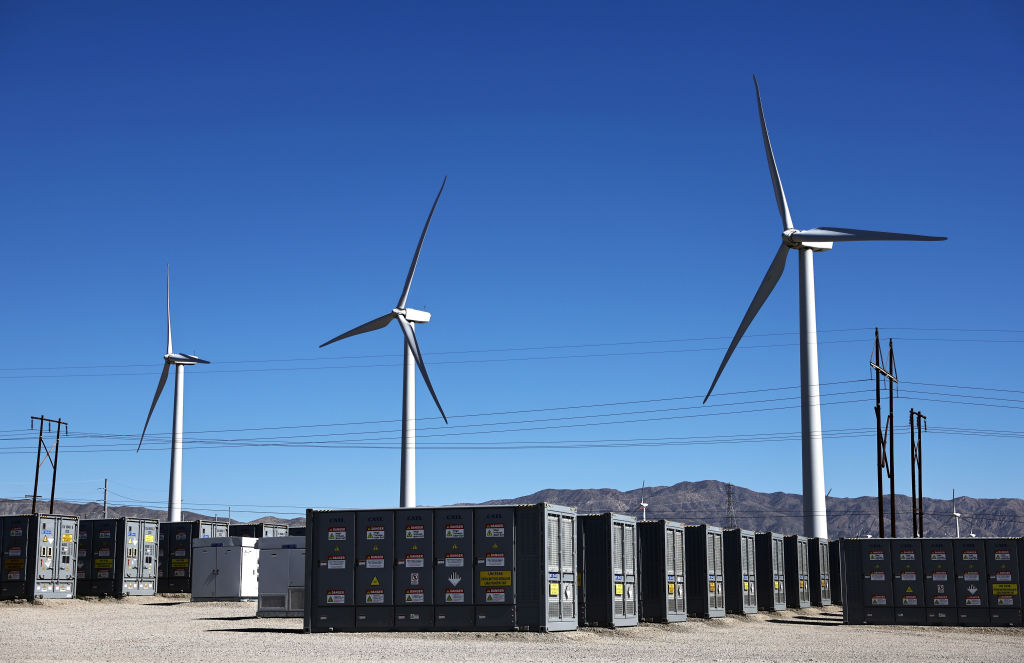
SNOQUALMIE, Wash. — As states and utilities push to meet growing power needs, “battery farms” are emerging as a crucial solution. These facilities, essential for energy storage, hold banks of batteries in large setups to support local utilities. However, increasing community opposition highlights safety concerns.
The rise of lithium-ion battery energy storage systems (BESS) is notable, with capacity exceeding 50 gigawatts nationwide. This is projected to double by 2028, driven by state lawmakers and renewable energy advocates who emphasize the importance of battery storage for grid stability and clean power transition.
Despite their benefits, battery storage systems face resistance due to fears of battery fires and toxic smoke. Nearly 200 communities have enacted or proposed moratoriums to block such projects. Industry proponents argue that modern battery systems are safer, but community activism, fueled by data center expansions, poses a challenge to this growing sector.
‘Meteoric growth’
Battery energy storage systems (BESS) dominate U.S. energy storage, leveraging cost-effective lithium-ion technology. The current storage capacity is over 50 gigawatts, up from 5 gigawatts in early 2022, with another 54 gigawatts planned in the next two and a half years. This could power 75 million homes, though battery farms provide electricity for just a few hours.
Noah Roberts, of the U.S. Energy Storage Coalition, notes the growth is crucial for decarbonizing the grid. Batteries store excess solar energy, reducing reliance on costly gas plants during peak demand. Texas and California, despite political differences, lead in battery projects due to their significant wind and solar energy production.
Battery farms can be quickly deployed, addressing power supply crises. Roberts emphasizes energy storage as an efficient solution, supported by state policies mandating energy storage targets.
Community concerns
While battery farms offer grid benefits, some communities oppose them due to fire risks. The Moss Landing Power Plant fire in 2025, releasing toxic metals, heightened fears. Lithium-ion batteries can cause thermal runaway, a difficult-to-extinguish reaction. Activists are concerned about battery farms near schools and playgrounds.
Industry leaders argue that modern safety standards have reduced fire risks. The Electric Power Research Institute reports a 97% decline in battery system failures since 2018, thanks to improved design and isolated, modular container storage.
Despite these improvements, some communities, like Snoqualmie, Washington, oppose local projects, fearing worst-case scenarios. Developers like Jupiter Power seek state approval to bypass local objections, citing proximity to substations as necessary.
Kelsey Nyland of Clean and Prosperous argues for clean energy growth, noting that Washington state lags despite climate goals. Battery storage could help utilize wind and solar power from rural areas. However, local activists prefer remote siting to minimize risks.
Industry leaders stress proximity to population centers for efficiency. Carina Energy has documented 175 battery farm moratoriums, with some being temporary to allow for community education. Developers are encouraged to engage early with communities to address concerns.