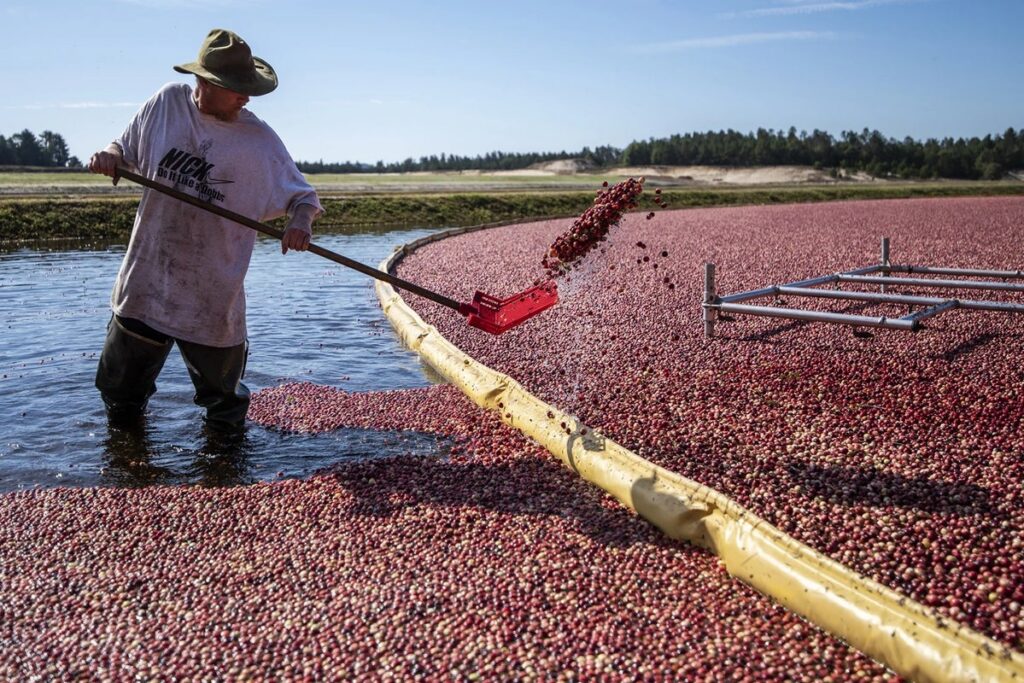
As autumn concludes, Rochelle Hoffman is preparing her cranberry marsh in western Wisconsin for the winter season. The perennial vines, which have just completed their harvest, will be protected with a layer of ice to shield them from the harsh winter conditions.
“The bud for next year is already on the vines right now, which is pretty exciting, and a little stressful because you want to make sure that you are protecting those for your crop for next year,” said Hoffman, a fifth-generation cranberry grower.
Cranberries are a popular feature on American holiday tables, presented as fresh berries or in sauce form. However, this year, cranberry yields in the Midwest are expected to be lower than average due to adverse weather conditions.
Grant Holley, executive director of the Wisconsin State Cranberry Growers Association, highlighted hail as the primary challenge for growers this season. Wisconsin, which produces about 60% of the U.S. cranberry supply, experienced an unusually prolonged hail season. “We have never seen hail come in as early as it did this year and stay as late as it did this year,” Holley noted.
The critical flowering stage in June, when vines are most susceptible, coincided with severe hail events in Wisconsin over the past two years, Holley said. Furthermore, smoke from Canadian wildfires in 2025 impaired bees’ pollination activities.
“As our bees were dodging hail, they were also not really happy with the smoky air at the same time,” Holley explained, recognizing that the decreased crop yield was anticipated by many growers.
Randy Forster from Minnesota Cranberry Company remarked on the unpredictability of weather impacts on cranberry agriculture. “The cranberry industry is trying to have hardier vines, more resistance to this and that, but it doesn’t always work according to the theories,” Forster stated.
Forster’s marsh is still healing from a past warm spell during winter that reduced its protective ice covering, exposing vines to freezing damage.

Increased Costs Hit Cranberry Producers, Too
The reduced harvest coincides with rising costs for essential supplies like diesel fuel, fertilizers, and farm equipment. A recent initiative by the Trump administration proposed an $8 billion Harvest Fuel Relief program, but specialty crops like cranberries are required to submit data on fuel costs to be considered.
For Forster, the steadiness of cranberry prices provides a financial buffer despite rising costs. Hoffman expressed concern over increasing production expenses, noting higher charges from her cranberry transportation company due to diesel price surcharges.
Despite these hurdles, Hoffman and Forster are optimistic about the cranberry industry’s future, fueled by research into the health benefits of cranberries. Studies suggest that cranberry products may help reduce the risk of urinary tract infections, and might enhance antibiotic efficacy against H. pylori, a bacterium linked to stomach issues.

Hoffman sees potential for cranberries to shed their seasonal association and find a place in year-round consumption. “I welcome the Thanksgiving pictures and the ‘gelled cranberry sauce versus whole berry sauce’ debate,” she said. “But I also think that we have a really great opportunity to be using cranberries kind of throughout the year in a lot of different ways.”
This story was produced in partnership with Harvest Public Media, a collaboration of public media newsrooms in the Midwest and Great Plains. It reports on food systems, agriculture and rural issues.