Davidson College Embraces Solar Energy with New Parking Canopy
The future of sustainability is shining brightly at Davidson College, where a new solar-powered canopy is helping to reduce the institution’s carbon footprint.
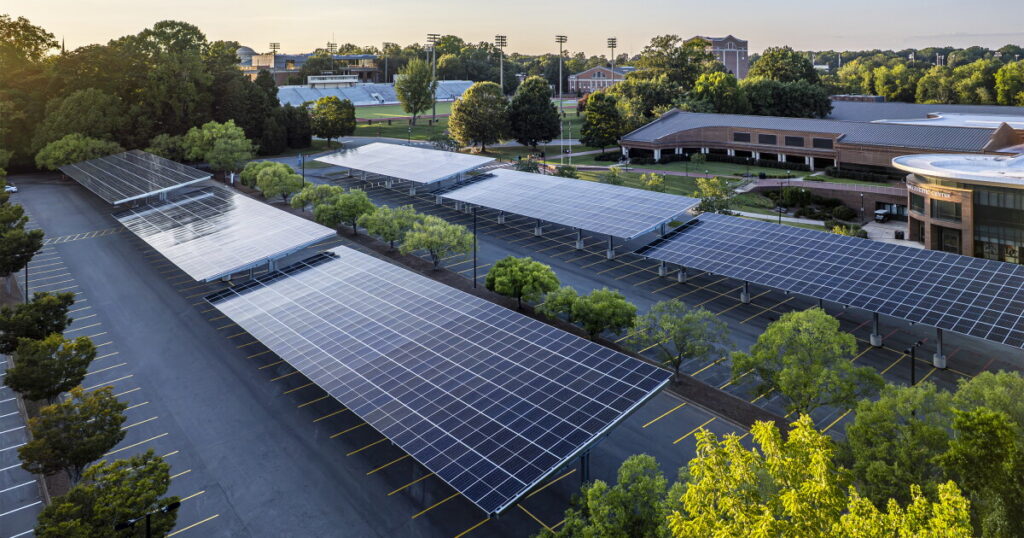
Strategically located at the heart of the campus, the $4.7 million solar canopy covers the parking lot of the Baker Sports Complex. According to Yancey Fouché, Davidson College’s sustainability director, this installation serves a dual purpose: generating renewable energy and educating the public. “This is a unique opportunity for folks to actually see power being produced,” Fouché explained.
Davidson College’s commitment to sustainable energy doesn’t stop there. The institution is also a stakeholder in the Sebree Solar II Energy Center, a 150-megawatt solar farm in western Kentucky. Together, these initiatives are set to significantly reduce the college’s greenhouse gas emissions.
On a single day, October 18, the solar canopy produced 4.28 megawatt-hours of energy, sufficient to power an average North Carolina home for over four months. This aligns closely with the energy needs of the college’s newly renovated library, as Fouché pointed out.
With a development timeline of about five years, the college expects to benefit from a 30% tax credit on the project. The remaining costs are anticipated to be offset by energy savings well before the panels reach the end of their 25-year warranty period. Fouché optimistically stated, “I think the reality is we’ll actually pay them off much sooner than that based on what we’re seeing coming down the pike with utility cost increases.”
The innovative nature of the project presented its own set of challenges. However, having completed this first solar canopy, Davidson is now better equipped to consider future installations. Yet, state-level regulations impose a cap on the electricity non-utilities can generate, limiting it to 1 megawatt. Davidson’s current installation is already at 75% of this capacity.
“If we wanted to go above 1 megawatt, we would have to work through the process to actually become our own utility,” Fouché noted. For now, this is not a path the college intends to pursue. More information about these regulations can be found here.