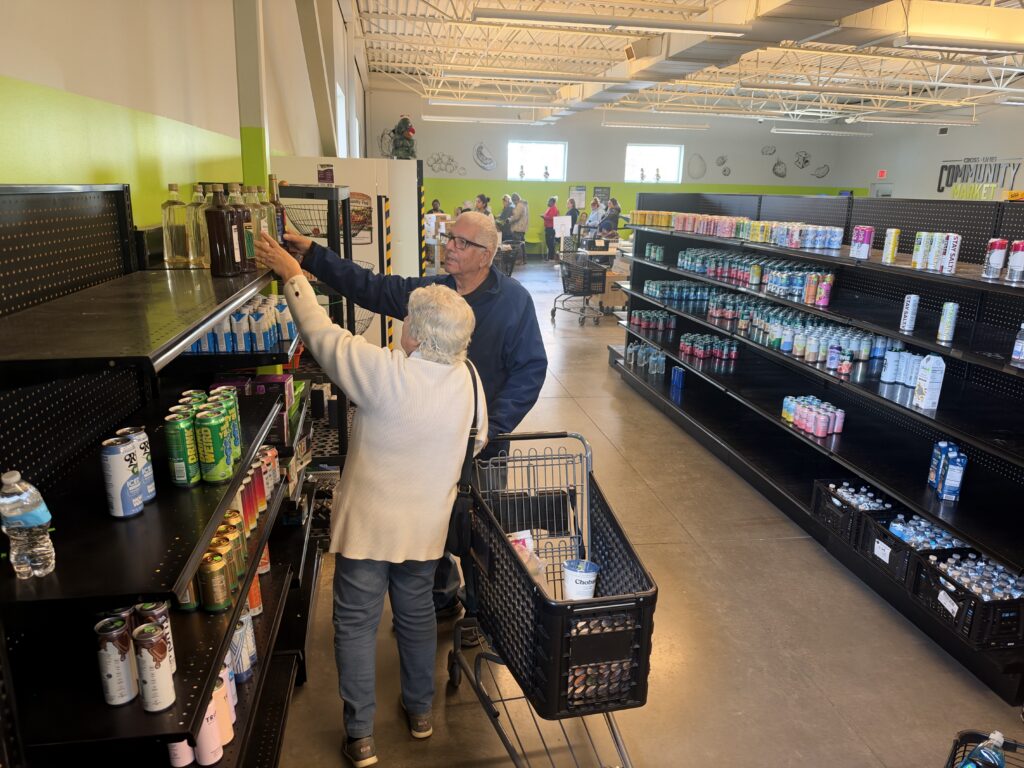
KANSAS CITY, Kan. — At Cross-Lines Community Outreach, lines form quickly as more individuals visit the nonprofit food pantry to fill their cupboards. Two days before Thanksgiving, Andreas Leal and his wife checked out the nearly empty meat freezer and assorted toiletry donations. Leal, a 75-year-old retiree, expressed how challenging it is to manage with soaring prices.
“It’s very expensive,” he said. “Everything is expensive right now.” Leal’s monthly Social Security struggles to match rising costs. Although federal benefits increased by 2.8% this year, his property tax is set to rise by 30%, costing him an additional $600. Such increases force difficult choices; the couple avoids visiting their son to save on gas.
Cross-Lines leaders note that such stories are increasingly common. Their Community Market, modeled like a grocery store, aids around 1,900 families monthly — a 35% increase from the previous year. “Daily, we have to turn people away,” said Executive Director Susila Jones.
The market had aimed to provide frozen ground beef monthly, but rising costs compel them to opt for ground turkey or chicken when prices allow. Serving Wyandotte County, a populous Kansas area with a high poverty rate, the pantry has relaxed income requirements, welcoming those seeking aid from various organizations.
The rising costs of groceries, housing, and gas have driven more people to seek emergency food assistance. Concurrently, many Americans have lost Supplemental Nutrition Assistance Program (SNAP) benefits, the nation’s largest food aid program. About 5.5 million Americans lost SNAP benefits following the One Big Beautiful Bill Act, which revised eligibility rules, removed work requirement exemptions, and transferred new costs to states.
‘A huge demand’
In Detroit’s East Side, cars lined for a mile waiting for Thanksgiving dinner ingredients. The Capuchin Soup Kitchen closed early, quickly exhausting 500 turkey meal kits. “If we had 750, we still would have to shut the line down,” said Brother Fred Cabras, director of social services. The organization serves about 1,000 hot meals daily and operates a food pantry for thousands of families, with visits surging in recent years.
In 2022, they served about 15,000 families; this number is expected to reach 34,000-35,000 by year’s end. “This is definitely worse than the pandemic,” Cabras remarked. Rising demand and food prices led the Capuchin Soup Kitchen to spend $20,000 more on food last month compared to September, though private donations remain strong.
Cabras noted increased awareness and empathy towards hunger due to the pandemic and last year’s SNAP disruptions. “People also realize it because they’re spending more money on groceries,” he said. “And they’re like, ‘Well if I have a decent job, and I’m struggling, I can’t even imagine for the folks who are not getting great wages how much they’re struggling.’”
Food banks increase spending
St. Mary’s Food Bank in Phoenix, Arizona, faces challenges with rising diesel and fuel costs, dipping into savings to cover these expenses. “We bought more food than we ever have before,” said Jerry Brown, director of public relations. Arizona has experienced the nation’s sharpest SNAP benefit decline, with about 450,000 Arizonans losing benefits from July 2025 to July 2026.
St. Mary’s has seen increased visits from those losing SNAP, as well as retirees unable to manage rising costs. “They thought they had enough money to retire on, and then the price of everything skyrocketed,” Brown explained.
In Texas, some food banks are forced to ration food amid surging demand. While individuals lose SNAP benefits, food banks face cuts to federal food aid. Last year, the Trump administration cut hundreds of millions from local food programs, and the U.S. Department of Agriculture reduced $500 million in food aid nationwide.
This has pressured food banks to purchase more food, said Celia Cole, CEO of Feeding Texas. “And that’s a real concern because it’s not really sustainable,” she said. Despite high food prices, Cole noted increasing political recognition of hunger issues, with hopes for changes to last year’s SNAP cuts.