Ten years have passed since Nebraska experienced an unprecedented voter turnout to decide on a contentious issue: the reinstatement of the death penalty. This event highlights the ongoing debate over capital punishment in the United States and its repercussions on local governance and public opinion.
In 2015, Nebraska made headlines by becoming the first conservative state since North Dakota in 1973 to abolish capital punishment. This decision came after the Nebraska Legislature passed LB268, a bill spearheaded by Sen. Ernie Chambers, who had been advocating for the abolition of the death penalty since 1979.
“Had not the conservative faction decided that it’s time for a change, there’s no way that what is happening today would be taking place,” Chambers announced on the legislative floor in 2015. His sentiments were echoed by Sen. Laura Ebke, who argued for philosophical consistency in government, stating, “If government shouldn’t be trusted to manage our healthcare…then why should it be trusted to carry out an irrevocable sentence of death?”
Despite the legislative victory, the bill faced opposition from then-Governor Pete Ricketts, who vetoed it amid a backdrop of unrest at Tecumseh State Correctional Institution. “Nebraskans expect their public officials to strengthen public safety, not weaken it,” Ricketts asserted during a press conference in 2015. However, his veto was overturned by a supermajority in the legislature, resulting in 10 death row inmates having their sentences commuted to life imprisonment.
Subsequently, Ricketts and his family invested $500,000 in Nebraskans for the Death Penalty, a group formed to restore capital punishment through a 2016 ballot referendum. The initiative succeeded, with over 60% of voters favoring the reinstatement of the death penalty.
Lawsuits and Legal Challenges
The aftermath of the 2016 vote led to legal challenges. The ACLU of Nebraska filed a lawsuit against Ricketts and state officials, arguing that the governor had a duty to enforce LB268. The Nebraska Supreme Court eventually dismissed the lawsuit.
Lethal Injection and Execution Controversies
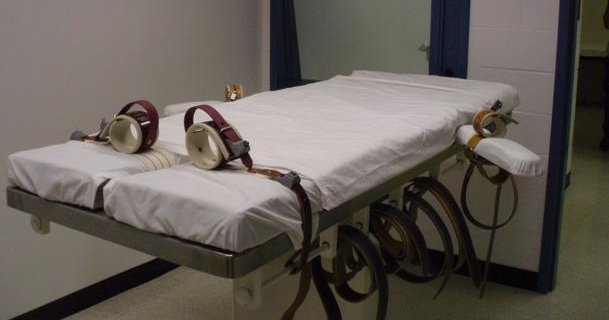
Nebraska’s death penalty policy gained national attention again during the 2018 execution of Carey Dean Moore, marking the first use of fentanyl for lethal injection. This execution highlighted the state’s struggles to obtain lethal injection drugs, which had previously included a failed $51,000 purchase from India. The state’s approach to transparency was challenged in courts, ultimately leading to a ruling in favor of public disclosure of the drug sources.
Ongoing Debate and Legislative Efforts
Capital punishment continues to be a divisive issue in Nebraska. Recent legislative efforts include a bill proposing nitrogen hypoxia as an execution method, which met significant opposition. Simultaneously, rising federal execution rates under President Donald Trump have fueled national conversations on the topic.
Local activists and lawmakers, including Sen. Terrell McKinney, persist in efforts to abolish the death penalty, citing moral and fiscal concerns. “I think a reconsideration of the death penalty in the state is overdue,” McKinney said.
Chris Stewart, the executive director of Nebraskans for Alternatives to the Death Penalty, emphasizes the financial burden of capital punishment, highlighting reports from the Death Penalty Information Center indicating that executions cost significantly more than life imprisonment. Stewart calls for a focus on life-enhancing programs over costly death penalty appeals.