The autumn skies of Wisconsin come alive with the distinctive calls of migrating geese, a seasonal spectacle that naturalist Bill Volkert closely associates with his years at Horicon Marsh. These birds also bring back memories of the “Goose Wars” during the 1960s and ’70s, a time of conflict between state and federal authorities over the marsh’s avian residents.
“They had to do something desperate,” Volkert recalls, reflecting on a period when understanding of goose behavior was limited.
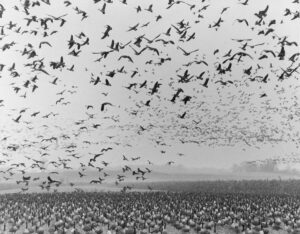
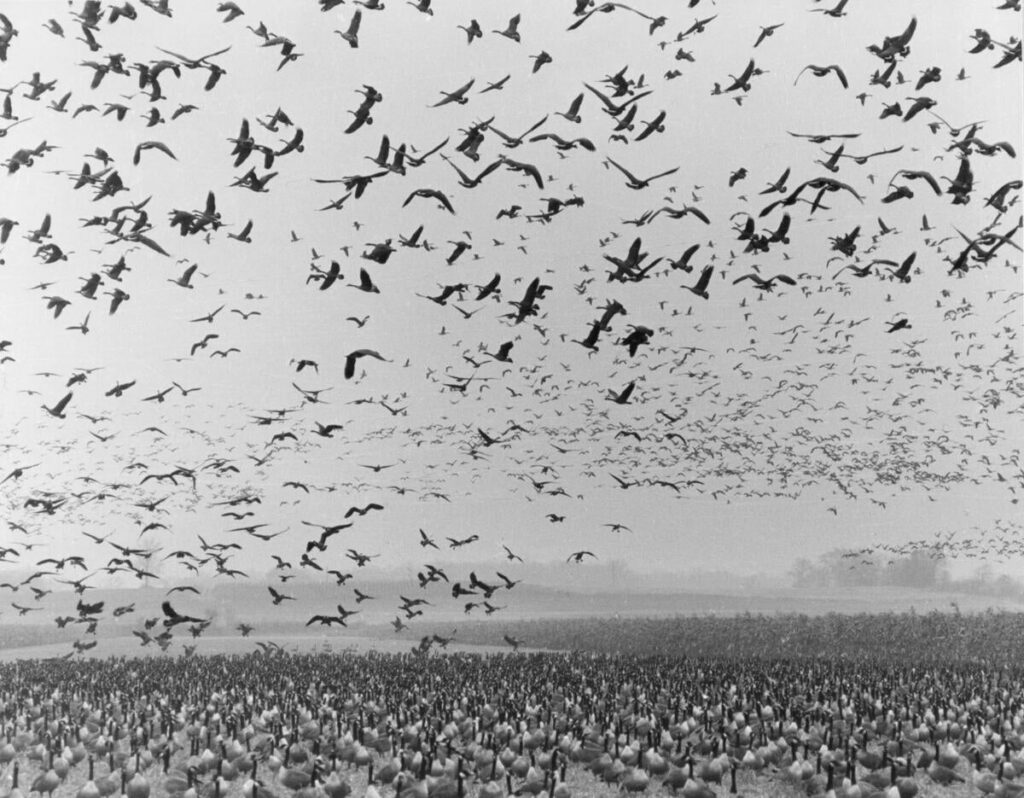
Every fall, thousands of Canada geese traverse from their breeding grounds near Hudson Bay, Canada, to Horicon Marsh in Dodge County. This journey, which sees them cutting across the country, is part of their unique migration pattern.
Horicon Marsh, a massive wetland spanning approximately 32,000 acres, is a crucial rest stop for these geese. The marsh’s history is intertwined with the geese, as its transformation over the years has impacted wildlife significantly.
A Brief History of Horicon Marsh
The marsh’s story began in 1846 when European settlers altered the landscape, turning it into Lake Horicon to power a sawmill. By the early 1900s, the marsh was drained for agriculture, leading to environmental challenges, including failed crops and peat fires.

By 1927, conservation efforts transformed the area into a wildlife refuge. The 1950s and ’60s saw a resurgence of geese as the DNR introduced food plots to attract them back, dramatically increasing the goose population.
The Goose Wars
With an influx of geese, concerns arose about potential disease outbreaks and crop damage. The mid-1960s saw state and federal agencies implementing a controversial goose reduction strategy using aircraft, exploders, and airboats to disperse geese.
Robert Personius, the national refuge manager at Horicon, explained the strategy aimed to distribute geese more evenly for hunting opportunities. However, legal challenges arose, such as Wisconsin’s lawsuit against the U.S. Fish and Wildlife Service in 1966, highlighting conflicts over wildlife management practices.
Geese Fever and Public Interest
The spectacle of geese at Horicon Marsh captivated the public, with naturalist Bill Volkert delivering talks to large audiences. These gatherings emphasized the geese’s importance and drew attention to conservation efforts.
Margie King of Mt. Horeb fondly recalls visiting the marsh in the 1970s, witnessing thousands of geese in flight—a mesmerizing and unforgettable experience.

Today at Horicon Marsh
Presently, Horicon Marsh remains a vital stop for Canada geese, with 100,000 to 200,000 stopping each fall. Recent research has helped better distribute the migrating geese across Wisconsin, ensuring a balanced ecosystem.
“What it took was research to understand the behavior—not just of individual geese, but this flock behavior,” Volkert stated, highlighting the extensive efforts to manage and preserve this natural phenomenon for future generations.