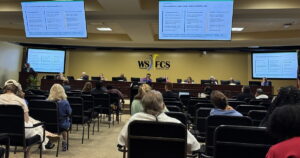
Judge Dismisses Lawsuit Against Port Washington Development Incentives
In a significant legal decision, an Ozaukee County judge has thrown out a lawsuit challenging the development incentives for a massive $15 billion data center campus currently under construction in Port Washington. The ruling marks a decisive moment in the city’s contentious plans to support the project through financial incentives.
Earlier in the year, Great Lakes Neighbors United, a local community group opposing the data center, filed a lawsuit against the city, contesting the establishment of a tax incremental district (TID) designated for funding approximately $175 million in infrastructure improvements for the data center.
Tax increment districts are defined as specific geographic areas within a municipality aimed at fostering development. These zones allow local governments to use the increased property tax revenue from the district’s growth to support development infrastructure or offer incentives.
Port Washington established TID No. 5 to facilitate the data center campus, which is being developed by Vantage Data Centers in collaboration with OpenAI and Oracle. The agreement for development is between the city and Vantage.
The lawsuit claimed that the TID would necessitate Port Washington to issue over $458 million in property tax reimbursement and interest payments to the developer over an 18-year span, arguing that the project did not require such a “public subsidy.”
However, Ozaukee County Circuit Court Judge Adam Gerol dismissed the lawsuit brought by Great Lakes Neighbors United last week, as reported by the county’s clerk of courts.
A proposed order suggests the case be dismissed “with prejudice,” a legal term indicating that Great Lakes Neighbors cannot refile the same claim. This order awaits the court’s signature.
In a statement, Great Lakes Neighbors expressed that the dismissal did not alleviate their concerns about the district.
“The court’s ruling does not close the question itself,” stated Christine Le Jeune, founder of Great Lakes Neighbors United. “Residents still deserve a full and transparent accounting of how TID No. 5 was created and administered, and we will continue to pursue it in every way available to us.”
In legal documents, the city argued that Great Lakes Neighbors incorrectly claimed that Port Washington would not benefit from property tax revenue through the project and failed to disclose “crucial deal points.”
The city of Port Washington, in a statement, affirmed that the court’s decision validated the city’s TID approval process. According to the city, Vantage Data Centers is initially covering the $175 million infrastructure costs, with reimbursement to occur through the TID.
“There is no money from taxpayers other than Vantage involved in the TID,” the city stated. “Once the TID closes, the City anticipates receiving the increased property tax revenue and increment made possible by the improvements that comprise this project.”
The data center and TID No. 5 controversy also led to a public ballot initiative. About two-thirds of Port Washington voters approved a referendum for increased public say in future development incentives.
The new ordinance requires voter approval for future tax incremental districts with project costs or a base value of $10 million or more before proceeding.
Earlier this year, business groups filed a lawsuit against Port Washington, challenging the legality of the new ordinance, arguing it could hinder employers and slow economic development. The city’s legal response also expressed concerns regarding the ordinance’s legality.
Great Lakes Neighbors United has joined the case to support the ordinance, with an oral ruling scheduled for Oct. 19.
Brigitte Pyzyk, a researcher with Great Lakes Neighbors, expressed hope that the court will respect the citizens’ vote.
“We would hope that the court would acknowledge that a vast majority of the citizens in Port Washington have voted on direct legislation, and they want a say on future TIDs,” Pyzyk said.
Beyond these court cases, Great Lakes Neighbors stated they “will pursue further action through additional avenues,” which could include filing complaints with the state Department of Revenue and seeking support from state lawmakers for an audit concerning TID No. 5. Pyzyk mentioned that these complaints would likely focus on compliance with state rules governing TIDs and that the group is considering its next steps.