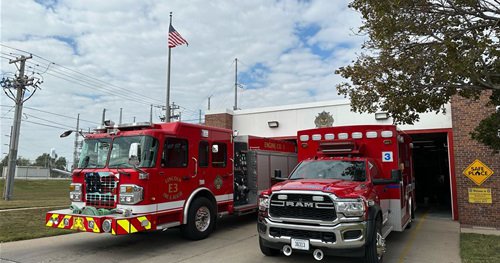
Lincoln Fire & Rescue’s Overtime Costs Under Scrutiny
The issue of overtime pay at Lincoln Fire & Rescue has caught the attention of state Auditor Mike Foley, who described the $7.2 million spent in 2025 as “staggering.” This revelation has sparked calls for a thorough review of the department’s scheduling practices.
In a report released early Tuesday, Foley urged the city to conduct a performance audit to determine the efficiency of the fire department’s current operations. Despite the absence of complaints from Lincoln residents, Foley emphasized, “more than $7.2 million in overtime pay during a single year is not chump change.”
The report detailed that the top 25 employees receiving overtime added over $72,000 each to their salaries, with their annual earnings averaging nearly $190,000. The top 100 employees saw an increase of over $45,000, bringing their average annual pay to more than $160,000.
While acknowledging that overtime is a standard practice in fire departments across the nation, Foley questioned the magnitude of Lincoln’s figures. He suggested that a performance audit could shed light on whether the overtime costs are justified. “An objective performance audit of the department’s scheduling strategy might yield taxpayer savings,” Foley stated in the news release.
The report also highlighted a lapse in the city’s oversight procedures, noting that no city department has been audited in over a decade, and the Performance Audit Committee has not convened in five years, despite a quarterly meeting requirement.
The city’s response, included with the report, admitted to the inactivity of the Performance Audit Committee. “We acknowledge that the Performance Audit Committee has been inactive for more than five years. The City is committed to reactivating the committee and has already begun taking steps to do so,” the response stated. “On August 31, the City Council adopted Resolution 26R 398 to formally initiate engagement with the Performance Audit Committee.”
However, the city’s response did not specifically address Foley’s concerns regarding the overtime expenses, and city officials were unavailable for comment on Tuesday morning.