Every summer, Rudy’s Drive-in in La Crosse offers a nostalgic dining experience reminiscent of a bygone era. Customers are served by carhops on rollerskates, delivering frosty mugs of root beer and baskets of food, all paid for in cash.
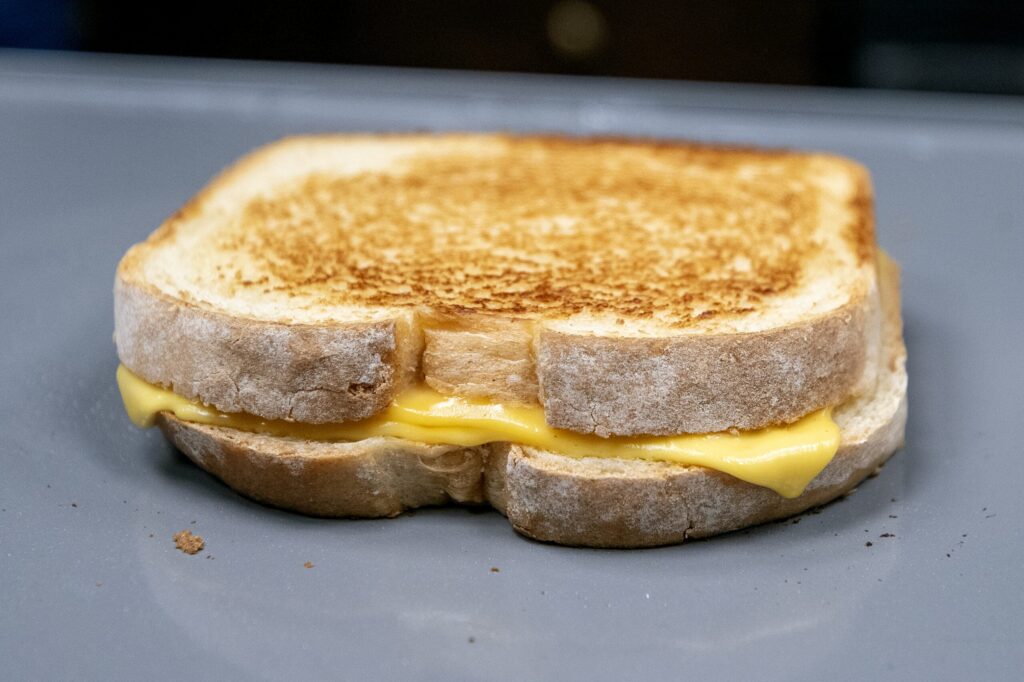
Inside, the grill sizzles with golden slices of American cheese melting over burgers, adding to the retro charm.
“It’s just the way it melts — you get the string pull off it,” remarked owner Justin Smith. “We use it on our chili dogs, too. Just the way it looks and melts down, it’s perfect.”
Commonly known as processed pasteurized cheese, American cheese owes its popularity to its ideal melting properties since Kraft introduced cheese slices in the 1950s.
Despite its ongoing popularity, American cheese is often criticized for being highly processed, akin to other Space Age foods like Jell-O salads and TV dinners. As more brands emphasize natural and healthy foods, American cheese’s additives have kept it rooted in the past.
Wisconsin-based cheese company Sargento aims to modernize this processed staple to align with contemporary consumer preferences, introducing a natural version of American cheese last year.
“We have watched a long migration of people from processed American slices to natural slices,” said Rod Hogan, senior vice president of innovation at Sargento. “We think part of it has been about flavor and variety. Part of it has also been about just this desire for cleaner-label, more natural foods.”
Yet, Sargento acknowledged that certain qualities of American cheese continue to appeal to some consumers.
This recognition led Sargento on a decade-long mission to create a cheese that combines the creamy texture of processed American cheese with the simple ingredient list of natural cheese.

The Science Behind the Melt
The unmatched melt of American cheese is no accident, but a result of deliberate chemistry. Processors have added ingredients to natural cheese to transform it into something uniquely meltable.
Cheese forms when rennet causes milk proteins to bond, trapping butterfat and forming a solid. When heated, this delicate protein structure breaks down, resulting in an oily texture.
“You’ll see literally butterfat start to come out of it, and you’ll see this stringy, kind of gloppy mess,” explained Lloyd Metzger, vice president of quality and technical services at Valley Queen Cheese in South Dakota, and an expert on processed cheese.
Processors discovered they could circumvent this separation and extend shelf life by melting natural cheese and mixing it with an emulsifying salt, creating a cohesive fat-protein complex.

Metzger elaborated, “When you re-melt it afterwards, it’s going to be this beautiful, smooth, even, velvety melt that you won’t ever get out of natural cheese.”
This transformation process is largely attributed to what became Kraft Foods. J. L. Kraft aimed to create a shelf-stable cheese in 1906, with the Kraft singles of the 1960s becoming a standard for the category.
While consumers often question the product’s longevity and ingredients, Metzger quipped, “If I called it ‘salt and lemon juice,’ the American consumer would be fine with it.”
A Decade of Trial and Error Pays Off
Sargento’s journey to develop its unique variety involved years of experimentation by its research and development team.
At their technical center in Elkhart Lake, John Rodgers, vice president of research and development, demonstrates the ultimate test for American cheese: a grilled cheese sandwich.
He estimates they’ve made thousands of sandwiches over the decade it took to develop and market the new product, which landed on store shelves last year.
Rodgers shared that an early version of their cheese failed consumer testing, nearly derailing the project.
“We thought we had a cheese that was pretty close. We actually put it to a consumer test, and it failed miserably,” he stated. “We were on the cusp of like, ‘Do we really think we can continue forward with this?'”

This setback became a pivotal moment, prompting a shift in focus from marketing to achieving scientific breakthroughs necessary for the product.
However, Sargento isn’t alone in reimagining American cheese. New School American Cheese, launched in Los Angeles in 2022, offers a “clean label” version, made from aged cheddar and other natural ingredients.
Alan Levitt, a founder, explained their focus on the food service industry, where chefs desire the melt quality of American cheese in a high-end product.
“You could be intentional about sourcing your beef and your vegetables,” he said. “Maybe you even baked your own bun in house. You might hand whisk your own mayo, and then, before New School came along, there was never an American cheese that would meet the quality standards of your plate.”
The Future of American in a MAHA World
Levitt doesn’t believe New School will remain unique, despite growing resistance to “ultra-processed” foods.
As part of President Donald Trump’s Make America Health Again initiative, the federal nutrition guidance released in January advocates for reducing processed food consumption and focusing on additive-free “real food.”
Levitt suggests this trend will encourage more companies to develop versions of American cheese with fewer ingredients.
“I tend to believe that it will lead to a larger segment of the population who wants to understand what’s in their American cheese and how it’s made, and might be willing to pay a premium for something that they feel more comfortable (with),” he said.
Sargento’s rollout strategy emphasizes consumer education about their new product, differentiating it from traditional processed American cheese.
Hogan noted that packaging positions the product alongside processed options, inviting those who have abandoned American cheese to rediscover its nostalgic charm.
“We want to give the natural cheese user the option to come back into a category that they actually love,” Hogan expressed.