Rebuilding I-40 in Pigeon River Gorge Faces Delays and Higher Costs
The extensive reconstruction of Interstate 40 through the Pigeon River Gorge is proving more challenging than initially expected. Originally pegged at $1 billion, the project’s cost has soared to $2.8 billion, and its completion date has been pushed to late 2029. This revision marks a year later than the previous estimate provided by the North Carolina Department of Transportation (NCDOT).
Daniel Johnson, the North Carolina Transportation Secretary, described the project as the most intricate in the state’s history. He emphasized NCDOT’s commitment to delivering a solution that is both safe and durable, ensuring careful management of taxpayer funds. “We are rebuilding while we continue to investigate and design, which means our understanding of the work becomes more precise as construction advances,” Johnson stated on Wednesday. He assured that transparency would be maintained as estimates evolve, focusing on cost reduction and restoring full traffic flow without compromising the road’s resilience.
Unexpected geological challenges have arisen, with construction teams discovering that the bedrock in certain areas lies much deeper than previously believed. This necessitates the use of longer steel piles to secure the roadway’s stability. In some locations, the bedrock is exposed, while in others, it lies as deep as 50 feet below the surface.
Wesley Grindstaff, Division 14 Engineer, highlighted the critical nature of addressing these vulnerabilities: “History shows us that I-40 in the Gorge is vulnerable to flooding and failure, and not addressing the vulnerabilities now would result in the same damages at some point in the future.”
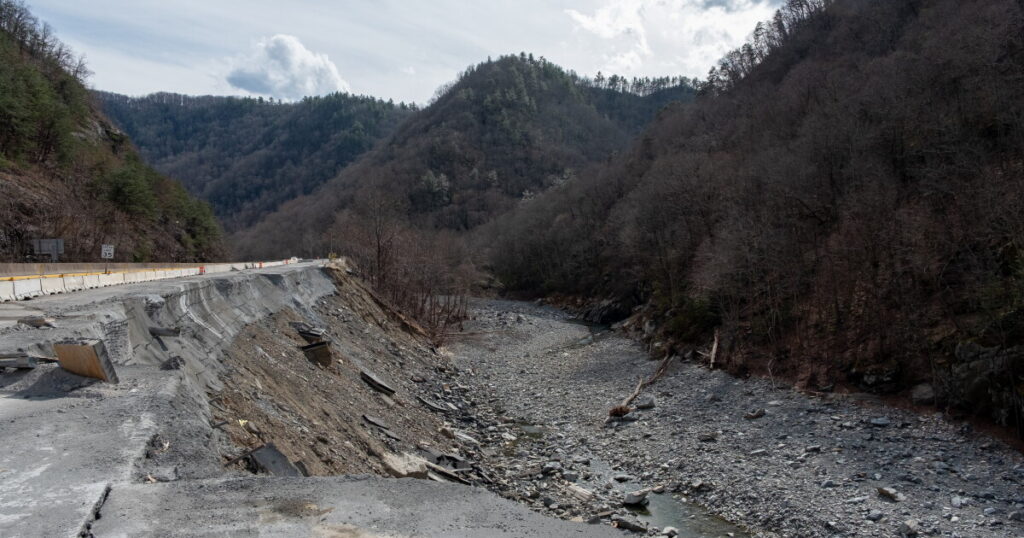
This segment of the interstate, which is vital for freight movement between North Carolina and Tennessee, suffered significant damage due to Hurricane Helene. The hurricane’s floodwaters led to the collapse of the eastbound lanes into the Pigeon River, necessitating a road closure for over five months. Following its reopening in March 2025, traffic has been limited to a single lane in each direction. However, in a recent video message, Grindstaff indicated that NCDOT aims to open two eastbound lanes and one westbound lane by late 2028.
During a project site tour in May, engineers initially anticipated the reconstruction would be completed by fall 2028 at a cost of $2 billion. They stressed the complexity of the project due to the gorge’s susceptibility to floods and landslides, with a focus on rebuilding with enhanced resilience to withstand future natural disasters. “The intent of our design is to withstand a similar event such as Helene,” noted NCDOT resident engineer Blake Soblesky.