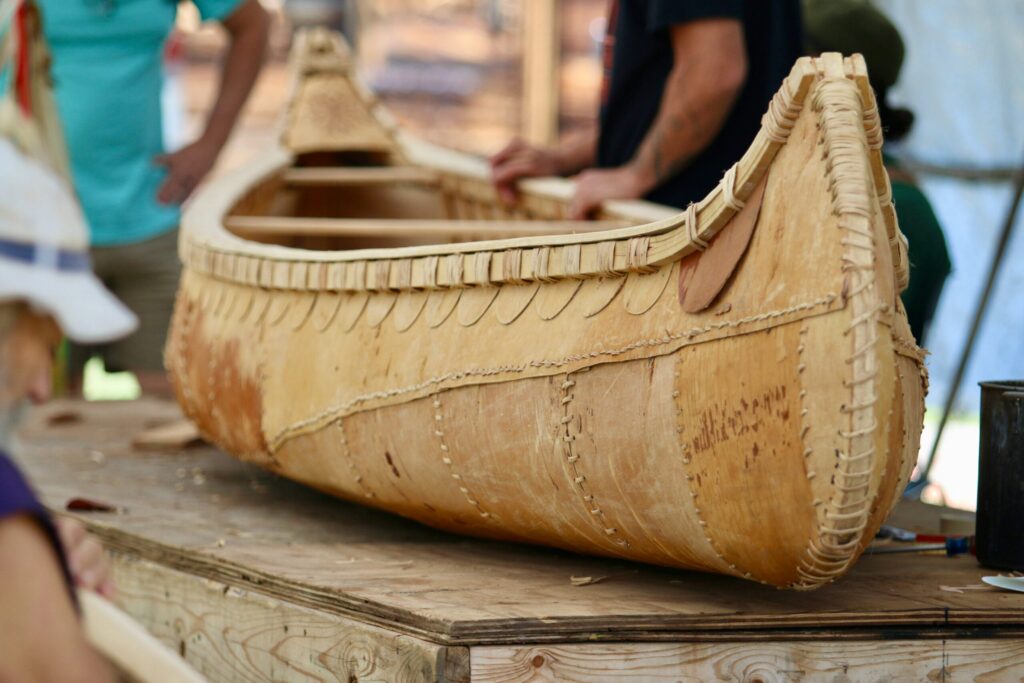
In a world where technology often overshadows tradition, Marvin DeFoe stands as a beacon of cultural preservation. This summer, the tribal elder of the Red Cliff Band of Lake Superior Chippewa dedicated three weeks to a timeless craft: canoe building. For DeFoe, the process is not just about creating a vessel but honoring family and heritage.
Crafting a Legacy by Hand
Marvin DeFoe, a master canoe builder, reflects on his father’s wisdom as he constructs canoes, recalling the saying, “We’re all in the same canoe and what we need to learn is how to paddle together so we can get to where we’re going.” Over five decades, DeFoe has honed his skills, using birch bark, white cedar, and jack pine roots—materials not found in stores, but in what he humorously calls his “Anishinaabe Walmart.”
This summer’s project was part of the “Canoe Journeys” program at the Madeline Island Museum. The initiative commemorates the 1854 Treaty of La Pointe, a pivotal agreement securing Ojibwe homelands.
In front of an audience, DeFoe shared stories of the Ojibwe people and the art of canoe building, accompanied by music and discussions about the region’s history. The canoe is scheduled for its maiden voyage on August 22. DeFoe hopes it will symbolize a shared journey, stating, “I hope that it tells a story of all of us… we’re all in the same canoe, paddling together.”
Ojibwe’s Historical Ties to Water
The “Canoe Journeys” program educates visitors on the cultural importance of Lake Superior and the birch bark canoes, known as jiimaan in Ojibwe. Mike Wiggins Jr., a special advisor to the museum, explains how these canoes enabled navigation of the world’s largest freshwater lake long before modern transportation.
Wiggins Jr. highlights the significance of these watercrafts in the 1854 La Pointe Treaty, which preserved Ojibwe rights to their lands. He recounts the epic journey of Chief Buffalo, who traveled by birch bark canoe to Washington D.C. to negotiate the treaty and prevent the forced relocation of the Ojibwe people.

Challenges in Gathering Birch Bark
For DeFoe, birch bark is a sacred and essential material, used for crafting canoes and other items. However, obtaining it has become increasingly difficult due to environmental threats like aging forests and insect infestations, as noted by Wisconsin’s Department of Natural Resources.
“These last two years have been very difficult gathering birch bark, because the birch trees are dying. The climate is changing,” DeFoe noted. Despite these challenges, he remains committed to his craft, hoping to connect people with nature and ancestral values.

As DeFoe’s canoe takes to the water, he envisions the spirits of the lake observing it, bringing a smile to their faces—a symbol of enduring tradition and cultural resilience.