Demolition Derby: The Art of Resourcefulness Amid Rising Costs
In the world of demolition derbies, where cars are modified to withstand the brutal impacts of competition, the challenge is not just on the dirt track. As costs skyrocket, participants are finding creative solutions to keep the sport accessible.
Connor Yungdahl, a seasoned competitor from Osceola, stands beside what remains of a newer model Chevy, its jet black front end ready for battle. He has been part of the derby scene since the age of 14. “That’s so in case you get rolled over, you don’t crumple inside of it,” Yungdahl explained, referring to the meticulous reinforcements made to his car.
The increasing complexity of modifications demands more materials, labor, and consequently, higher expenses. Yungdahl expressed concern that these rising costs might deter future generations. “A lot of the younger kids who are trying to do it, they won’t be able to get into it,” he noted. “They can’t afford to buy a $1,500 car, a $300 fuel tank and all the metal that goes into it, a $300 bumper. It’s just getting harder and harder to get into it.”
However, Scott Angell, the long-time announcer of the Osceola derby and an off-season auto parts dealer, has faith in the ingenuity of derby teams. According to Angell, while prices have undeniably increased, teams are adapting through innovation. “The derby world’s got some of the smartest engineers in the world,” he said. “I’ve seen the things they can create to get around rules, or make a car bend a certain way or fold different ways. There’s definitely a method to their madness in everything they do.”
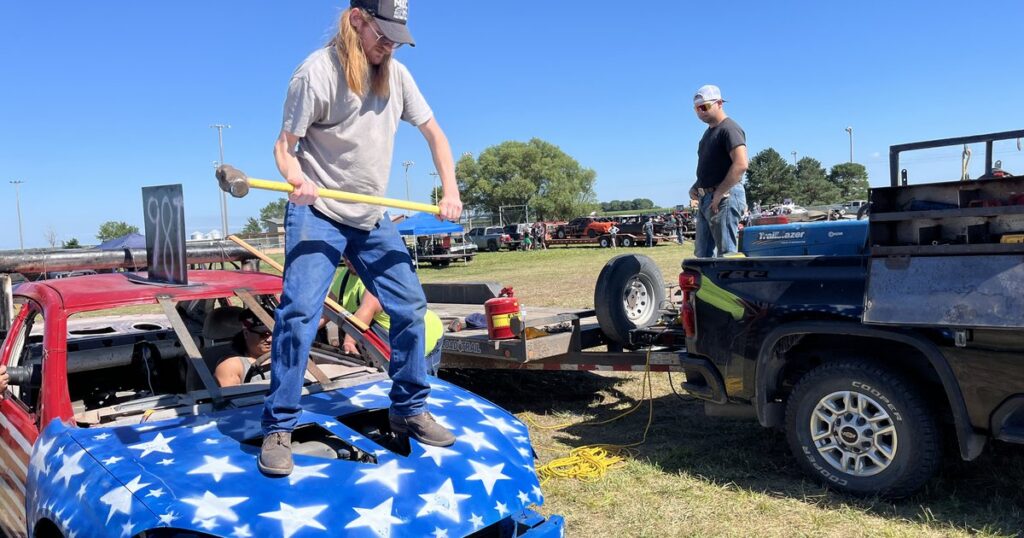
As the derby approaches, Noah Tworek’s team is deeply engrossed in last-minute preparations. Armed with a checklist scribbled in sharpie on the driver’s side door, they work tirelessly. The Impala’s hood, adorned with scattered stars, undergoes a relentless hammering by a ten-pound sledge. Saws buzz, cutting through pipes, only for an impact wrench to resecure them moments later. Plastic shrapnel and rolls of duct tape remnants scatter as the team races against time, embodying the frenzied energy of a NASCAR pit stop driven by sheer ingenuity.
Tworek, like many derby engineers, manages expenses by tackling most of the build himself, especially welding. “I’m self taught, more or less. I went to school for a little bit, but I’m not certified or anything like that,” he admitted. This do-it-yourself approach is crucial for those who wish to remain competitive despite financial constraints.