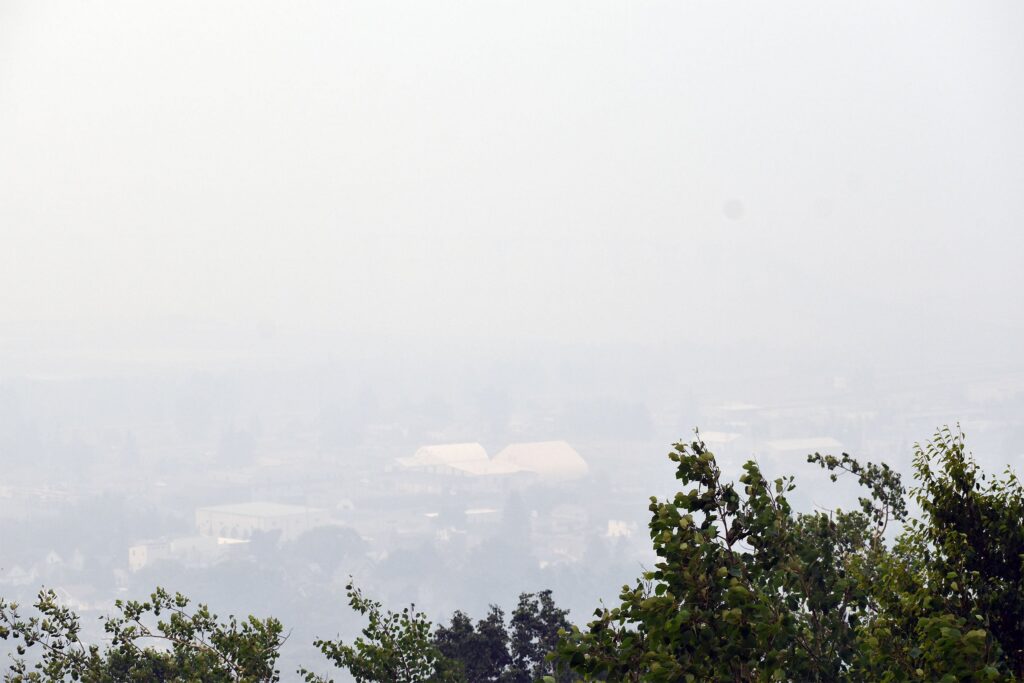
Wisconsin Faces Hazardous Air Quality as Wildfire Smoke Engulfs the State
Wisconsin is grappling with hazardous air quality as smoke from wildfires blankets the state. The Wisconsin Department of Natural Resources (DNR) has urged residents to stay indoors and use masks when venturing outside to combat the rising air pollution.
The DNR’s air forecast for Thursday categorizes much of Wisconsin, from the shores of Lake Superior to Kenosha, as experiencing hazardous smoke levels. According to air quality experts and medical professionals, these conditions are extremely concerning.
Craig Czarnecki from the DNR’s Air Management Program stated, “As far as wildfire smoke is concerned, this is some of the worst air quality that we’ve measured at the DNR on record.”
He highlighted the severity of the smoke’s impact, noting, “I know we’ve had wildfire smoke impacts the last few years. But this is really the highest concentration of smoke that we’ve seen in any of these episodes.”
Czarnecki expressed surprise at the current air quality levels, stating, “I don’t remember ever hitting hazardous (air quality rankings) ever.” While the smoke is expected to linger overnight, there is optimism for improvement by Friday as winds are anticipated to disperse the smoke.
“We expect to see some clearing kind of start tomorrow,” Czarnecki explained, with winds likely to aid in reducing smoke levels. However, there remains a possibility of continued smoke issues into the weekend.

Health Risks Across Wisconsin
Czarnecki likened the air quality index to a traffic light system, explaining that while green indicates good, yellow signals concern, and red represents danger, much of Wisconsin has reached the purple level, which is very unhealthy.
“Then we’re talking unhealthy for everybody,” Czarnecki warned, advising residents to remain indoors if experiencing symptoms such as coughing or shortness of breath.
Dr. Mark Moss, an allergist with UW Health, noted that individuals with pre-existing heart or lung conditions, children, older adults, pregnant women, and those who exercise outdoors are particularly vulnerable. “Wildfire smoke’s small particles will penetrate very deeply into the lungs,” Moss said. “They can easily penetrate into tissues, even the bloodstream and cause inflammation, irritation and in the lungs cause people to have difficulty breathing.”
Public Health Madison & Dane County advises that anyone experiencing symptoms like coughing, stinging eyes, or a scratchy throat should seek shelter indoors.
Moss emphasized the seriousness of “air hunger,” where individuals struggle to breathe and feel chest tightness. He advised moving into a cool, preferably air-conditioned environment immediately.
According to AirNow.gov, Milwaukee-Ozaukee reported a hazardous air quality index of 644 at noon.
The adverse air quality has prompted Milwaukee’s Department of Public Works to suspend non-essential outdoor work. Garbage and recycling services have also been halted, and city drop-off centers and the tow lot have closed early.
City officials are actively monitoring the situation to determine when normal operations can resume safely.
Barista Finn Wozniak, working at Best Place Coffee and Spirits in downtown Milwaukee, expressed frustration while wearing a mask indoors. “This blows,” Wozniak commented. “Canada, this is a call out post. Stop doing that. Stop having wildfires up there.”
Why Is the Smoke Sticking Around?
The combination of dry weather, heat, and wind has created ideal conditions for rapid fire growth and smoke production in Minnesota and Canada, affecting Wisconsin. Czarnecki detailed how these factors have led to severe smoke across the state.
“The explosion of the fire … and then the proximity also just kind of combined to make these really high concentrations in that very unhealthy to hazardous range,” he explained.
Monitoring networks and DNR forecasts are closely examining areas where smoke may concentrate in Wisconsin, while also consulting with Minnesota’s officials on the fires’ status.
The lack of space for the smoke to dissipate and the presence of large water bodies like lakes are contributing to the persistence of smoke in the region, especially near Lake Superior in cities like Duluth, Superior, and Ashland.
Czarnecki shared anecdotal evidence from friends in Ashland, saying, “They said it’s just terrible. They could see ash falling in some places.”
Now based in Madison, he described waking up to the smell of smoke in the air, remarking, “It’s really spread. It’s quite the impressive smoke plume here that we’re dealing with.”
How to Protect Yourself
Dr. Moss recommends wearing a mask if outdoor exposure is unavoidable. “An N95 mask will be the best type of mask to filter out these very small particles,” he advised, noting that cloth masks offer less protection.
Stay updated on air quality conditions through the Wisconsin Air Quality page or by downloading the airnow.gov app. Alerts can be received via email or text from the DNR.
To mitigate smoke exposure, Public Health Madison & Dane County suggest:
- Avoiding outdoor exercise.
- Wearing a mask.
- Minimizing time spent outside.
- Rescheduling outdoor events.
- Keeping windows shut.
- Running air conditioning on recirculation.
- Using an air purifier if available.
If air conditioning is unavailable, consider visiting public spaces like malls or libraries, and wearing an N95 mask.
Editor’s note: WPR’s Evan Casey contributed reporting to this story.
Wisconsin Public Radio, © Copyright 2026, Board of Regents of the University of Wisconsin System and Wisconsin Educational Communications Board.