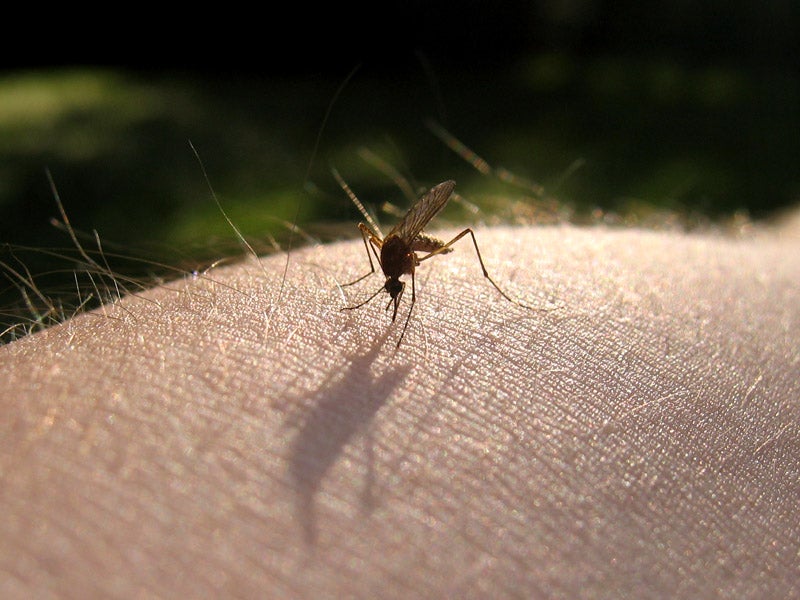
Summer in Wisconsin brings warm weather, outdoor activities, and unfortunately, mosquitoes. While these tiny insects are often seen as mere nuisances, they can also be vectors for serious diseases, which is a growing concern for health officials.
The Wisconsin Department of Health Services has reported the initial detection of West Nile Virus in the state this year.
As part of the state’s yearly monitoring program, the virus was identified in mosquitoes in Milwaukee County and in a wild bird in Bayfield County. At present, there have been no human cases reported.
This discovery indicates the presence of virus-carrying mosquitoes in Wisconsin, posing a potential threat of transmission to humans.
Rebecca Osborn, a vector-borne disease epidemiologist at the Wisconsin Department of Health Services, explained that migratory birds are carriers of the virus, which means its spread is unpredictable.
“That means that it’s a good idea for folks all around the state to take precautions and assume that it’s probably in their environment as well,” Osborn stated during a news briefing.
Residents are advised to protect themselves from mosquito bites by using insect repellent and wearing loose-fitting, long-sleeve clothing.
Osborn also advises awareness of peak mosquito activity times, which are early mornings and evenings.
“They reach their peak activity during those early morning and start of the evening hours,” she said. “So if it’s at all possible to stay indoors during those hours, that can also reduce your risk.”
On average, 19 people in Wisconsin contract West Nile virus annually, predominantly in the late summer months of August and September. However, many more may be infected without showing symptoms.
According to the Centers for Disease Control and Prevention, symptoms can include fever, muscle pains, and fatigue. Those over 65 or with compromised immune systems are at higher risk for severe cases, which can lead to encephalitis or meningitis.
Climate change, with its accompanying rise in temperatures, might influence the spread of mosquito-borne diseases like West Nile virus in the region.
Osborn noted that warmer weather results in mosquitoes becoming active earlier and having shorter life cycles.
“You’ll see more mosquitoes that are hatching at a quicker rate when it’s really hot,” she said. “Really hot temperatures can also increase the amplification of the virus, so the viral activity can speed up in the mosquitoes as well.”
The Department of Health Services will continue surveillance of mosquito populations across Wisconsin through October, or until the first hard frost, which would mark the end of their activity for the year.
Wisconsin Public Radio, © Copyright 2026, Board of Regents of the University of Wisconsin System and Wisconsin Educational Communications Board.