The University of Nebraska is grappling with substantial financial constraints following a directive from Governor Jim Pillen. This mandate requires state agencies and institutions, including the university, to implement a hiring freeze and curtail spending, a move that is expected to significantly affect operations across the board.
Statewide Budget Reductions
Governor Pillen’s recent order has prompted a 5% reduction in monthly budget allocations for Nebraska’s state agencies, commissions, and boards. This includes the University of Nebraska, which now faces a new challenge in managing its financial resources. The governor’s memo stipulates that no state-funded positions, aside from sworn law enforcement and correctional officers, may be filled without prior approval from the State Budget Division. Additionally, agencies are urged to consolidate their physical spaces and streamline services by the month’s end to foster fiscal prudence.
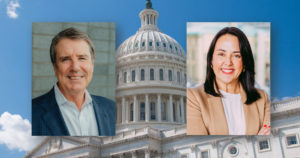
University of Nebraska President Jeffrey Gold highlighted the gravity of the situation in a communication to staff, stating, “What the governor’s office is asking of us is significant. This new reduction in the current year’s budget represents more than $36 million across the NU system.”
Impact on University Operations
The university is reeling from budgetary constraints that commenced during a biennial legislative session, where funding fell short of expectations. These financial pressures have already led to budget cuts across the university’s physical campuses. Notably, the University of Nebraska-Lincoln (UNL) was compelled to eliminate four academic programs, a decision ratified by the Board of Regents in December, yielding $6.7 million in savings. To mitigate these impacts, NU campuses are implementing tuition hikes.
President Gold acknowledged the ongoing budgetary reductions, noting the resilience of faculty and staff amidst these challenges. “Over the past biennium – and many years before that – we have navigated budget reductions every year, and you – our faculty and staff – have responded with creativity, resilience and an unwavering commitment to our students, your professions and the communities we serve and that depend on us every day,” he stated.
Reflecting on the constraints, Gold emphasized the limits of perpetual budget cuts, remarking, “We cannot cut our way to extraordinary, nor can we fully realize our mission of exceptional teaching, research and statewide engagement if we are operating in a constant cycle of cuts and related restrictions, without the ability to predict even a single year of stability.”
Challenges in Academic and Research Environments
UNL Interim Chancellor Katherine Ankerson echoed these sentiments, acknowledging the ongoing financial pressures faced by the university and its faculty. In a message to staff, Ankerson noted, “At the same time, we must acknowledge what these cycles have cost us. They have placed strain on our academic programs and research enterprise. They have tested the culture and shared sense of purpose that define this university. No one does their best work under the weight of uncertainty, and we cannot ask our students to reach their full potential — or expect to attract and retain the faculty, staff, and leaders our mission requires — if stability remains perpetually out of reach.”
As the University of Nebraska navigates these financial challenges, it continues to engage its campus leaders to develop strategies for adapting to these budgetary constraints.