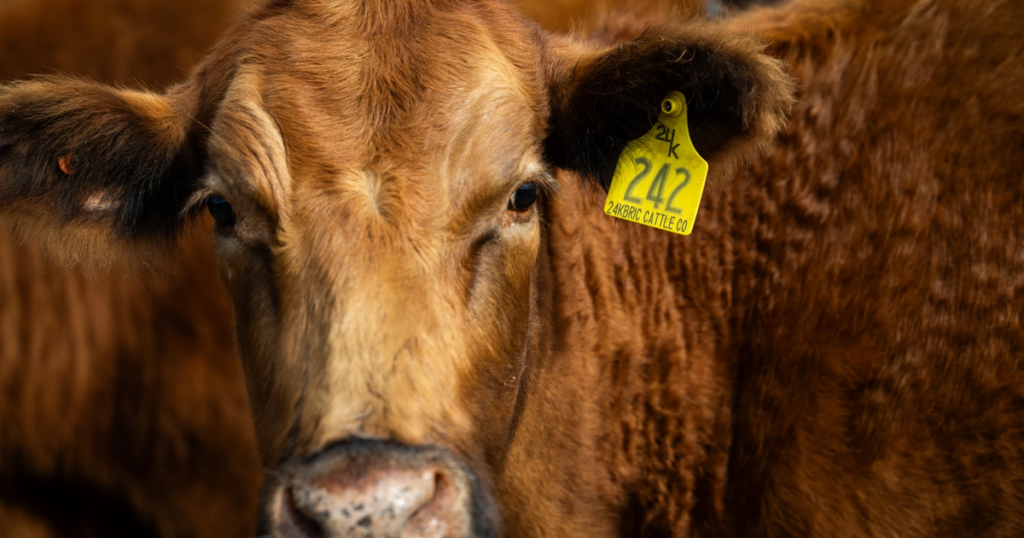
As the U.S. cattle herd continues to dwindle, experts warn that the decline is far from over. Despite a steady drop over the past six years, industry specialists like Derrell Peel suggest the herd could shrink even further.
“We still don’t know for sure that we actually have a low in place yet,” stated Peel, who serves as an extension livestock and marketing specialist at Oklahoma State University.
The U.S. Department of Agriculture’s January report revealed the cattle population stands at 86.7 million, marking its lowest point since the early 1950s. Meanwhile, prices for cattle have hit record highs.
“We’ve got record high [cattle] prices. That’s to provide incentives for rebuilding the herd. But at this point in time, we’re not seeing that happen,” Peel explained.
This reduced cattle population has led to beef price hikes in grocery stores, with ground beef hitting an average of $6.89 per pound, a new high. The USDA forecasts beef prices to increase by 10% through the year.
Nevertheless, ranchers are hesitant to expand their herds.
Persistent drought conditions in states like Nebraska, Oklahoma, and Texas have played a significant role in keeping herd sizes minimal. Additionally, high operational costs and the return of the New World Screwworm have exacerbated this trend.
David Anderson, a professor and extension economist at Texas A&M University, commented, “If we think about years past, we would’ve seen growth with these record-high cattle prices. That’s the market telling us to produce more, but I think there’s some good reasons we’re not.”
Long-term drought
The U.S. cattle numbers peaked at 94.7 million in 2019 before the multi-year decline began. Since then, drought has severely impacted much of cattle country.
Peel noted, “Starting in … late 2020 through up until even current times, we’ve had lots of drought conditions pretty much all over the country at some point in time. And so that forced [cattle] producers to do more liquidation than they planned.”
Both water shortages and limited food supply can compel producers to sell off livestock. Pastures recovering from severe drought may take years, with insufficient rain reducing forage options and leading to smaller herds.
Kevin Buse, a north Texas rancher and CEO of Champion Feeders, shared his experience: “I’ve had to shrink my own herd to adjust to the feed that’s available. When feed costs are elevated and you do not have enough grass, the obvious reaction to that is to start to pull back on numbers.”
Feedlots have also seen a decrease, with a nearly 10% reduction in cattle intake in May compared to May 2025, as noted by Anderson.