The University of Michigan (U-M) extends its influence far beyond academia, playing a pivotal role in transforming Michigan’s economy. At the heart of this transformation are innovation and research, which reach from classrooms to commercial industries throughout the state, highlighting the university’s vital role as an economic catalyst.
President Domenico Grasso, in a recent address at the Reindustrialize Summit in Detroit, emphasized U-M’s contribution to the country’s industrial landscape. He described the university as a cornerstone of Michigan’s economic framework, particularly in its capacity to convert research into groundbreaking technologies, companies, and partnerships that fuel the innovation economy.

“Today, we are one of the greatest research universities in the world … and this makes the University of Michigan a real hotbed for innovation and technology development,” he said. “We can show that we can take discoveries from the bench to commercialization.”
A study by the Michigan Association of State Universities highlighted the economic contributions of Michigan’s public universities, citing nearly $45 billion in economic activity. U-M stands out for its ability to transform public funding and federal research into high-growth businesses and well-paying jobs.
High-growth startups with deep Michigan roots
U-M’s research efforts are a driving force behind the state’s economic expansion, transforming academic innovations into viable commercial applications. In the fiscal year 2025, this focus on commercialization led to 673 new inventions, 31 new startups, and $31.4 million in licensing revenue.
More than 2,500 jobs in Michigan stem from these initiatives. U-M’s Innovation Partnerships have earned the university a national ranking of second place in startup creation due to this steady flow of new business ventures.
“At the University of Michigan, we are launching world-changing startup companies whose innovations are not only improving the lives of people in our communities, but are also creating new jobs and diversifying Michigan’s economy,” stated Kelly Sexton, associate vice president for research – innovation partnerships and economic impact.

Ben Marchionna of the Michigan Economic Development Corp. commented on U-M’s distinction in translating academic discoveries into market-ready products. “Academia is known for lots of inventions, but less well known for commercialization of those ideas into the market,” he said. “Very few universities in the world do that well. U-M’s Innovation Partnerships is the tip of the spear. That is what matters to economic development: making sure there is a durable economic impact.”
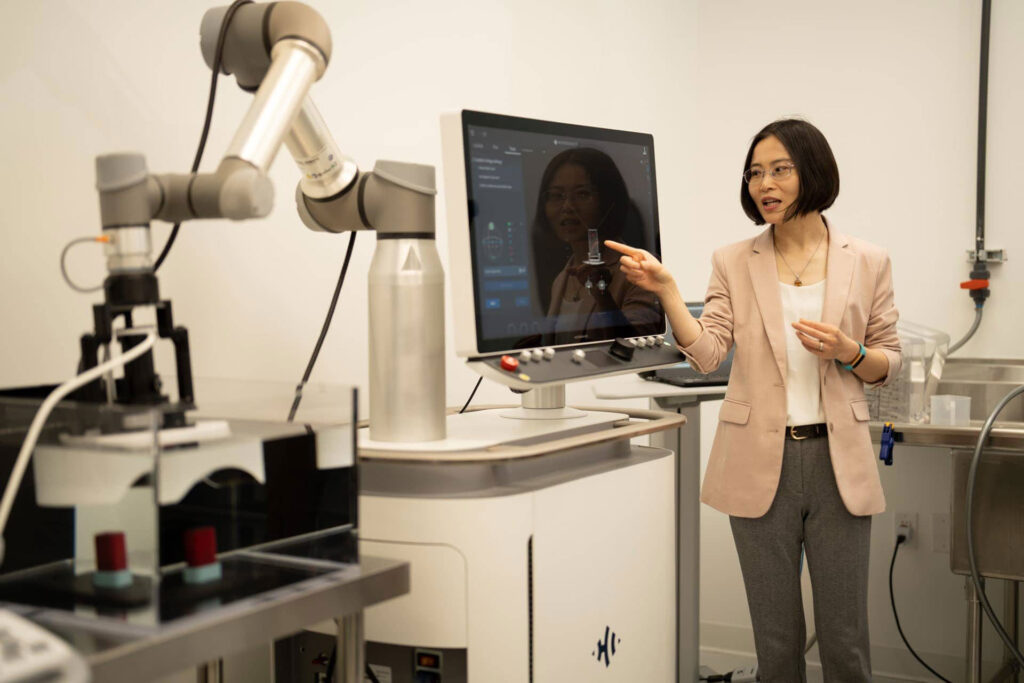
Case studies like HistoSonics and May Mobility illustrate how U-M’s research translates into economic success. HistoSonics, a company developing noninvasive techniques to destroy targeted tissue, was launched from U-M in 2009. In 2023, its Edison Platform received FDA clearance to destroy liver tumors. Now valued at $3.75 billion, the company generated $100 million in 2025 and established a 40,000-square-foot research center in Ann Arbor.
“HistoSonics is a Michigan success story,” said Mike Blue, president and CEO of HistoSonics. “Our technology was invented and pioneered at the University of Michigan, and the entrepreneurial ecosystem, talent base and community support throughout the state helped transform a bold scientific idea into a company impacting patients around the world.”
May Mobility, created in 2018, focuses on developing autonomous vehicle fleets. Operating globally, the company employs 340 people, with nearly 200 based in Michigan. Fast Company recognized May Mobility as one of the most innovative companies worldwide in March 2026.
“Our roots at the University of Michigan gave us the research, the talent, and the community that helped turn an idea into autonomous vehicles serving real riders around the world,” said Tom Tang, chief people and customer operations officer at May Mobility. “Hiring graduates from the University of Michigan continues to be an excellent source of new ideas, driving innovation forward in a rapidly evolving industry.”
Marchionna further emphasized the importance of nurturing young companies for economic resilience. “Over the long run, research shows the younger companies are responsible for the net new jobs in an economy,” he stated. “Big, established companies can add big numbers of jobs in good times; but in bad times they also shed lots of jobs.”
Chris Kolb, U-M’s vice president for government relations, highlighted the university’s economic influence: “The University of Michigan is a powerful driver of Michigan’s economic future because its impact multiplies across the economy,” he said. “When U-M research helps launch a startup, it creates high-quality jobs, attracts investment, supports suppliers and service providers, and gives more Michigan graduates opportunities to build their careers here. That is how university innovation becomes long-term economic growth for communities across the state.”

Research funding as startup fuel
The extensive research initiatives at U-M, supported by significant federal grants, drive the engine of startup creation. According to a report by the Institute for Research on Innovation and Science, these grants supported over 16,000 jobs and nearly $396 million in research-related spending nationwide last year.
Substantial portions of these funds flow back into the economy through wages, contracts, and partnerships. In Michigan alone, businesses benefited from more than $164 million in funding, impacting vendors across all 13 congressional districts.
Students, who make up 43% of the research workforce, gain invaluable experience working on innovative projects, preparing them to lead Michigan’s expanding startup scene.
Building Michigan’s talent pipeline
Sustainable economic growth hinges on both innovation and the development of skilled professionals. U-M annually produces thousands of graduates—engineers, scientists, health professionals, and business leaders—who meet the workforce demands of Michigan’s industries.
By aligning high-level research with workforce development, U-M ensures that both new and established companies have access to the skilled personnel needed to thrive.
Investing in public higher education yields far more than academic degrees. It generates a continuous pipeline of discoveries, companies, skilled workers, and economic opportunity.
Through federal research funding, U-M supports innovations that become the foundation for startups, technologies, and jobs. Simultaneously, it develops the talent essential for these enterprises to flourish.
The University of Michigan exemplifies how academic institutions can drive substantial economic growth by translating research into actionable impacts, thereby paving the way for the next wave of innovation and prosperity within the state.