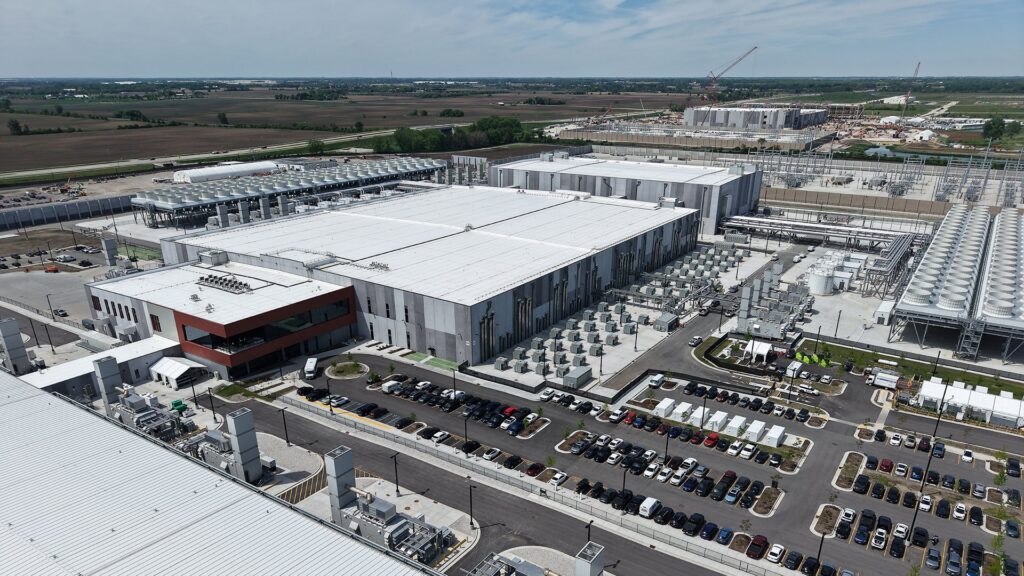
Mount Pleasant Residents Take Legal Action Against Microsoft Over Data Center Noise
Residents near Microsoft’s newly operational data center in Mount Pleasant, Wisconsin, are raising concerns over noise pollution, prompting a lawsuit against the tech giant. The legal move reflects broader community frustrations as Microsoft expands its presence in the area.
Filed in the U.S. District Court for the Eastern District of Wisconsin, the lawsuit comes from three Sturtevant residents who allege that Microsoft’s data center operations produce “unreasonable and excessive noise,” causing property damage through “private nuisance and negligence.” This legal action follows the recent announcement of the facility’s operational status, marking the first of several planned buildings on the site.
The plaintiffs argue that the data center’s infrastructure, including diesel generators and HVAC systems, contributes to persistent noise pollution. The lawsuit highlights that the noise includes low-frequency infrasound not captured by standard dBA measurements.
A Microsoft spokesperson acknowledged awareness of the lawsuit, stating, “Microsoft is committed to being a good neighbor in the communities where we build, own, and operate our datacenters.”
Residents have reported a “tonal humming sound,” attributed by Microsoft to cooling fans at the facility. Although local noise ordinances are reportedly met, Microsoft emphasizes its commitment to addressing community feedback. A recent update indicated that noise mitigation measures have been implemented following engineering assessments.
Sean Ryan, spokesperson for Mount Pleasant, noted, “The Village has received no formal complaints relating to Microsoft’s properties since the company completed the adjustments that were announced in mid-April.” He reassured that officials are prepared to respond to any future concerns.
Community Concerns Extend Beyond Noise
Beyond noise, the data center’s presence has stirred unease over construction-related issues, such as dust, light pollution, and traffic congestion. Long-term resident Larry Neumiller describes the disruption: “If you come out here at night, they have got lights out here, I mean, they’re just super lights that even my blinds in the windows can’t keep out.”
Brian Schue, who relocated to Sturtevant for its rural appeal, now finds himself reconsidering his choice amid the construction impacts. “We moved here, and then they said the data center was coming aboard,” Schue explained. “We’re like, okay, yeah, what’s the big deal? Well, how big it was kind of shocked everybody, and then the noise started.”
Roger Johansen, residing across from the “Fairwater” data center, reflects on the landscape transformation: “It was so dark out there, you could see all the stars, and now you have a hard time seeing the stars with all the light,” he recalls.

Microsoft acknowledges the disruptions, stating, “We continue to work with the General Contractor to mitigate issues and minimize any construction impacts on neighboring communities.” A company announcement noted the significant workforce involved in the project, with nearly 10,000 construction workers and 550 full-time employees currently on-site.
Mount Pleasant Village President David DeGroot lauded the data center’s opening as a “historic milestone,” while Microsoft maintains efforts to address dust concerns with street sweepers and tire wash systems at site exits.