A New Vision for the French Broad River Parks Takes Shape
The French Broad River parks are set to undergo a transformative redevelopment after being in disrepair for nearly two years. The city has unveiled a comprehensive plan to revitalize the riverfront, ensuring both resilience and enjoyment for the community.
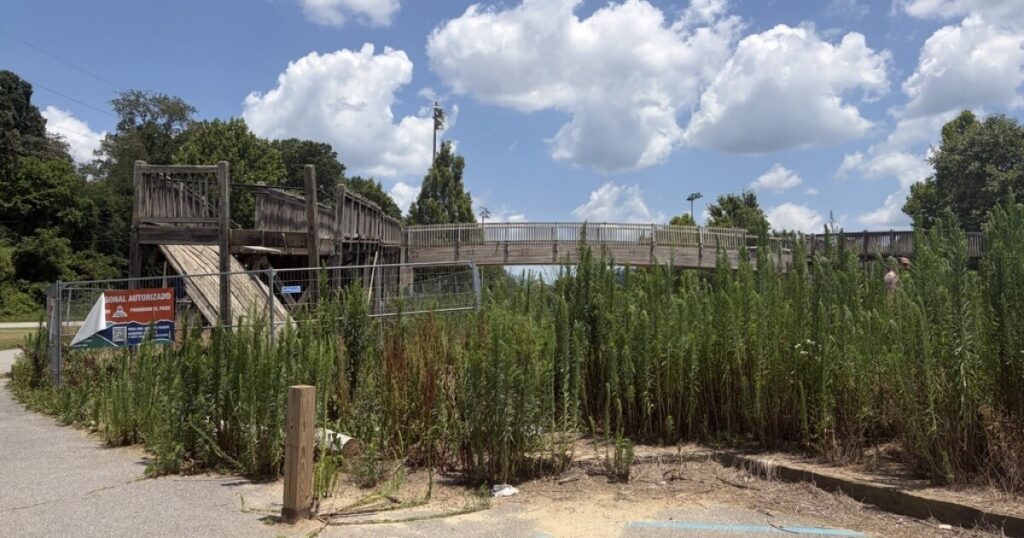
Among the notable transformations, Carrier Park will see tall horseweed cleared from its basketball court and playground. Previous damage left by Helene’s floods, including skewed light poles and an unusable swing set, will be addressed. The $63 million initiative aims to integrate nature and recreation with a focus on sustainability.
A recently released concept design outlines the city’s strategy to weave in natural elements such as wetlands and rivercane alongside recreational spaces. New attractions like a food forest, paddler’s beach, and sculpture meadow will complement the restored velodrome and dog park.
Dustin Clemens, Asheville’s Capital Projects Division Manager, emphasized the unique opportunity to create a cohesive and resilient park system along the river. This project covers Carrier Park, French Broad River Park, Jean Webb Park, and various other greenways and access points.
The endeavor is backed by over $21 million from CDBG-DR funds, with additional funding anticipated from FEMA. After extensive negotiation, Clemens expressed confidence in FEMA’s support.
For design expertise, the city has invested $4.6 million in Sasaki, a Boston design firm. Their assessment of water velocity, soil conditions, and vegetation has pinpointed vulnerable sections of the riverbank susceptible to flooding.
Screenshot from City of Asheville
Identifying particular vulnerabilities, such as those in French Broad River Park, has led to innovative solutions. “Engineers started to understand the velocity and that even 300-pound boulders were going to be picked up and washed downstream in a large storm event,” Clemens mentioned. This recognition prompted the development of a “floodable terrace lawn” featuring terraced seating that both shields the park from floods and serves as a venue for gatherings.
Flood analysis also suggested relocating the velodrome, originally situated in a floodplain, to higher ground for safety. The new design will modify its structure, creating a flatter loop suitable for multiple activities, with a central bioretention pond to manage stormwater.
Additional park facilities, including basketball courts and restrooms, may require elevation adjustments. “In order to do that, you need to manipulate the grade to raise the elevation of the parks,” Clemens explained, adding that this change offers a chance to form wetlands and prevent erosion by gently sloping the riverbank.
Rivercane, a native bamboo, will be planted to further stabilize the banks. While optimistic about the plan, Clemens noted that the project is still in its nascent stages, with construction anticipated from 2027 to at least 2030.
Details about the food forest remain under wraps, but Clemens hinted at potential inclusions like serviceberries and pawpaws, offering a taste of what’s to come.