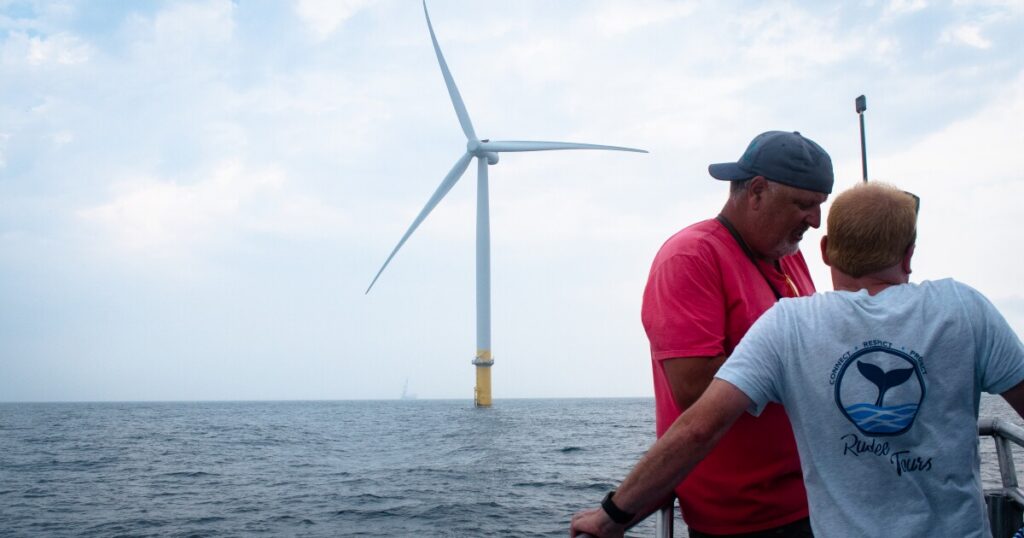
The energy landscape in North Carolina is undergoing significant shifts as Duke Energy’s offshore wind lease off the Wilmington coast has come to an end. This development follows the exit of French company TotalEnergies from a similar venture months earlier. The utility giant reached a settlement with the U.S. Department of the Interior, securing a partial reimbursement of $129 million from its initial $155 million lease. This refund will potentially fund other energy projects, including nuclear and gas power plants.
Kodwo Ghartey-Tagoe, executive vice president and CEO of Duke Energy Carolinas, expressed the utility’s intention to redirect the refunded amount towards customer and community benefits. “This settlement allows Duke Energy to refocus $129 million in ways that directly benefit our customers and communities in the Carolinas,” he stated.
North Carolina’s energy needs are met by diverse power sources, including coal, nuclear, and wind, each contributing to the state’s regular energy demands. Last autumn, Duke Energy submitted an acquisition request for information (ARFI) to the Utilities Commission. The filing highlighted the high costs associated with offshore wind farms compared to solar energy plus battery storage.
The Impact of Federal Energy Policies
The decision to terminate the wind lease has raised concerns among renewable energy advocates. Karly Brownfield of the Southeastern Wind Coalition criticized the federal government’s role in influencing energy market dynamics. “It’s unfortunate to see the federal government continue to pick winners and losers in the energy space,” she commented.
The abandoned wind project could have powered approximately 300,000 homes and provided significant economic benefits, including 37,000 jobs, $233 million in taxes, and a $44 billion capital investment, according to the Southeastern Wind Coalition.
This marks the ninth such project to be halted since Trump assumed office, leaving Avangrid’s Kitty Hawk Wind South as the sole option for Duke Energy to pursue wind energy in the state. Brownfield noted, “It’s not like offshore wind is off the table in North Carolina. There’s less optionality, which is not ideal, but there’s still opportunity.”
Challenges in Wind Energy Procurement
Recently, Duke Energy faced scrutiny regarding its involvement in wind energy projects. Mark McIntire, director of government affairs, energy, and environment for Duke Energy, clarified that the company’s subsidiary, Cinergy Corp, held the lease, not Duke Energy Carolinas.
During a Carbon Plan expert witness hearing, McIntire explained, “We are not in a position to expend funds to develop a resource for which we don’t have the rights to develop.” He also referenced House Bill 951, which mandates that Duke Energy own new generation facilities selected by the Utilities Commission during the Carbon Plan process, ensuring cost recovery for new power plants. More details on this legislation can be found here.