The landscape of U.S. campaign finance is undergoing a significant transformation following a new ruling by the Supreme Court. This landmark decision allows political parties to engage in unlimited fundraising and spending, a move that is less revolutionary in states like Wisconsin where such practices have been in place for years.
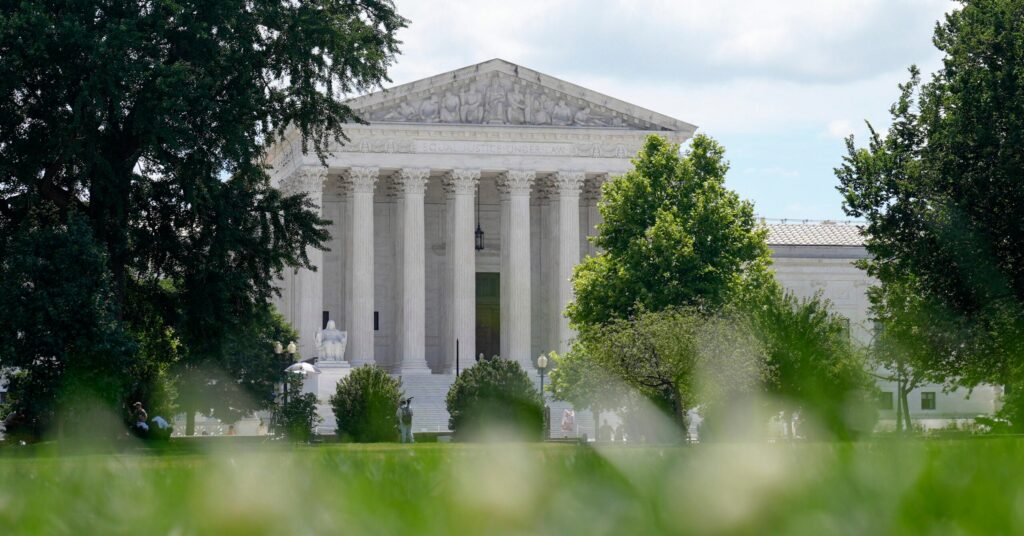
In a 6-3 decision, the conservative justices of the Supreme Court concluded that capping party expenditures infringes upon First Amendment rights. This verdict overturns sections of the Federal Election Campaign Act, established post-Watergate to mitigate electoral corruption risks.
Justice Brett Kavanaugh, representing the majority, emphasized the importance of equal treatment for all political players.
“The ruling will allow all political parties—including the DNC and RNC and the respective Senate and House campaign committees, as well as other parties and party committees—to participate more freely and compete more fully in the political process, and to coordinate more closely with their candidates,” Kavanaugh stated.
This decision also eases previous restrictions on cooperation between donors and their chosen candidates. Unlike political action committees, political parties can directly coordinate with campaigns. The plaintiffs argued successfully that limiting financial transfers from parties to candidates hampers free expression by constraining campaign coordination.
Wisconsin’s state parties have operated under these liberalized financial rules since 2015, following reforms by then-Governor Scott Walker and a Republican-majority legislature. They contended these changes enhanced business competition against union influence, with state parties remaining subject to public disclosure.
Democratic concerns about potential corruption were dismissed, and Republicans succeeded in eliminating party spending limits in Wisconsin.
Justice Elena Kagan, dissenting, warned that the ruling could encourage quid pro quo arrangements between significant donors and officials.
“The caps prevent easy circumvention of contribution limits; and so the former, as much as the latter, are needed to avert corrupt deals between candidates and their supporters,” Kagan wrote.
‘Exporting’ the Wisconsin model
The relaxation of Wisconsin’s campaign finance laws initially sparked accusations from Democrats of partisan advantage-seeking by Republicans. However, Democrats have since capitalized on these rules, particularly in high-stakes judicial races.
In the 2023 race for court control, the Democratic Party invested $10 million in electing Justice Janet Protasiewicz. By 2025, both parties had contributed significantly, culminating in the most expensive judicial race to date, exceeding $100 million, with Justice Susan Crawford emerging victorious.
Jeff Mandell, head of the liberal legal organization Law Forward, noted that the Supreme Court’s decision effectively adopts Wisconsin’s model nationwide, potentially leading to similarly costly elections elsewhere.
“It is essentially taking this Wisconsin model, which I would argue has been really, really unfortunate,” he remarked. “I don’t think anybody believes that the problem with our judicial elections is that there’s too little money spent, that they’re not seeing enough campaign ads, they’re not getting enough information in the mail.”
“And we’re taking that, and we’re exporting that to everywhere else in the country,” Mandell added.