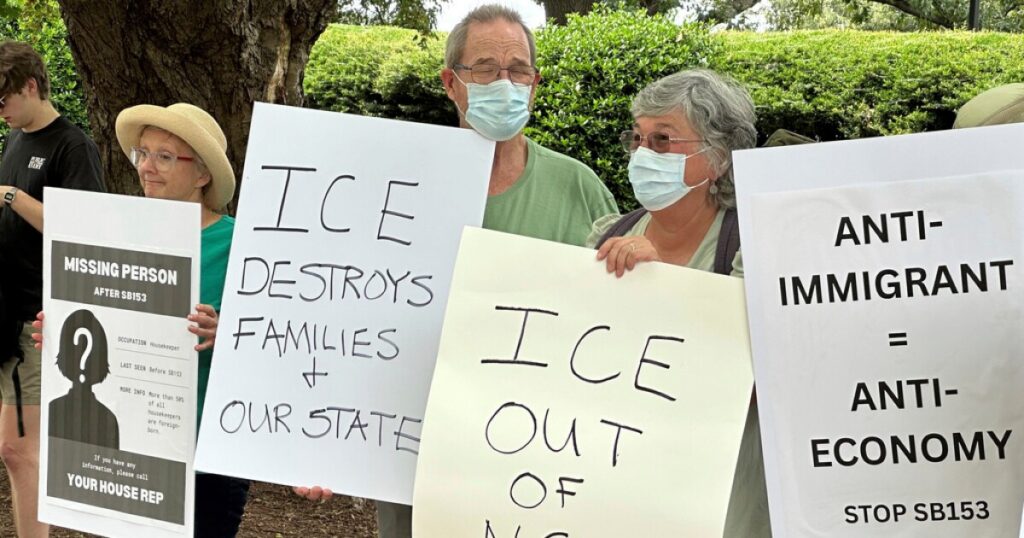
In a significant legislative move, North Carolina’s lawmakers have enacted a new immigration bill, overriding Governor Josh Stein’s veto. The “North Carolina Border Protection Act,” also known as Senate Bill 153, mandates collaboration between state law enforcement and federal immigration authorities, intensifying the state’s immigration enforcement efforts.
The legislation requires officers from the State Highway Patrol, Department of Public Safety, Department of Adult Corrections, and State Bureau of Investigation to cooperate with Immigration and Customs Enforcement (ICE) to the fullest extent permitted by law. However, the State Highway Patrol has yet to provide details on the implementation of this law. Lt. Christopher Knox stated, “We will work to share information as we move forward with the application of this legislation.”
Key components of the law include the prohibition of “sanctuary city” policies and restrictions on state-funded benefits for undocumented immigrants. The law also prevents colleges within the University of North Carolina system from hindering immigration operations. This legislation follows two other immigration laws enacted in recent years, House Bill 318 from last year and House Bill 10 from 2024, both of which require local jails to alert ICE if an unlawful noncitizen is in custody for a crime.
Key Provisions of Senate Bill 153
- Law enforcement agencies such as SHP, DAC, DPS, and SBI are mandated to contact ICE if they have custody of an individual who is not a legal resident or U.S. citizen.
- Officers will receive training to check the immigration status of individuals in custody and to perform functions similar to federal immigration officers under a 287(g) agreement.
- The law allows victims of crimes by immigrants without legal status to file lawsuits against “sanctuary cities.”
- University of North Carolina system schools are prohibited from maintaining a “sanctuary status” and from obstructing ICE activities.
- Noncitizens without lawful status are barred from receiving state-funded benefits from agencies such as the Department of Health and Human Services and Department of Commerce, including services like housing assistance, Medicaid, child care subsidies, and unemployment benefits.
Immigration advocates express concern that this law may heighten fear within immigrant communities, especially as over 6,300 immigration arrests have occurred in North Carolina since the start of President Donald Trump’s second term, as reported by NC Local.