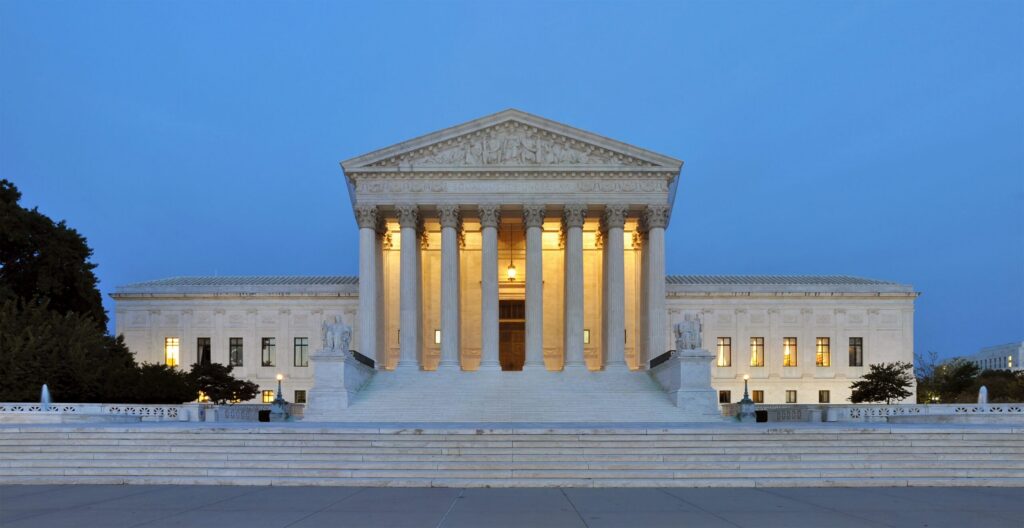
The longstanding legal principle of birthright citizenship in the United States has been reaffirmed by a recent U.S. Supreme Court decision, sparking celebrations among immigrant rights advocates in Wisconsin. This ruling, which preserves the right to citizenship for all individuals born on U.S. soil, comes as a significant barrier against a recent executive order.
The Supreme Court’s decision maintains a legal tradition that dates back over 150 years, counteracting an executive order from President Donald Trump. This order, signed at the beginning of Trump’s second term, would have denied automatic citizenship to individuals born in the U.S. if their parents were present in the country illegally or only temporarily.
The order was not intended to retroactively affect citizenship status but aimed to apply from February 19, 2025, onwards. “Per the executive order, no one would be losing their citizenship,” clarified Erin Barbato, director of the Immigrant Justice Clinic at the University of Wisconsin Law School.
Despite this assurance, Barbato noted the potential for “chaos,” with many individuals, including those legally present on a temporary basis, expressing concern about the implications for their future children. “They’re pregnant and they’re worried that they’re going to have a child, and (the child is) going to be stateless,” she stated. “And so the executive order has just caused a lot of turmoil.”
Had the order been enacted, projections from the Migration Policy Institute at Pennsylvania State University suggested it could have led to approximately 250,000 children being born annually in the U.S. without citizenship. These figures highlight the potential wide-reaching impact of such a policy change.
In defense of birthright citizenship, attorneys from Madison and Dane County in Wisconsin joined a friend-of-the-court brief along with local governments nationwide. This brief argued that revoking birthright citizenship could harm thousands of children and disrupt communities. “When these children grow older, they start businesses, teach schoolchildren, pay taxes, and contribute to our local and national economies in myriad other ways,” the brief stated, listing roles such as frontline workers, medical providers, and law enforcement personnel.
Wisconsin’s Attorney General, Josh Kaul, a Democrat, also took action by joining other state attorneys general in filing an amicus brief against Trump’s order. This brief emphasized the Fourteenth Amendment of the U.S. Constitution, which declares that “All persons born or naturalized in the United States, and subject to the jurisdiction thereof, are citizens of the United States and of the State wherein they reside.”
“It is the plain language of our Constitution,” Kaul remarked on birthright citizenship in an interview with WPR’s Wisconsin Today. “If we can’t even uphold that language, that’s a real threat to the rule of law.” However, the Trump administration focused on the clause “subject to the jurisdiction thereof,” arguing that children of unauthorized immigrants do not fall under U.S. jurisdiction.
Editor’s note: This story will be updated.