Understanding the Impact of Pyrometeors from Wildfires
While the focus has often been on monitoring smoke and large embers from wildfires, less attention has been given to a different type of airborne particle: pyrometeors. Recent research aims to shed light on these particles and their far-reaching effects.
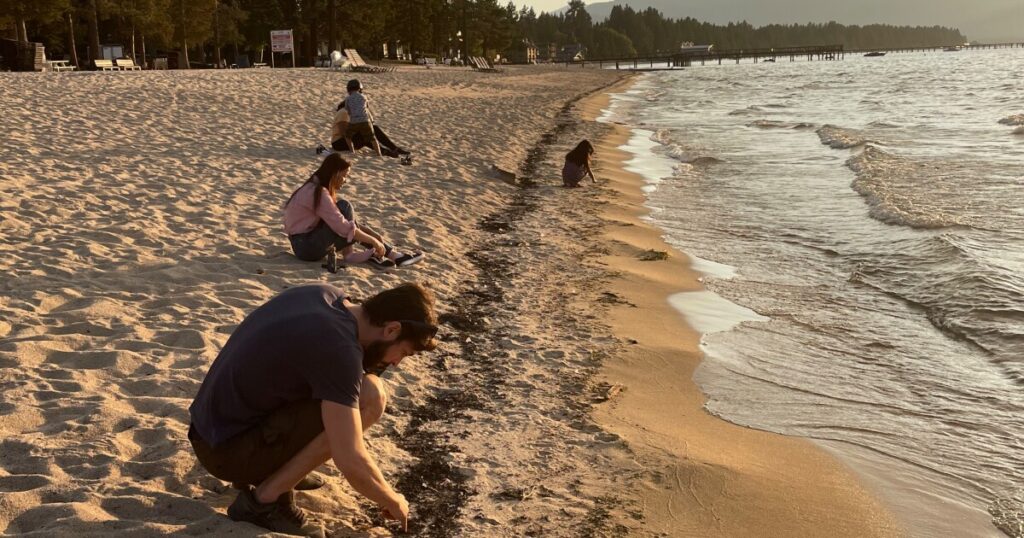
During the 2021 Caldor Fire, researchers from the University of Nevada, Reno (UNR) and Utah State University gathered data to create a model predicting the landing patterns of pyrometeors. This research highlights that the consequences of wildfires extend far beyond the immediate burn area.
Facundo Scordo, a research assistant professor at UNR, emphasized, “Wildfires’ impact does not stop where the flames stop.” Pyrometeors, capable of carrying nutrients, contaminants, and microbes, can significantly affect areas miles away from the original fire site.
Scordo noted, “Even 40 kilometers away from the fire, these pyrometeors are substantial. They are highly active and will produce a substantial impact when they land in the land or in the water.”
Post-Caldor Fire observations revealed changes in Lake Tahoe’s ecosystem, such as an increase in algae, including toxic cyanobacteria, and shifts in dominant algae types. These transformations are attributed to the deposition of pyrometeors, which add nutrients to the lake and alter sunlight exposure necessary for algae control.
Looking ahead, Scordo aims to conduct more comprehensive chemical analyses of these particles and apply the predictive model to other wildfire events to further understand their environmental impact.