University of Michigan Expands Educational Impact Across the State
In an ambitious effort to extend its academic influence beyond campus boundaries, the University of Michigan (U-M) is launching an initiative to address pressing challenges in schools, workplaces, and communities across the state. This initiative, a crucial part of the university’s Life-Changing Education theme year, promises to bring educational expertise directly to the public.
Central to this effort is the ED Talks initiative, which comprises a newly appointed group of faculty who will translate their research into actionable insights for various audiences. The aim is twofold: to make U-M’s educational research more accessible to the public and to foster a reciprocal learning environment where scholars gain insights from the communities relevant to their studies.

Dean of the Marsal Family School of Education and co-chair of the Year of Life-Changing Education, Elizabeth Birr Moje, has long envisioned this kind of public engagement. “Education research has the potential to transform not only education systems, but also society. Unfortunately, researchers don’t always know how to engage people beyond our academic communities to make societal change,” Moje explained.
With a focus on strengthening U-M faculty as public intellectuals, ED Talks will encourage dialogue on topics such as literacy, mentorship, and inclusive classroom design. These events, open to the public and free of charge, will occur several times each semester across partner communities, followed by open discussions to integrate audience feedback.
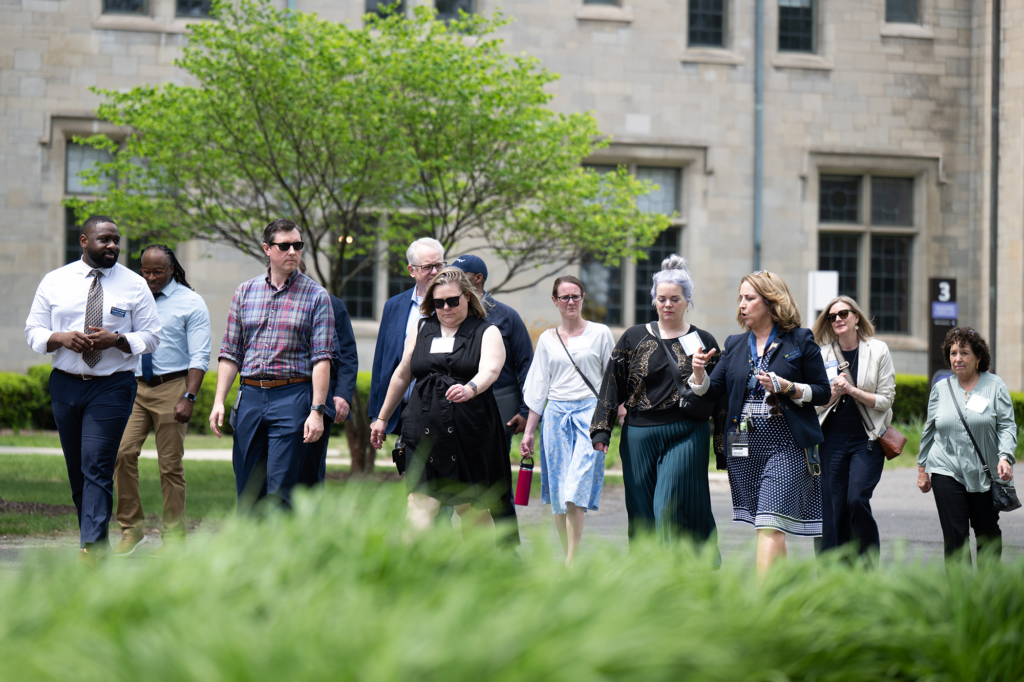
Each session will last between 20 and 30 minutes, with recordings and summaries provided afterward to facilitate ongoing community engagement. The initial cohort of The Future of Learning Scholars, comprising 16 education researchers from diverse disciplines, convened at U-M’s Marygrove Learning Community in Detroit for training on how to present complex research in a manner accessible to public audiences.
“The trainings are designed to help education researchers become better at talking with rather than at people and to create a corps of researchers who can travel across the state, nation, and even the globe, engaging with multiple communities to connect and deepen findings from education research,” Moje stated. “Ultimately, we hope these ED Talkers will craft the future of learning by engaging with communities in and outside the university.”
The Future of Learning Scholars Cohort
- Michael Bastedo, associate dean for research and graduate affairs; Marvin W. Peterson Collegiate Professor of Education, Marsal School
- Angela Calabrese Barton, chair, educational studies; Alvin Demar Loving Sr. Collegiate Professor of Education, Marsal School
- Kara Finnigan, associate dean for faculty and student development; professor of education, Marsal School
- Paul Fleming, associate professor of health behavior and health equity, School of Public Health
- Erin Flynn, associate professor of education, Marsal School
- Rebecca Hasson, Victor L. Katch Collegiate Professor of Kinesiology and associate professor of kinesiology, School of Kinesiology
- Mika LaVaque-Manty, Arthur F. Thurnau Professor; associate professor of political science and associate professor of philosophy, LSA
- Earl Lewis, Thomas C. Holt Distinguished University Professor of History, Afroamerican and African Studies and Public Policy; director, Center for Social Solutions; professor of history, professor of Afroamerican and African studies, LSA; and professor of public policy, Gerald R. Ford School of Public Policy
- William Lopez, associate chair and clinical associate professor of health behavior and health equity, School of Public Health; faculty associate, Latina/o Studies Program
- Vilma Mesa, professor of education, Marsal School; and professor of mathematics, LSA
- Chauncey Monte-Sano, professor of education, Marsal School
- Alaina Neal-Jackson, clinical assistant professor of education, Marsal School
- Katie Richards-Schuster, associate dean for undergraduate programs and strategic initiatives and associate professor of social work, School of Social Work
- Joe Ryan, professor of social work, School of Social Work; faculty associate, Population Studies Center, Institute for Social Research
- Chris Torres, associate professor of education, Marsal School
- Tanya Wright, professor of education, Marsal School
- Jeremy Wright-Kim, assistant professor of education, Marsal School