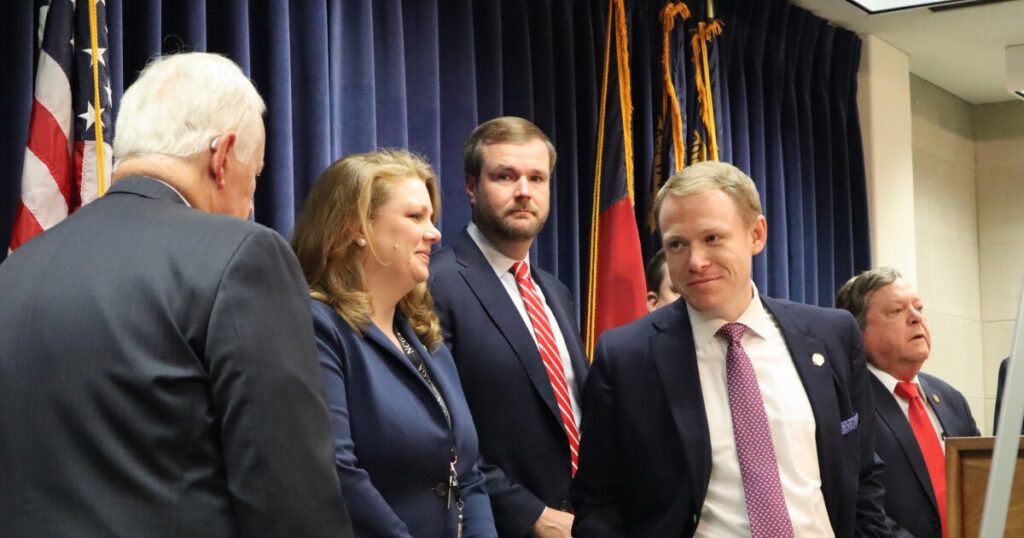
The North Carolina House of Representatives has been actively engaging with numerous veto overrides during the legislative short session. On Wednesday, lawmakers addressed four of these overrides, facilitated by the absence of two representatives.
Among the bills passed into law were Senate Bill 227 and Senate Bill 558, which restrict diversity, equity, and inclusion (DEI) policies in public schools and universities, respectively. Senate Bill 153 mandates state law enforcement agencies to cooperate with federal border patrol enforcement. Additionally, House Bill 171, intended to ban DEI policies in state agencies, was forwarded to the Senate, where it is anticipated to face a veto override.
The House votes on Wednesday concluded with a 71 to 47 split along party lines, allowing Republicans to achieve the necessary three-fifths majority. The absence of Edgecombe County Democrat Shelly Willingham and Mecklenburg County’s Carla Cunningham, formerly a Democrat now unaffiliated, was crucial in reaching this threshold.
Both Willingham and Cunningham had attended a House Rules meeting earlier in the day but opted out of the regular voting session. Notably, both had lost Democratic Party primary elections this year.
During the proceedings, Rep. Deb Butler, D-New Hanover, urged Speaker Destin Hall to permit additional debate on the veto override bills. “It appears that these override votes here that we are seeing today are very well choreographed, and so I would ask you to reconsider the question of privilege concerning the integrity of the House’s proceedings because the ability of members to deliberate and represent their constituents is central to the institutional rights of this body,” Butler stated.
Speaker Hall countered by asserting that the bills had been thoroughly debated when initially passed and that voting schedules were announced well in advance. He explained, “The simple math is that Republicans are able to override vetoes if two non-Republicans are missing from the chamber. And that was the situation Wednesday afternoon.”
As the short session nears its end, these veto overrides occur amidst discussions of an impending budget agreement. Governor Stein criticized the overrides, emphasizing the need for a comprehensive budget: “It’s time for them to do their jobs for the people of North Carolina. Instead, they are overriding my veto on bills to whitewash the diversity that makes our state strong and to take state law enforcement officers away from their existing state duties, forcing them to act as federal immigration agents,” he said in a statement.
In total, the Republican majority in the General Assembly has overridden 12 vetoes from Democratic Governor Stein, with a 13th likely on House Bill 171. Republicans did not address the remaining veto on Senate Bill 50, which proposes permitless concealed carry. This bill faces opposition from two Republican representatives, William Brisson and Ted Davis, necessitating a higher approval margin.