As Congress reevaluates a longstanding federal law from the 1960s, differing opinions have emerged among Wisconsin Republicans, while the Green Bay Packers closely monitor the developments.
The House Judiciary Committee recently examined the Sports Broadcasting Act of 1961, questioning its relevance in today’s era dominated by streaming media platforms.
Initially enacted during the early days of television, this legislation provided professional sports leagues with an exemption from antitrust laws regarding broadcasting rights. This allowed leagues to negotiate broadcast deals collectively, benefiting smaller market teams by distributing profits equitably.
Matthew Mitten, executive director of the National Sports Law Institute at Marquette University Law School, noted, “This has definitely benefited the Packers, because they’re in the league’s smallest market. Their … share is much higher than if the Packers were individually selling their broadcast rights, trademark licensing rights, et cetera.”
With changing times, Congress is scrutinizing whether this exemption still holds, especially as some games are now exclusively available on subscription-based services like Amazon Prime or Peacock.
U.S. Rep. Scott Fitzgerald, R-Juneau, who leads the House Judiciary Committee’s antitrust subcommittee, has initiated an investigation into the pricing structures of these leagues. During a recent hearing, Fitzgerald expressed concerns that modern broadcast deals are far more lucrative than in 1961, potentially disadvantaging fans.
“Years later … it is fair for this body to ask whether the professional sports leagues have kept up their end of the bargain. In my opinion, they have not, and sports fans are paying the price because of it,” Fitzgerald stated. “While the leagues are undoubtedly more popular than they were in 1961, because they do not follow America’s antitrust laws for television agreements, they can charge consumers inflated prices that would otherwise be illegal.”
The NFL remains the most watched sports league in the U.S., far surpassing MLB and NBA viewership. According to a report by the House Judiciary Committee, some fans spend up to $600 per season to follow their teams.
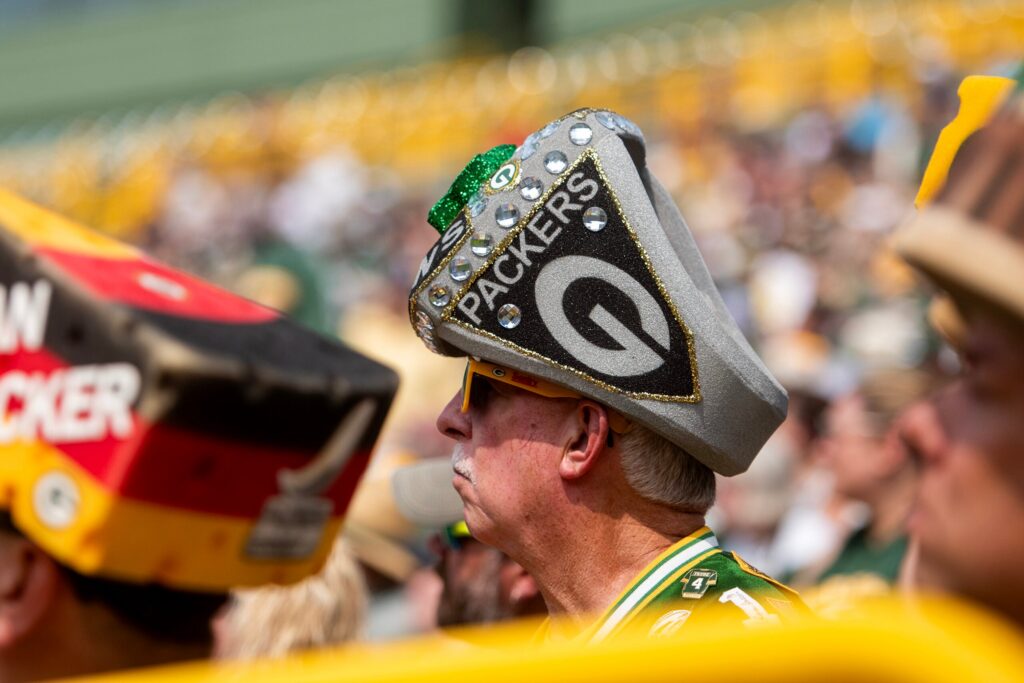
Representatives of the Green Bay Packers assert that the existing revenue-sharing arrangement is vital for the team’s sustainability. Packers’ public affairs director Aaron Popkey warned in a letter to Fitzgerald that any changes to the Sports Broadcasting Act could threaten the Packers’ future in Green Bay.
Some congressional members have also voiced their support for the current law, emphasizing its role in ensuring local markets can access home games at no cost. They argue that it allows smaller markets like Green Bay, Buffalo, and Kansas City to compete equally with larger cities.
U.S. Reps. Tony Wied, R-Green Bay, and Derrick Van Orden, R-Prairie du Chien, were among those who signed a letter advocating for the law’s success in providing free access to local fans.
Despite a salary cap ensuring balanced player compensation, equal revenue streams are crucial for teams to attract top talent, according to Mitten. “It’s expensive to field the winning team,” he remarked.
In a television interview, Fitzgerald downplayed concerns about the potential impact on NFL revenue sharing, asserting it remains unaffected by the Sports Broadcasting Act.
Mitten suggests that legislative gridlock might prevent any significant changes to the law, noting, “These days it’s very difficult to enact any federal legislation, you know, particularly sports legislation.”