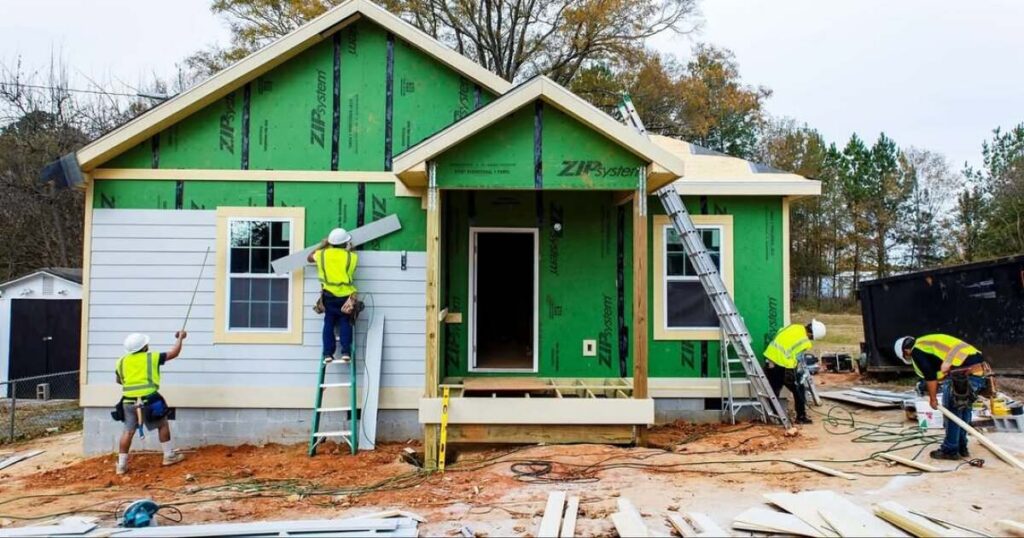
As Asheville grapples with the aftermath of Hurricane Helene, a critical decision looms: Should $19 million of federal disaster funds be redirected toward repairing single-family homes or used to build new affordable housing? This dilemma has sparked a lively debate among local housing advocates and city officials.
The Buncombe Affordable Housing Network, a coalition of ten local housing nonprofits, has urged the city to invest in long-term affordable housing development. In a public letter, they argued that the city’s substantial $225 million CDBG-DR grant is ideally placed to address the affordable housing shortage on a large scale. They view the proposed funds reallocation to the state-run Renew NC program as a temporary fix that may not be cost-effective.
Conversely, some housing advocates, including Yvette Jives from the Helene Housing Recovery Board, emphasize the importance of home repairs for vulnerable households. Jives advocates for investing in home repairs to enhance family stability and foster generational wealth. “I am in favor of putting money back into homes, investing into the homes, building these homes up and not just patchwork,” she shared with BPR.
The urgency of this debate intensified following BPR News’ report that Asheville had allocated enough funds from the grant to repair only eight homes. The city now proposes to redirect $19 million to repair 65 more homes, a decision that would shift funds from infrastructure and multi-family housing projects.
Nonprofits Argue for Efficient Repair Processes
Andy Barnett, leader of Asheville Area Habitat for Humanity and signatory of the nonprofit coalition’s letter, advocates for nonprofits managing the repairs. According to Barnett, local nonprofits can operate with greater speed and flexibility compared to the heavily regulated federal programs like Renew NC. “Funds that don’t have some of the federal restrictions like CDBG-DR really work a lot more efficiently for single-family repair than those larger sources,” Barnett explained.
ARCHR, a local nonprofit, has demonstrated its capability by repairing 60 homes with $1.4 million, averaging $30,000 per repair. In contrast, Renew NC, which follows more stringent federal guidelines, has completed repairs on 60 homes statewide.
City Explores Additional Funding Options
As the June 23 vote on reallocating CDBG-DR funds approaches, Asheville City Council is considering various strategies to maximize housing repairs. One proposal is to provide ARCHR with an additional $3 million from the city’s Affordable Housing Bond. This funding would support repairs beyond those caused by Hurricane Helene.
Nikki Reid, head of Asheville’s Community and Economic Development department, emphasized a balanced approach to fund both single-family and multi-family housing projects. “We’re hoping to propose what we’re calling a balanced approach which means ‘yes’ to CDBG-DR single family, ‘yes’ to CDBG-DR multi family and ‘yes’ to bond allocation,” Reid stated.
Despite the focus on repairs, the city council has already approved $8 million for new affordable housing projects, creating 205 rental units. These projects will utilize a combination of CDBG-DR funds, Low-Income Housing Tax Credits, and private investments.
Ongoing Debate Among Council Members
Council member Sage Turner supports prioritizing single-family home repairs, arguing, “To me it is so much more important to repair the homes.” Turner sees this as a unique opportunity to enhance homeownership and generational wealth.
The decision process is further complicated by the city’s vast unmet needs, highlighted by a previous study estimating over $1 billion in damage. As council member Kim Roney noted, “$225 million sounds like a lot but it’s not $1.1 billion,” echoing the scarcity of available resources.
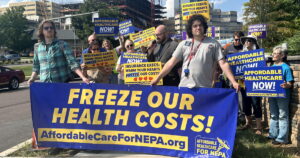
As the city prepares for the public hearing on June 9, residents are encouraged to share their views on the proposed reallocation of funds.