Recent budget decisions have sparked a debate among state employees in North Carolina, with varying reactions based on job roles. Legislative leaders have proposed a general pay raise, but the amount varies significantly based on specific roles within state government.
The State Employees Association of North Carolina (SEANC) has expressed dissatisfaction with the proposed 3% raise for most state employees, citing inflation and increased healthcare costs as major concerns.
While certain groups such as correctional officers, state law enforcement, and educators are set to receive larger increases, other positions facing similar challenges are seeing less financial recognition.
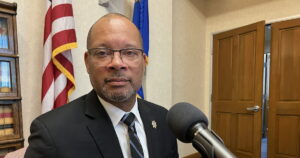
In an interview with WUNC Politics Podcast, Colin Campbell discussed the issue with SEANC’s executive director, Ardis Watkins.
State Employee Reactions
Watkins noted a mixed response: “So it’s mixed: for the folks who were cherry-picked to get nice increases to try to make up for how far behind market rate they’re paid, they’re pleased. Correctional officers are pleased, but everyone else within the walls of a prison, who’s also in a dangerous situation, is upset.”
Appropriate Salary Adjustments?
Watkins advocates for a minimum of a 5% raise to better address the economic pressures state employees face. “I would say the minimum you would need to have been looking at would have been 5%, and then maybe people would have been OK with that. The way they keep telling me they look at it – and I can’t blame them – is ‘gosh, that feels like 1.5% for last year, which they owe me a year of, and then 1.5% for this year, yet they jacked my healthcare up. So what are they doing for me?’”
Staffing Challenges
Concerns about staffing shortages are prevalent, particularly in prisons. “Especially within the prison scenario, I’m hearing a lot from members who say ‘I am increasingly feeling like the folks around me might not have my back if something went down. This is not the same caliber of person that I was used to working with.’”
Funding Raises
Questions remain about how these raises will be funded, with Watkins pointing out the challenges of eliminating vacant positions to cover salary increases. “Since 2009, the number of state employees who are on the job has decreased in North Carolina, because we have jobs frozen right now – so we literally have less people on the job than we did in 2009. We have added 2 million citizens since 2009. Things like DMV (wait times) happen when you do exactly that, you don’t increase the number of employees you have. How you would cut any more is mind-blowing to me.”
Comparative Analysis
Watkins highlighted comparisons with neighboring states, stating, “If you look at other states around the Southeast, Georgia and Virginia come to mind, they not only have increased their number of employees as their population increased, but something else interesting happened: their gross state product increased at a higher rate than ours. This does not seem to be a good economic policy.”
Listen to the full interview on the WUNC Politics Podcast