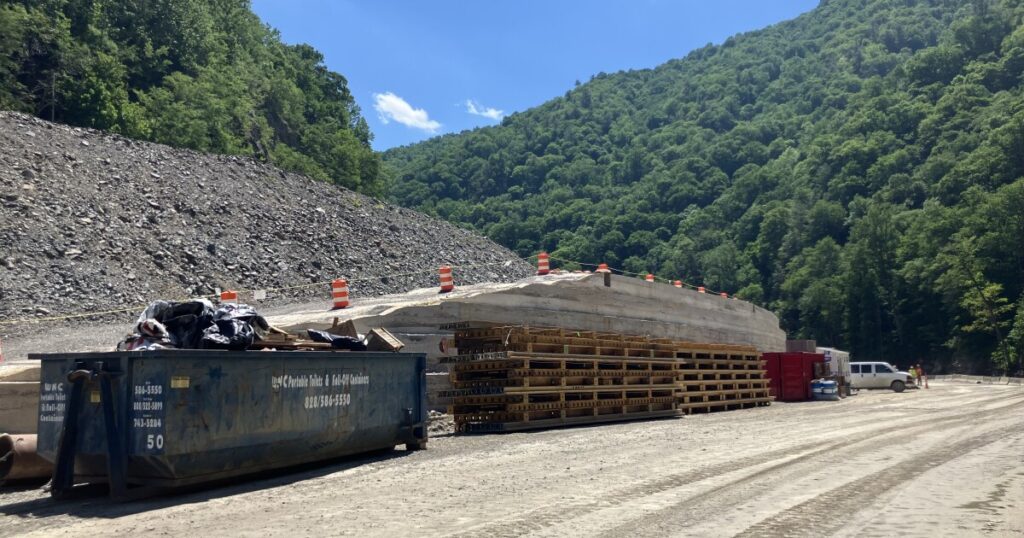
In the picturesque backdrop of the Pigeon River Gorge near the Tennessee-North Carolina border, a bustling hub of construction activity is transforming the landscape along Interstate 40. As part of a massive $2 billion initiative, the project aims to not only repair but fortify the highway against future natural calamities.
The North Carolina Department of Transportation (NCDOT) is overseeing this monumental task, which became imperative after Hurricane Helene’s forceful waters swept away a significant section of the highway, including 1 million cubic yards of rock. Blake Soblesky, resident engineer for the NCDOT, stated, “The intent of our design is to withstand a similar event such as Helene.” Read more about the hurricane’s impact here.
Engineering a Resilient Highway
Engineers are employing advanced hydraulic and hydrology analyses to construct robust retaining walls along the highway, which sits an average of 70 feet above the Pigeon River, with some parts reaching 100 feet. The new construction strategy involves using roller-compacted concrete to form large, sturdy slabs. “And then we’re bonding that all in one giant mass,” explained Soblesky, emphasizing the material’s resilience.
Felicia Sonmez
/
BPR News
With the challenging V-shaped terrain of the gorge and its remote locale, construction crews have built a 6-mile-long causeway adjacent to the river to facilitate movement. Moreover, an agreement with the U.S. Forest Service allows sourcing of rock directly from the Pisgah National Forest, cutting costs by about 30% and saving time.
Josh Deyton, Division 14 construction engineer, noted, “There’s still some things that have to be brought in for the project, obviously. But we are trying to minimize that. And I feel like that’s a good win for the folks that use the facility and for the taxpayers, because it does actually save some money.”
The Scale of the Project
Currently employing about 300 workers, the workforce is expected to grow to 500 in the summer months. Since the project commenced in February, approximately 31,000 cubic yards of concrete have been used, marking about 4% of the total expected volume. Overall, the ambitious endeavor is around 15% complete.

Felicia Sonmez
/
BPR News
While the project progresses, I-40 remains reduced to one lane in each direction, with completion anticipated by the fall of 2028. This essential route, crucial for freight movement in the Southeast, faces unique challenges including the presence of rattlesnakes, as highlighted by Soblesky.