Wisconsin Seeks Federal Aid After Devastating Storms and Floods
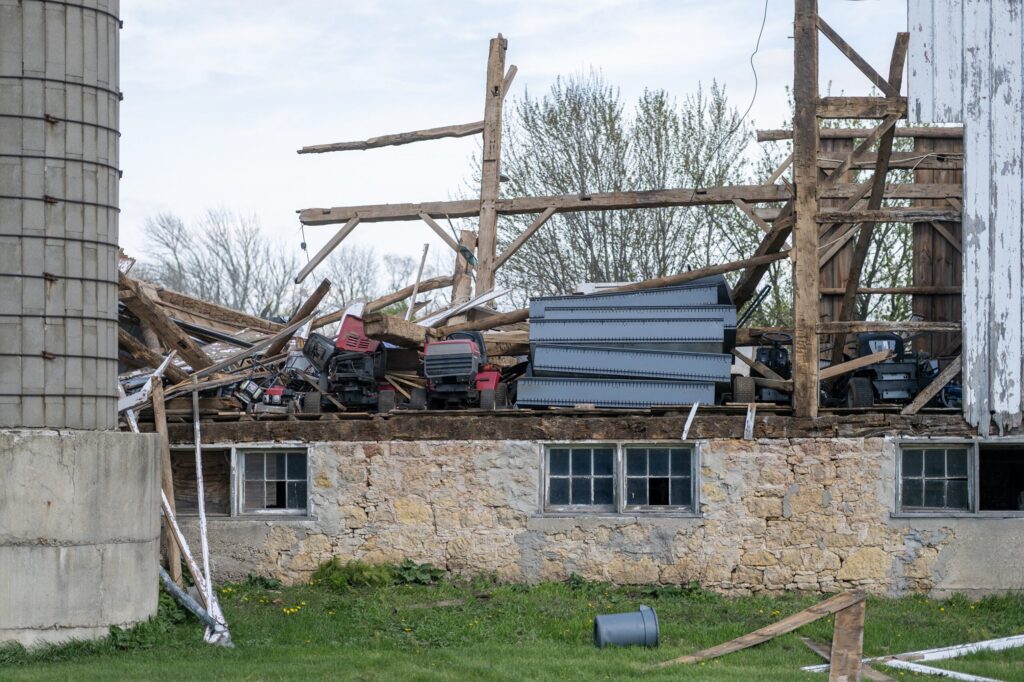
Following a series of destructive storms and floods in April that inflicted over $27 million in damages, Wisconsin Governor Tony Evers has formally requested a disaster declaration from President Donald Trump. This request seeks federal assistance to aid communities severely affected by the extreme weather conditions.
In a letter addressed to the president, Gov. Evers described the impact of hail, tornadoes, straight-line winds, and flooding as “widespread destruction” across Wisconsin and the Oneida Nation, exceeding local capabilities for recovery. “Families have lost their homes, businesses, and livelihoods, and far too many people are facing uncertainty, loss, and grief,” Evers emphasized.
The joint assessments by Wisconsin Emergency Management and the Federal Emergency Management Agency revealed that damages to over 1,570 residential properties across 19 counties and one tribal nation amounted to $9.8 million. Meanwhile, public sector damages in 14 counties and one tribal nation were nearly $17.7 million.
Gov. Evers, in his statement, highlighted his visits to the impacted areas, noting both the devastation and the resilience of the local residents. He stressed the necessity of federal aid, urging the president to act with urgency. Local leaders, including Janesville City Manager Kevin Lahner and Outagamie County Executive Tom Nelson, echoed the call for federal support.
Janesville, struck by what Lahner described as a “500-year-flood event,” experienced significant damage, including $10 million to public infrastructure alone. “The water came up very quickly, overwhelmed all the systems, and then went down relatively quickly,” Lahner explained, emphasizing the urgent need for federal funding.

In northeastern Wisconsin, the village of Shiocton and the city of New London dealt with evacuation orders due to flooding. The public damages in Outagamie and Waupaca counties exceeded $1.4 million and $2 million, respectively. Nelson emphasized the gravity of the situation, stating, “The federal government can make or break Shiocton.”

The response from the federal government remains pending, as there is no fixed timeline for a decision on the disaster declaration. This request follows a previous denial of aid by the Trump administration for similar damages last summer, a move highlighted in reporting by Politico that noted challenges faced by Democrat-led states in securing disaster funding.
Gov. Evers has also reached out to Wisconsin’s Congressional delegation, urging bipartisan support to ensure the state receives the necessary federal aid. Both Republican U.S. Rep. Tony Wied and Democratic U.S. Sen. Tammy Baldwin have shown support for the state’s recovery efforts, highlighting a united front in the pursuit of federal assistance.