Discover the rich tapestry of history woven into the Villa Louis in Prairie du Chien, Wisconsin’s first historic site. This Italianate villa, nestled on a sprawling 20-acre estate along the Upper Mississippi River, stands today as one of the most faithfully restored landmarks of its kind in the United States.
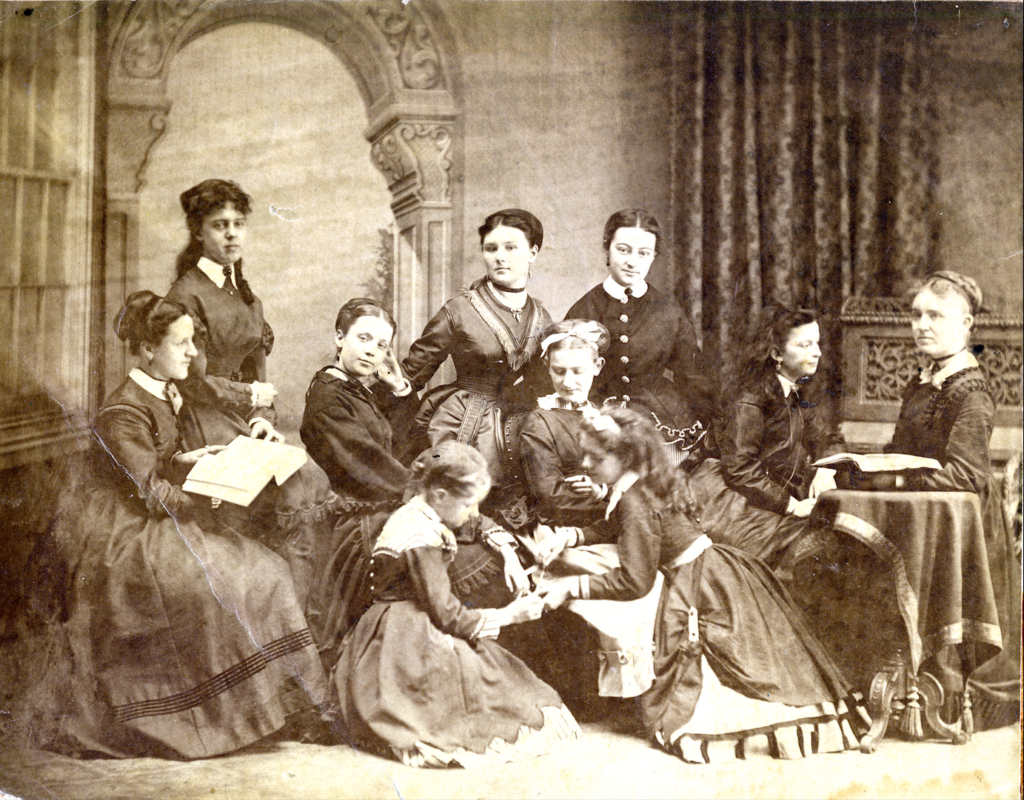
The Villa Louis estate is not just an architectural marvel but also a testament to the legacy of the Dousman family, whose fortune was built on the lucrative fur trade of the region. While the narrative of the Dousman family has traditionally spotlighted the men, the villa’s history is equally marked by the influence and resilience of the women who called it home.
Mary Elise Antoine, a native of Prairie du Chien, sheds light on the often-overlooked contributions of the Dousman women in her book, “An Elegant Edifice: The Women Who Forged a Legacy at Villa Louis.” She discussed her insights with WPR’s “Wisconsin Today.”
This conversation has been edited for brevity and clarity.
Villa Louis: A Historical Gem
Kate Archer Kent: Before we learn about these women of Villa Louis, tell us about this impressive residence. Why does the villa hold a significant place in Wisconsin history?
Mary Elise Antoine: It’s the home of the Dousman family. Three generations of the family lived there, and the first generation Hercules was quite important in the Upper Mississippi Western Great Lakes area. First as a person engaged in the fur trade with the American Fur Company, and then later on as an entrepreneur.
The house itself, though, dates from the second generation. It was built by Hercules, his son Louis, designed by the Milwaukee architect E. Townsend Mix.
The really great part about it is that the house remained unchanged from the 19th century, and the family left a tremendous amount of items with the house when it was first given to the city of Prairie du Chien, and then later acquired by the Wisconsin Historical Society.

We have documentation of the life of the Dousman families through account books, letters, children’s work and just a variety of correspondence, both business from the men’s point of view and family from the women’s point of view.
Unveiling the Unsung Heroines
KAK: The legacy of this house has mainly been told through the stories of the men. The matriarchs of the household, Jane and Nina Dousman, have been overlooked. Why focus your book on the women who lived there?
MEA: It was the women that maintained the property, and then made sure that it was going to be preserved as a historic site. The present house was built in 1870 and after the house was constructed her son Louis left, and so Jane was the matriarch, the caretaker of the house for the next 12 years.
Then when she died, Louis, Nina and their children moved back to Prairie du Chien from St. Louis. But Louis dies as a very young man, and Nina is left with five children, the oldest of whom is only 11. And Nina has to maintain the continuity of the family and of the property. She does this with help from her oldest daughter, Violet, and her second daughter, Virginia.

Navigating Legal Challenges and Community Ties
KAK: What restrictions were put on women in this era? And how did Nina overcome these barriers?
MEA: In those days when a woman married there was the law of coverture, so when a woman married she was covered by her husband and any personal property she owned became the property of her husband. So, when Nina’s husband Louis dies without a will the estate has to be inventoried.
First Nina has to apply to the court to be granted guardianship of her five children, and of course, the only male heir, Louis de Vereville, is 5 or 6 years old and so he cannot inherit the estate yet.
Therefore she has to go to court again and be made the trustee of the estate so that it will be kept intact to be passed on to her son Louis when he comes of age.
Community Support and Legacy
KAK: There is Penelope Flora McLeod, Jane’s caretaker. There were other caretakers of this property. How did Prairie lift up this family?
MEA: They were the support system. Both Jane and Nina were Catholic, and they were very supportive of St. Gabriel’s Church. Jane started a school for girls in Prairie du Chien. So they gave to the community that way but all of their domestic staff were residents of Prairie du Chien.
Besides Penelope, there was a man who lived within the house, Louis Le Brun. Both Penelope and Louis owned real estate in Prairie du Chien but they chose to live in the house and take care of the property.
When each passed away they were buried in the Dousman family plot.

Preserving History
KAK: The Wisconsin Historical Society operates the villa and the estate as a historic site. It’s a tourist draw. How is it used today?
MEA: The house, based upon some wonderful documentation we received in 1990 from a Dousman heir, has been restored to the way it looked in the 1890s.
We have photographs, itemized bills from the interior decorator and we found remnants of draperies and upholstery in trunks stored in the third floor of the house. The house has been restored to the best of our ability the way Nina Dousman had it.
Over 90 percent of the furnishings are original. The carpeting has been custom made to match the original in the hallway. The wallpapers have all been custom made to match.
So it’s a really special site. You’re seeing it as the Dousmans had it, not as some contemporary curator thinks it should be.